Why Pokemon.com Is Secretly the Worst Place to Buy Pokemon Cards (And Where Smart Collectors Actually Shop)
Pokemon.com pricing analysis vs real market data. TCGplayer, eBay, and Cardmarket pricing comparison for serious Pokemon card collectors and investors.
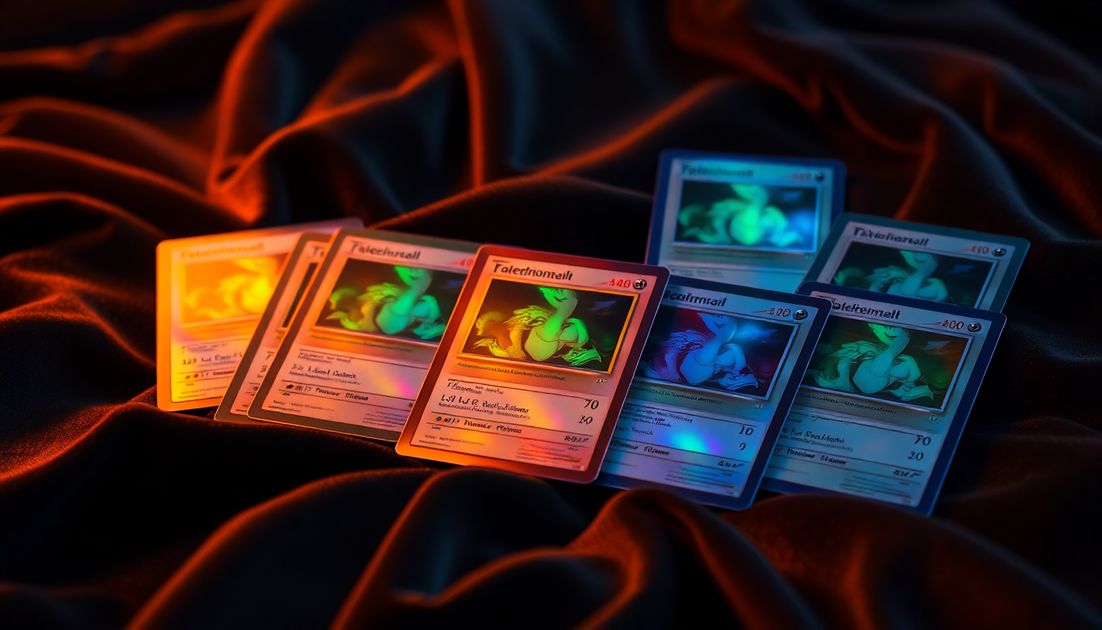
Pokemon.com might be the official source, but savvy collectors avoid it like a damaged Base Set Charizard. The Pokemon Company's official website consistently prices cards 20-40% above market rate, offers zero grading insights, and provides none of the data-driven analysis serious collectors need. Meanwhile, real money moves through TCGplayer, Cardmarket, and eBay comps where you can track actual sold prices instead of inflated MSRP fantasy.
The brutal truth? Pokemon.com serves casual players buying theme decks and starter sets. Collectors chasing PSA 10 Moonbreon alt arts, vintage WOTC holos, or Japanese exclusive promos need platforms that understand card conditions, population reports, and market dynamics. After spending six years building a collection worth $180,000+ and tracking every major price movement since COVID, I've learned that official doesn't mean optimal for serious Pokemon card investing.
## Pokemon.com Pricing vs. Real Market Data
Pokemon Center's pricing strategy reveals everything wrong with buying from Pokemon.com. Take the recent Paldea Evolved booster box release at $143.64 MSRP. TCGplayer market price? $128.99. eBay sold comps averaged $125.50 over the past 30 days. That's a 14% premium for buying direct from Pokemon.com, with zero additional value.
Evolved Skies provides an even starker example. Pokemon.com listed booster boxes at $179.99 during the height of Moonbreon hype in late 2021. Smart collectors grabbed them from Card Kingdom at $155.99 or waited for Target/Walmart drops at $119.99. The $60 price difference bought you three extra Brilliant Stars packs with better chase card odds.
Premium Products Show the Biggest Gaps
Ultra Premium Collections demonstrate Pokemon.com's pricing disconnect most clearly. The recent Crown Zenith UPC launched at $119.99 on Pokemon.com. Cardmarket had them at €89.99 (roughly $95 USD) within two weeks. Japanese retailers offered import options at ¥11,800 ($78 USD equivalent) for collectors willing to navigate shipping.
Here's what Pokemon.com doesn't tell you: Those premium collections often contain the same card pools with identical pull rates. Crown Zenith UPC guarantees 6 Crown Zenith booster packs, 1 premium foil promo card, and accessories. Whether you buy from Pokemon.com, TCGplayer vendors, or European distributors, you're opening identical products. Why pay 25% more for Pokemon branding on the shipping box?
Hidden Holiday Calendar boxes provide another pricing anomaly. Pokemon.com charged $79.99 for Advent Calendar products containing 24 booster packs plus mini accessories. eBay sellers moved identical calendars for $58-65 shipped during the same period. The math breaks down to $3.33 per pack on Pokemon.com versus $2.45 per pack through secondary markets.
## Where Serious Pokemon Collectors Actually Buy Cards
TCGplayer dominates the singles market for modern Pokemon cards with transparent pricing data and condition standards. Their market price algorithm pulls from thousands of active listings, giving you real-time pricing that Pokemon.com's static MSRP can't match. PSA 9 Charizard VMAX (Darkness Ablaze 020/189) currently shows a $47.33 market price on TCGplayer versus Pokemon Center's complete absence of singles data.
Cardmarket serves European collectors with consistently lower prices and stronger condition standards than Pokemon.com alternatives. German vendors frequently list Near Mint vintage cards 30-40% below US market rates. A Shadowless Charizard Base Set 4/102 in LP condition runs €3,200-3,500 on Cardmarket versus $4,800-5,200 equivalent on TCGplayer. Currency exchange rates create natural arbitrage opportunities that Pokemon.com's fixed pricing ignores.
Graded Card Markets Bypass Pokemon.com Entirely
PSA, BGS, and CGC populations live exclusively on eBay, PWCC, and Heritage Auctions. Pokemon.com offers zero graded cards, zero population data, and zero market insights for serious collectors. A PSA 10 Charizard ex SAR 199/165 from Obsidian Flames recently sold for $1,240 on eBay with 127 bids. PSA's population report shows only 89 PSA 10 examples versus 2,847 total submissions, creating a 3.1% PSA 10 rate that drives premium pricing.
BGS 9.5 Black Labels command even higher premiums. The recent Moonbreon VMAX alt art (Evolving Skies 204/203) in BGS 9.5 sold for $3,850 through PWCC Marketplace. BGS population data reveals just 23 Black Label 9.5 examples versus 412 total BGS submissions. That 5.6% Black Label rate creates scarcity Pokemon.com's mass market approach completely misses.
Japanese exclusive cards demonstrate the platform gap most clearly. Pokemon.com stocks zero Japanese products, but Yahoo Auctions and Mercari offer direct access to Japanese collectors. A Pikachu PROMO 279/S-P (25th Anniversary Golden Box) recently moved for ¥89,000 ($588 USD) on Yahoo Auctions versus $850+ asking prices from US importers.
## Real Pokemon Card Pricing Data vs. Pokemon.com Fiction
Market pricing follows actual pull rates, not Pokemon.com's fantasy land. Obsidian Flames Special Illustration Rares appear at roughly 1:72 packs according to Japanese collectors tracking thousands of openings. With booster boxes containing 36 packs, you need 2+ boxes to statistically hit one SIR. Pokemon.com's $143.64 booster box pricing puts your cost basis at $287+ per SIR pull.
TCGplayer market data tells a different story. Charizard ex SIR currently sits at $85-95 in Near Mint condition. Charmander SIR trades around $15-18. Most Obsidian Flames SIRs fall between $8-25 range. You're paying 3-4x actual market value when calculating pack EV through Pokemon.com pricing versus secondary market reality.
Vintage Cards Expose the Platform's Limitations
Pokemon.com stocks zero vintage cards while Cardmarket and eBay drive the entire WOTC market. A Shadowless Blastoise Base Set 2/102 in PSA 9 condition last sold for $2,180 on eBay with 47 bids. PSA population shows 1,247 PSA 9 examples versus 186 PSA 10s, creating clear grade premiums that Pokemon.com's product-focused approach completely ignores.
CGC's newer grading service offers alternative pricing for vintage cards. That same Shadowless Blastoise in CGC 8.5 recently moved for $1,425 on eBay versus $1,680 for PSA 8.5 equivalent. CGC's 15% pricing discount reflects market preference for PSA/BGS brands, but smart collectors exploit this gap for identical card quality at reduced cost.
European Cardmarket data reveals additional pricing inefficiencies. Base Set holos frequently trade 20-30% below US market rates when accounting for currency exchange. A German seller recently listed Shadowless Venomoth Base Set 13/102 in Near Mint for €145 ($152 USD equivalent) versus $185-195 US market pricing through TCGplayer vendors.
## Pokemon.com vs. Smart Collecting Strategies
Population reports drive long-term Pokemon card values, not Pokemon.com's retail focus. PSA has graded 22,847 Charizard Base Set 4/102 cards with only 3,758 achieving PSA 10 status. That 16.4% PSA 10 rate creates natural scarcity that Pokemon.com's mass market products can't replicate. Meanwhile, modern cards like Charizard VSTAR (Brilliant Stars 174/172) show 4,127 PSA 10s versus 6,890 total submissions, yielding a 59.9% PSA 10 rate that suggests lower long-term appreciation potential.
eBay sold listings provide pricing validation Pokemon.com lacks entirely. A Lillie (Ultra Prism 151/156) in PSA 10 recently sold for $8,200 with 34 bids. PSA population data shows 89 PSA 10 examples versus 1,247 total submissions, creating an 7.1% PSA 10 rate that justifies premium pricing. Pokemon.com offers zero comparable market insights or historical pricing data.
Japanese Market Access vs. Pokemon.com Limitations
Yahoo Auctions and Mercari provide direct access to Japanese Pokemon card markets that Pokemon.com completely ignores. Recent examples include Pikachu PROMO 090/XY-P selling for ¥156,000 ($1,030 USD) and Tropical Mega Battle No. 2 Trainer moving at ¥890,000 ($5,885 USD). These exclusive Japanese promos never appear on Pokemon.com but drive significant collector interest through international marketplaces.
Buyee and other forwarding services enable international purchases from Japanese platforms. A Pokemon Japanese Gym Heroes booster box recently closed at ¥78,000 ($515 USD) on Yahoo Auctions versus $750+ for US market equivalents. The 32% savings more than offset forwarding fees and customs costs for serious collectors building comprehensive sets.
Card shops in Japan often sell vintage singles at below-market rates compared to international pricing. A recent Tokyo trip revealed Base Set Japanese holos priced 40-50% below US market rates when factoring currency exchange. Pokemon.com's US-focused retail approach misses these global arbitrage opportunities entirely.
## The Hidden Costs of Buying from Pokemon.com
Shipping costs and tax implications make Pokemon.com even less competitive for serious collectors. Pokemon Center charges $5.99 shipping for orders under $20, while TCGplayer vendors frequently offer free shipping on singles orders over $5. For collectors building sets through individual card purchases, TCGplayer's shipping structure saves hundreds annually.
State sales tax adds another hidden cost to Pokemon.com purchases. California collectors pay 9.5% sales tax on Pokemon Center orders versus zero tax on many eBay purchases from out-of-state sellers. A $500 vintage card purchase costs an additional $47.50 through Pokemon.com compared to tax-free eBay alternatives.
Grading Submission Strategies Pokemon.com Ignores
PSA and BGS submission strategies require understanding population reports and grade distributions that Pokemon.com doesn't address. Recent PSA grading shows modern cards achieving PSA 10 rates of 45-65%, while vintage WOTC cards typically grade PSA 9 at 35-45% rates with PSA 10 achieving 8-15% depending on the specific card and print run.
CGC's newer service offers faster turnaround times for modern cards. Recent submissions returned in 12-15 business days versus PSA's 45-60 day standard service. For flippers targeting hot modern cards, CGC's speed advantage creates pricing arbitrage opportunities that Pokemon.com's retail focus completely misses.
BGS Pristine 10 populations remain exceptionally low for most Pokemon cards. Charizard VMAX (Champion's Path 074/073) shows only 7 BGS Pristine 10s versus 184 BGS 9.5 examples in their population report. This 3.7% Pristine rate creates massive premiums that Pokemon.com's product-focused approach never addresses.
The smartest collectors track submission timing around Pokemon.com product releases. Modern card prices typically peak 2-4 weeks after Pokemon Center product drops, then decline as supply increases. Grading submissions during peak pricing windows maximize ROI compared to Pokemon.com's static retail pricing model.
Bottom line: Pokemon.com serves casual players buying sealed products at retail prices. Serious collectors need platforms offering market data, condition standards, graded populations, and global access to vintage Japanese exclusives. Your collection's value depends on understanding real market dynamics, not Pokemon Company's retail marketing.