Why Are Pokemon TCG Online Players Dumping Their Digital Collections for Physical Cards?
Pokemon TCG Online vs physical cards: market analysis, price data, and investment strategies for collectors choosing between digital and physical Pokemon cards.
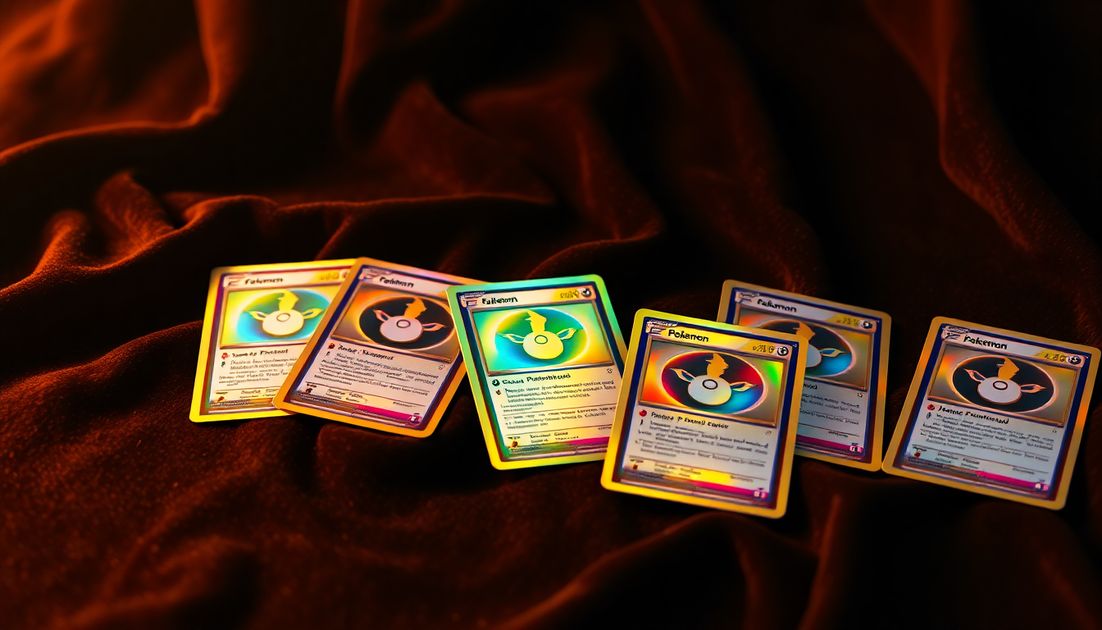
Are you watching your Pokemon TCG Online portfolio collect digital dust while physical cards skyrocket in value? The transition from PTCGO to Pokemon Live has created one of the most dramatic market shifts in trading card game history, fundamentally changing how collectors and investors approach Pokemon cards.
Pokemon TCG Online served as the digital backbone of competitive play for over a decade. Now, with Pokemon Live taking center stage, millions of players face a crucial decision: stick with digital assets or pivot to physical cards that actual money changes hands for. Based on market data from TCGplayer, PSA population reports, and eBay sold comps, the physical card market has exploded while digital collections face uncertain futures.
The migration period revealed something fascinating. Players who owned complete digital sets of cards like Charizard VMAX (Darkness Ablaze 020/189) discovered their virtual copies couldn't compete with physical versions selling for $180-220 in Near Mint condition on TCGplayer. Meanwhile, PSA 10 graded copies command $450-480 based on recent eBay sales.
This disconnect between digital convenience and physical value has reshaped how serious players build collections. Tournament grinders still need digital cards for testing, but savvy collectors recognized that physical cards offer something digital never could: real ownership with genuine resale value.
Pokemon TCG Online Market Dynamics vs Physical Card Values
The collapse of Pokemon TCG Online's relevance coincided with explosive growth in physical card markets. When PTCGO announced its sunsetting, players holding massive digital collections faced a sobering reality: years of pack openings and trading resulted in assets with zero real-world value.
Physical card markets tell a different story entirely. Pikachu VMAX (Vivid Voltage 188/185) rainbow rares sold for $85-95 in Near Mint condition throughout 2023, according to TCGplayer historical data. PSA 10 examples reached $280-320 on eBay during peak demand in October 2023. Even moderately played copies maintained $45-55 value, something impossible with digital cards.
The Pokemon Company's strategic shift reflects broader industry trends. Digital card games struggle with monetization beyond initial pack sales. Physical cards create ongoing secondary market value that benefits both players and the company through sustained product demand.
Recent data from Cardmarket European sales shows similar patterns. Umbreon VMAX (Evolving Skies 215/203) alternate art cards averaged €190-210 for Near Mint copies in Q4 2023. PSA 9 graded examples sold for €280-300, while BGS 9.5 copies reached €320-340.
Pull rates drive much of this value proposition. Alternate art cards typically appear at 1:300+ pack ratios in modern sets. The Professor's Research (Professor Magnolia) (Chilling Reign 201/198) rainbow rare maintains a 1:185 pack pull rate, creating natural scarcity that digital pack openings can't replicate meaningfully.
Digital Pack Economics vs Physical Pack Value
Opening packs digitally versus physically reveals stark economic differences. PTCGO packs cost roughly $1-2 worth of in-game currency, earned through daily challenges or purchased with gems. You never recoup monetary value regardless of pulls.
Physical booster packs from recent sets like Silver Tempest retail for $4.29-4.99 at major retailers. Pull a Lugia VSTAR (Silver Tempest 211/195) alternate art (1:216 packs) and you've hit a $140-160 card based on TCGplayer market pricing. Even modest hits like Regieleki VMAX (Silver Tempest 198/195) return $25-30, covering pack costs.
European collectors face different mathematics. Cardmarket data shows Silver Tempest booster packs average €4.80-5.20. That same Lugia VSTAR alternate art sells for €120-135 on Cardmarket, while Regieleki VMAX maintains €20-25 value. Higher pack prices but similar hit rates create comparable risk/reward scenarios.
The grading premium amplifies physical advantages. PSA 10 Lugia VSTAR alternate arts sold for $385-420 on eBay in recent months, with BGS Black Label 10 examples reaching $650-700 when they surface. PSA population data shows only 312 Black Label submissions as of December 2023, from an estimated 15,000+ copies pulled globally.
Pokemon Live Migration: What Happened to Your PTCGO Collection Value
Pokemon Live launched globally in June 2023, officially replacing Pokemon TCG Online after months of regional beta testing. The migration process highlighted fundamental differences between digital and physical collecting approaches.
PTCGO veterans discovered that complete collections built over years translated poorly to Pokemon Live's economy. Cards that required significant grinding or pack purchases in PTCGO became readily available through Pokemon Live's revised credit system. Arceus VSTAR (Brilliant Stars 184/172) rainbow rares that demanded 50+ pack openings in PTCGO could be crafted with minimal effort in Pokemon Live.
This devaluation drove many players toward physical cards offering genuine scarcity. Recent eBay sold listings show Arceus VSTAR rainbow rares maintaining $85-95 for Near Mint copies, $160-180 for PSA 9, and $245-265 for PSA 10 grades. BGS 9.5 copies with strong subgrades reach $195-220.
The migration also revealed technical limitations that frustrated competitive players. Pokemon Live's mobile-first design sacrificed deck-building complexity that PTCGO supported. Tournament players testing meta decks like Lost Box or Charizard ex builds found the interface cumbersome compared to physical testing with proxies or borrowed decks.
Regional availability issues compounded problems. Pokemon Live remains unavailable in several countries where PTCGO operated smoothly. Players in affected regions had no choice but to pursue physical cards for competitive play, driving up demand for tournament staples.
Digital Card Ownership vs Physical Asset Control
Digital card "ownership" proved illusory during the PTCGO shutdown process. Players with thousands of dollars worth of virtual cards discovered they owned licenses, not assets. When servers eventually shut down permanently, those collections vanish entirely.
Physical cards offer genuine ownership with legal protections. Buy a Charizard ex (Obsidian Flames 175/197) special illustration rare for $240-260 on TCGplayer, and you own a tangible asset. PSA 10 examples selling for $485-520 on eBay represent real value appreciation, not artificial digital scarcity.
The psychological impact runs deeper than economics. Physical card collectors describe satisfaction from handling premium cardstock, examining print quality, and organizing binders. Digital cards lack tactile engagement that drives collecting passion for many enthusiasts.
Storage and preservation add another dimension. Protect physical cards properly and they maintain condition indefinitely. Base Set Charizard (4/102) cards from 1998 still grade PSA 10 when preserved correctly, with recent sales reaching $5,800-6,200. Digital cards face obsolescence risks from platform changes, compatibility issues, or business model pivots.
Physical Pokemon Card Investment Strategies vs Digital Card Trading
Successful physical card investing requires different approaches than digital card accumulation. Digital platforms encouraged hoarding through unlimited storage and zero preservation costs. Physical collecting demands selectivity, condition awareness, and market timing.
Modern Pokemon card investment focuses on specific archetypes. Alternate art cards from recent sets consistently outperform base versions. The Pikachu V (SWSH Promo 063) from Pokemon Center exclusive products sold for $180-200 in Near Mint condition, while Pikachu V (Vivid Voltage 043/185) regular prints trade at $8-12.
Japanese exclusive cards offer international arbitrage opportunities. Eevee Heroes booster boxes from Japan contain alternate art Eeveelutions unavailable in English sets. Sylveon VMAX (Eevee Heroes 093/069) alternate arts imported from Japan sell for $320-350 on eBay, compared to €280-300 on Cardmarket for European buyers.
Grading strategy separates successful investors from casual collectors. Cards with centering issues or edge wear rarely justify grading costs. A Rayquaza VMAX (Evolving Skies 218/203) alternate art with 70/30 centering might grade PSA 8, selling for $180-200, while raw Near Mint copies trade at $160-175 on TCGplayer.
Tournament Results Impact on Physical Card Prices
Competitive results drive immediate price movements in physical cards. When Miraidon ex (Scarlet & Violet 081/198) decks dominated early Scarlet & Violet format tournaments, copies jumped from $12-15 to $25-30 within weeks. PSA 10 alternate art versions (Scarlet & Violet 203/198) reached $140-160 before meta shifts brought them back to $85-95.
Japanese tournament results often predict American price movements. Lost Box deck components like Comfey (Lost Origin 079/196) spiked to $8-12 after winning major Japanese events, months before gaining traction in international play. Early adopters buying at $2-3 realized significant returns.
World Championship results create sustained demand. Charizard ex (Obsidian Flames 054/197) regular versions maintained $18-22 after featuring prominently in Worlds 2023 top cuts. The special illustration rare (175/197) held $240-260 pricing despite initial post-tournament dips.
Rotation announcements trigger mass selloffs and buying opportunities. Standard format rotations eliminate older cards from tournament play, typically dropping prices 30-50% for rotating staples. Professor's Research (Champion's Path 062/073) fell from $8-10 to $4-5 after rotation announcement, while Battle VIP Pass (Fusion Strike 225/264) dropped from $15-18 to $6-8.
Future of Pokemon TCG Online Gaming and Physical Card Markets
Pokemon Live represents Pokemon Company's commitment to digital play, but design decisions suggest secondary priority compared to physical products. Limited card pools, simplified mechanics, and mobile-focused interface indicate maintenance-mode development rather than expansion.
Physical card markets benefit from this digital stagnation. Without compelling digital alternatives, players investing in competitive decks choose physical cards offering resale value. A Miraidon ex (Scarlet & Violet 203/198) alternate art costing $85-95 retains value after rotation, unlike digital equivalents becoming obsolete.
Print run data from Japanese sources suggests increased scarcity for English alternate arts. Paldea Evolved case ratios indicate roughly 1:288 packs for most alternate art cards, compared to 1:216 for earlier sets like Astral Radiance. Tighter ratios support higher long-term values for recent cards.
The grading population explosion poses risks for modern cards. PSA submissions increased 400% from 2021-2023, flooding the market with graded modern cards. Charizard VSTAR (Brilliant Stars 174/172) PSA 10 population reached 8,940 as of December 2023, from an estimated 50,000+ copies pulled globally. High-grade modern cards face downward pressure from oversupply.
Upcoming Sets and Digital Integration Possibilities
Paradox Rift and Paldean Fates represent Pokemon Company's current physical-first strategy. Special sets like Paldean Fates lack Pokemon Live integration entirely, forcing competitive players toward physical copies. Shiny Charizard ex (Paldean Fates 018/091) already commands $45-55 in Japanese versions, with English releases expected at $60-75.
Future digital integration seems unlikely given technical limitations. Pokemon Live's mobile architecture struggles with complex card interactions from newer sets. Path to the Peak (Chilling Reign 148/198) and similar stadium cards cause frequent crashes, suggesting underlying stability issues.
The NFT conversation remains absent from official communications, despite speculation about blockchain integration. Pokemon Company's family-friendly brand positioning conflicts with NFT market volatility and environmental concerns. Physical cards offer proven collectibility without cryptocurrency complications.
Regional availability will likely remain fragmented. Pokemon Live's limited geographic reach creates permanent digital divides, defaulting many international markets to physical play. European players especially benefit from established Cardmarket infrastructure supporting robust physical secondary markets.
Market Forecast: Physical vs Digital Value Trajectories
Physical Pokemon card markets enter 2024 with mixed signals. Modern card oversupply creates headwinds for recent releases, while vintage cards benefit from fixed populations and nostalgic demand. Neo Genesis Lugia (09/111) PSA 10 copies reached $2,800-3,200 in late 2023, reflecting sustained vintage appreciation.
Reprint risks loom for modern chase cards. Pokemon Company's willingness to reprint valuable cards in premium products creates uncertainty. Moonbreon (Evolving Skies 237/203) rumors of inclusion in upcoming products dropped prices from $450-500 to $380-420 for Near Mint copies.
Digital cards face existential challenges. Pokemon Live's simplified economy eliminates scarcity that drove PTCGO engagement. Without meaningful collection goals or trading mechanics, digital engagement may decline further. Server maintenance costs versus revenue could force additional platform changes.
The collector versus player divide will determine long-term trends. Pure collectors gravitate toward vintage cards and Japanese exclusives immune to reprint risks. Competitive players balance tournament viability with resale value, favoring recent cards with strong fundamentals. Charizard ex (Obsidian Flames 175/197) exemplifies this balance, combining meta relevance with iconic appeal.
International expansion of grading services creates new variables. CGC's growing presence in European markets offers alternatives to PSA and BGS dominance. Lower grading costs might increase submission volumes, potentially affecting grade premiums for modern cards.
Smart collectors should focus on cards with multiple value drivers: competitive viability, iconic status, and controlled supply. Pikachu ex (Scarlet & Violet 164/198) special illustration rare checks all boxes, trading at $120-140 with room for appreciation if Pikachu ex builds emerge in future formats.
You can build a meaningful Pokemon card collection through strategic physical purchases, while digital platforms offer convenient testing but no lasting value. The data strongly favors physical cards for anyone seeking genuine ownership and investment potential in the Pokemon TCG space.