Which Card Grading Service Saves You the Most Money Without Destroying Your Investment?
Compare 2024 grading costs: PSA vs BGS vs SGC vs CGC pricing, turnaround times, ROI analysis, and market premiums to find cheapest service.
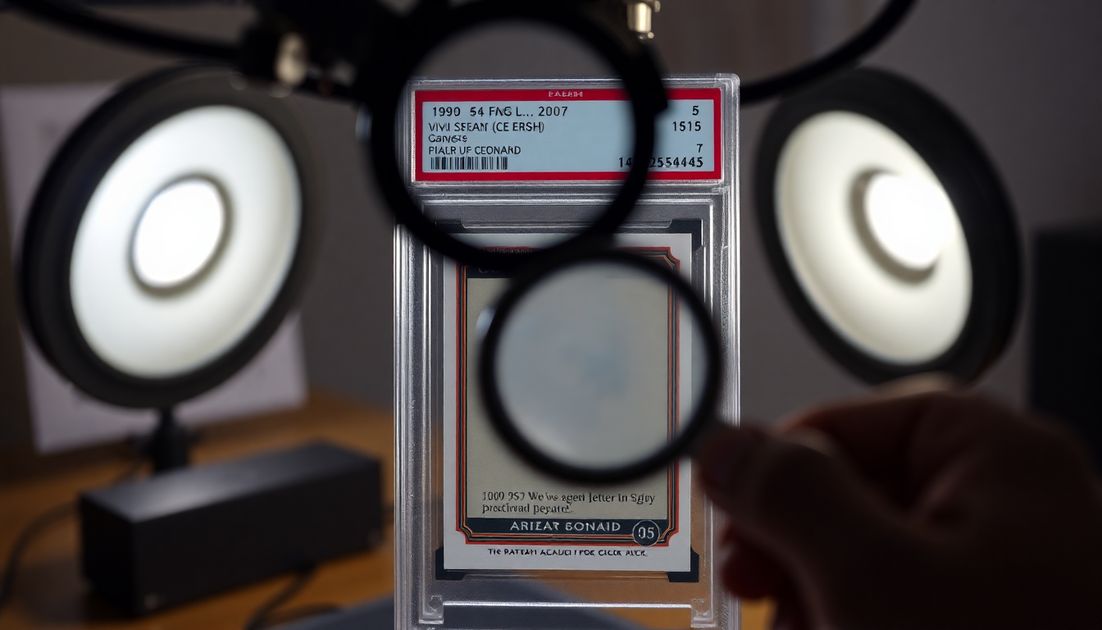
Is paying $75 for PSA grading actually worth it when SGC charges $30 for the same service? The cheapest card grading service isn't always the smartest choice, especially when you're staring at a Charizard ex SIR 199/165 that could swing from $800 raw to $2,400 in PSA 10. The grading game has exploded with options beyond the Big Three, creating a pricing war that benefits collectors but complicates decisions.
Most collectors fixate on submission fees while ignoring turnaround times, population reports, and market premiums. A $12 CGC submission might seem attractive until you realize that same Pokemon card sells for 40% less in CGC 10 compared to PSA 10. Understanding the true cost means calculating total expense (grading + shipping + insurance + opportunity cost) against expected return premiums.
The landscape shifted dramatically in 2024. PSA introduced Express Plus at $150 per card with 5-day turnaround, while newer services like TAG and HGA continue undercutting established players. BGS modified their sub-grades system, and CGC expanded into sports cards aggressively. Your choice impacts not just upfront costs but long-term liquidity and resale values.
Breaking Down 2024 Grading Service Pricing: The Real Numbers
Current submission tiers reveal stark differences across major graders. PSA's Value tier runs $25 per card (45-day turnaround, $499 max value), while their Regular service costs $50 (20-day turnaround, $1,499 max value). BGS charges $20 for Standard (30-day, $500 max) and $50 for Express (10-day, $2,500 max). These base prices exclude shipping, insurance, and handling fees that add $15-30 per submission.
SGC emerges as the cheapest card grading service for basic submissions at $30 per card with 15-day turnaround. Their pricing structure stays flat regardless of declared value under $10,000, making them attractive for mid-range cards. CGC offers similar value at $35 per standard submission, though their Pokemon and sports card premiums lag behind PSA significantly in secondary markets.
Newer players shake up pricing assumptions. TAG charges $15-25 per card depending on volume, while HGA runs promotions as low as $10 per card during bulk submission windows. However, these services carry liquidity risks. A TAG 10 Pikachu VMAX Rainbow Rare sells for roughly 60% of comparable PSA 10 prices on eBay, negating cost savings.
Declared value rules create hidden costs many collectors miss. PSA requires minimum $10 declared value per card, while BGS allows $1 minimums. Insurance runs 1-2% of declared value across services. Submitting a $2,000 Liliana of the Veil (Innistrad) at full value adds $20-40 in insurance costs, pushing total submission expense toward $100 regardless of base tier selected.
ROI Analysis: When Cheap Grading Actually Costs More Money
The math gets brutal fast. Consider a Charizard ex SIR 199/165 trading raw at $800-900 on TCGplayer. Recent PSA 10 sales hit $2,200-2,400, while BGS 10 reaches $1,800-2,000. SGC 10 examples sell for $1,400-1,600. Your grading choice directly impacts potential returns by hundreds of dollars.
Calculate total cost including opportunity. PSA Value submission costs $25 + $20 shipping/insurance + 45-day lockup. BGS Standard runs $20 + $18 shipping + 30-day wait. SGC costs $30 + $15 shipping with 15-day turnaround. The fastest option (SGC) saves two weeks of market exposure but caps upside at $1,500 versus $2,300 PSA potential.
Sports cards show different dynamics. A 1986 Fleer Michael Jordan #57 PSA 10 averages $6,000-7,000, while SGC 10 examples trade around $4,500-5,500. The $1,500 premium easily justifies PSA's higher fees and longer waits. However, modern parallels like 2023 Bowman Chrome Superfractors show smaller spreads between services.
Volume submissions change calculations entirely. PSA offers bulk pricing at $12-18 per card for 50+ submissions, making them competitive with budget services when you factor in market premiums. BGS runs similar volume discounts. Submitting 100 cards drops per-unit costs below advertised rates while maintaining premium market reception.
Hidden Costs That Destroy Budget Grading Plans
Insurance requirements bite inexperienced submitters. Declaring a Blue-Eyes White Dragon LOB-001 at $50 when PSA 10s sell for $8,000+ violates terms of service and voids coverage. Under-declaring saves insurance fees short-term but creates massive liability if packages disappear. FedEx loses roughly 0.1% of shipments annually.
Return shipping costs compound quickly. PSA charges $15-25 return shipping per submission regardless of card count. Submitting single cards makes zero economic sense unless you're chasing population control on ultra-rare pieces. BGS and SGC offer slightly cheaper return options but still charge minimum fees.
Rejection fees punish poor preparation. Cards deemed altered, damaged, or ungradeable still incur full grading charges plus return shipping. PSA rejects roughly 3-5% of submissions for various reasons. A $25 Value submission becomes $40+ in total costs even when unsuccessful.
When Budget Services Make Perfect Sense
Certain scenarios favor cheaper grading options despite market premiums. Japanese Pokemon cards often see smaller spreads between PSA and SGC, making SGC's lower costs attractive. Sets with massive print runs like Lost Origin benefit from faster SGC turnaround since population control matters less.
Modern sports parallels numbered to thousands show minimal grading premiums across services. A 2023 Bowman Chrome Purple Refractor /250 might gain $30-50 from grading regardless of company. SGC's speed advantage outweighs PSA's premium when dealing with current products facing reprint risk.
Surface Analysis and Preparation: Maximizing Grades While Minimizing Costs
Grading standards remain consistent across services, but emphasis varies. PSA weighs surface quality heavily, docking grades for print dots and foil scratches invisible to naked eyes. BGS focuses on sub-grades for centering, corners, edges, and surface, allowing strong categories to offset weaknesses. CGC tends toward lenient surface grading but punishes centering issues more harshly.
Surface preparation saves money by avoiding regrades. Wipe fingerprints using microfiber cloths before submission. Oils from handling create permanent stains under UV inspection lights used by graders. A pristine Iono SAR 269/198 can drop from PSA 10 to PSA 8 due to finger smudges, costing $1,000+ in lost value.
Corner and edge examination requires 10x magnification. Microscopic whitening invisible under normal lighting triggers automatic grade reductions. Charizard VMAX Rainbow Rares from Champion's Path show notorious corner chipping straight from packs. Pre-screening with jeweler's loupes prevents wasted submission fees on compromised cards.
Centering measurements matter across all services but with different tolerances. PSA 10 requires 60/40 centering or better on front and back. BGS demands 55/45 for pristine sub-grades. Use clear rulers over card surfaces to measure borders before submitting borderline examples.
Packaging Best Practices That Actually Matter
Card Savers remain the gold standard for submission holders despite alternatives. Team Bags + semi-rigids cost less but create movement during shipping, potentially causing damage. Penny sleeves inside Card Savers prevent static adhesion while maintaining protection. This combination costs $0.75 per card versus $0.25 for budget options.
Submission forms require exact detail to avoid delays and upcharges. Listing "Charizard" instead of "Charizard ex SAR 199/165" triggers research fees and extended processing. Set numbers, card names, and languages must match exactly. Errors add 10-15 days to turnaround times.
Bubble mailers need reinforcement for valuable submissions. Single-wall packaging fails roughly 2% of the time during shipping, based on collector forums and Reddit complaints. Double-boxing with rigid inserts costs extra $5-10 but prevents catastrophic damage to $1,000+ cards.
Alternative Grading Services: Beyond the Big Three
TAG (Trading Card Authentication & Grading) offers the most aggressive pricing at $8-15 per card during promotional periods. Their holders use similar materials to PSA but with different label designs. Market reception remains mixed, with TAG 10s selling for 50-70% of PSA 10 prices across Pokemon and sports categories.
HGA (Hybrid Grading Approach) provides custom label options and sub-grades similar to BGS. Base pricing runs $15-25 per card with faster turnaround than major services. However, their population reports lack depth, making comp analysis difficult for sellers.
CSG (Certified Sports Guaranty) focuses exclusively on sports cards with competitive pricing around $20-30 per submission. Their holders rival PSA quality, but market acceptance lags significantly. A 2018 Panini Prizm Luka Dončić Silver CSG 10 sells for roughly 60% of PSA 10 equivalents.
Local grading services operate in major markets but lack authentication databases. These options work for personal collection organization but provide zero market premium over raw cards. Avoid unless you're grading purely for protection rather than value enhancement.
Market Premium Analysis: Why Service Choice Determines Profit
Pokemon cards show the largest premium spreads between services. PSA 10 examples consistently command 20-40% higher prices than BGS 10 equivalents. Japanese exclusives like Pokemon Center Lady SR show even wider gaps, with PSA 10s reaching $1,800 versus BGS 10s at $1,200.
Magic: The Gathering follows different patterns. Vintage cards like Black Lotus favor BGS due to sub-grade transparency about condition issues. Modern cards show smaller service premiums since reprints constantly threaten values. Reserved List staples split evenly between PSA and BGS preference among collectors.
Yu-Gi-Oh cards heavily favor PSA grading due to market concentration on eBay rather than TCGplayer. A Blue-Eyes White Dragon LOB-001 First Edition PSA 10 sells for $8,000-12,000, while BGS 10s reach $6,000-8,000. The premium justifies PSA's higher costs and longer waits for vintage Yu-Gi-Oh pieces.
Sports cards segment by era and sport. Vintage baseball (pre-1980) strongly favors PSA due to registry participation and auction house preference. Modern cards show service neutrality since population counts matter less with larger print runs. Basketball and football split between services more evenly than baseball.
Pop Report Manipulation and Long-Term Value
Population control affects grading decisions beyond immediate ROI. Cards with low PSA pop counts (under 100 in PSA 10) benefit from additional submissions to PSA regardless of cost premiums. However, modern cards with thousands of PSA 10s show diminishing returns from population building.
BGS Black Label (pristine 10 sub-grades across all categories) commands significant premiums over regular 10s. A Charizard Base Set Unlimited BGS Black Label sold for $18,000 in 2023, versus $8,000 for PSA 10 examples. The extreme rarity (less than 1% of BGS submissions achieve Black Labels) creates scarcity premiums.
Timing submissions around major tournaments, anniversaries, or media releases can boost premiums temporarily. Pokemon World Championship periods show increased demand for competitive cards. Magic Pro Tour seasons affect relevant card values. These cycles influence optimal grading service selection based on turnaround times.
When Not to Grade: Avoiding the Cheapest Card Grading Service Trap
Certain cards lose money regardless of grading service chosen. Heavily played vintage cards rarely achieve grades above PSA 6, while grading costs remain constant. A damaged 1998 Pokemon Base Set Charizard might cost $50 to grade but only gain $30 in value over raw condition.
Modern bulk commons and uncommons fail cost-benefit analysis even at $10 per submission. Pokemon Battle Styles commons grade at PSA 10 rates above 80% but sell for $15-25, barely covering grading expenses. These cards serve collection completion rather than investment purposes.
Altered or cleaned cards face immediate rejection with full fee charges. Topps Chrome cards show obvious cleaning attempts under UV light used by graders. Pokemon cards with removed bends or pressed surfaces trigger authentication failures. Research grading standards before submitting questionable pieces.
The cheapest card grading service becomes irrelevant when market premiums disappear. Cards facing imminent reprints or rotation from competitive play lose grading value quickly. Pokemon cards rotating from Standard format show immediate price declines regardless of grade. Time-sensitive submissions favor faster services over cheaper alternatives.
Grading service selection ultimately balances upfront costs against long-term value retention. PSA maintains market leadership through authentication databases and collector preference, justifying premium pricing for high-value submissions. SGC offers middle-ground pricing with decent market reception for mid-range cards. Budget services work for personal collections but sacrifice significant resale potential.
Your submission strategy should match your goals. Quick flips favor faster services despite higher costs, while long-term holdings benefit from maximum market premiums regardless of submission expenses. Calculate total cost including opportunity, not just grading fees, when making service decisions.