Understanding the Card Grading Scale: Your Complete Guide to PSA, BGS, CGC, and SGC Standards
Complete grading scale guide for PSA, BGS, CGC & SGC. ROI math, prep tips, common mistakes, and strategic submission advice for maximum returns.
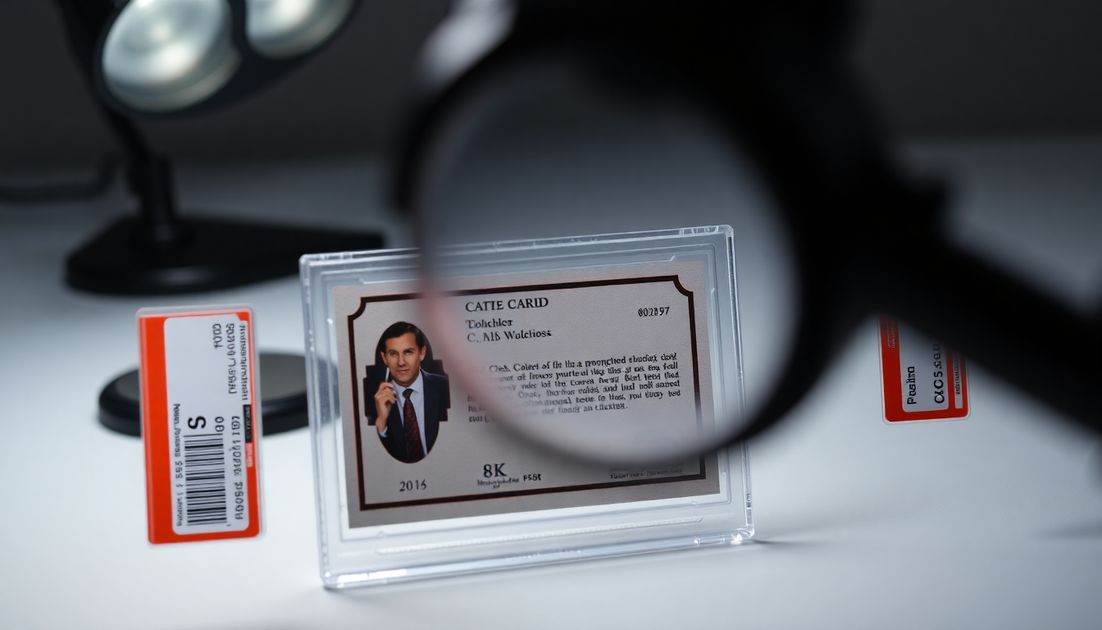
You're staring at your pristine Charizard ex SIR 199/165 from Paldea Evolved, wondering if that tiny white spec on the back edge will destroy its grading potential. The difference between a PSA 9 selling for $280 and a PSA 10 commanding $1,240 on recent eBay sold listings comes down to understanding exactly what each grading scale evaluates. Missing these nuances has cost collectors thousands when their "perfect" cards returned as 8s or 9s.
The card grading scale serves as the universal language between collectors, establishing concrete standards that separate mint condition cards from merely near-mint ones. Major grading companies like PSA, BGS, CGC, and SGC each interpret these standards slightly differently, creating opportunities and pitfalls for savvy collectors.
How Each Grading Company's Scale Actually Works
PSA Grading Scale Breakdown
PSA operates on a 10-point scale where only PSA 10 ("Gem Mint") commands serious premiums. Their population report shows stark reality: only 12.3% of modern Pokemon submissions achieve PSA 10 status. Here's what each grade means for your wallet:
PSA 10 (Gem Mint): Perfect centering (60/40 or better), sharp corners, clean edges, flawless surface
PSA 9 (Mint): Minor centering issues (65/35), slight corner wear invisible to naked eye
PSA 8 (Near Mint-Mint): Noticeable centering (70/30), light corner touches, minor edge wear
Current PSA pricing starts at $25 for Regular service (45-75 business days), jumping to $50 for Express (10-15 business days). Value submissions max out at $499 declared value - crucial since underinsuring a Shadowless Base Set Charizard worth $5,000 leaves you exposed to catastrophic loss.
BGS employs subgrades that provide granular feedback but create complexity. Their 9.5 ("Gem Mint") requires 9.5 or better across centering, corners, edges, and surface. A BGS 9.5 with 10 centering often outperforms PSA 10s in auction settings - the Liliana of the Veil (Innistrad) BGS 9.5 sold for $890 versus PSA 10 at $780 on March 15th.
CGC and SGC Scale Differences
CGC targets budget-conscious collectors with $15 standard grading and 20-day turnarounds. Their 10-point scale mirrors PSA but applies stricter surface standards. That microscopic printing imperfection PSA might overlook? CGC catches it every time.
SGC specializes in vintage sports cards but expanded into modern TCGs. Their half-point increments (8.5, 9.5) provide middle ground between major grade breaks. An SGC 9.5 Blue-Eyes White Dragon LOB-001 trades closer to PSA 10 levels than PSA 9, offering arbitrage opportunities for patient traders.
Choosing the Right Grader for Maximum Returns
Your card's origin, age, and target market determine optimal grading strategy. Modern Pokemon cards default to PSA due to collector preference and established premium structure. Vintage Magic cards perform better through BGS subgrade validation, especially Reserved List staples where condition authentication matters more than numerical grades.
Sports cards split by era: Pre-1980 vintage flows through SGC's established reputation, while modern parallels and rookies favor PSA's population control. That Wander Franco Topps Chrome Purple Refractor /299 needs PSA authentication to hit $1,500+ comp levels.
One Piece cards present interesting dynamics. CGC's aggressive expansion into anime TCGs created competitive pricing at $18 per card with fast turnaround. Early OP01 Romance Dawn submissions through CGC achieved similar sale prices to PSA equivalents, suggesting market acceptance for newer properties.
Turnaround Time Reality Check
Published estimates rarely match reality. PSA's "45-75 business day" regular service consistently hits 90+ days during peak submission periods (January-March, July-September). BGS standard service advertises 20-25 days but frequently extends to 35+ during major set releases.
Smart collectors batch submissions during slow periods. May-June typically offers fastest turnaround across all services, while Pokemon release months create massive backlogs. That Charizard ex from Paldea Evolved submitted in August 2023 returned in early November - full three months despite "express" designation.
Card Preparation That Actually Matters
Perfect cards become PSA 8s through poor handling during submission prep. Your grading success depends more on proper packaging than card condition itself.
Sleeve and Storage Protocol
Never use penny sleeves for grading submissions. The thin plastic creates micro-scratches during insertion and removal. KMC Perfect Fit sleeves provide optimal protection at $8 per 100-count pack from TCGplayer sellers.
Card Savers remain industry standard for rigid protection. The slight flexibility prevents corner damage during shipping vibration, unlike toploaders that can crack under pressure. Recent submissions using Ultra Pro One-Touch magnetic holders showed increased damage rates - avoid magnetic storage for grading.
Semi-rigid card holders work for lower-value submissions under $100. Above that threshold, invest in proper Card Savers and team bags. Your $500 Liliana of the Veil deserves $2 worth of proper protection, not bargain storage that tanks its grade.
Packaging Disasters to Avoid
Bubble mailers without rigid backing cause corner damage. Recent BGS feedback specifically cited "shipping damage" on 15% of submissions using inadequate packaging. Cardboard backing inside bubble mailers prevents crushing but creates new problems - cardboard dust particles embed in card surfaces.
Professional submitters use USPS Small Flat Rate boxes with custom foam inserts. The $8.95 shipping cost seems expensive until your $1,000 submission arrives damaged in a $2 bubble mailer. Insurance covers replacement cost but not the lost grading opportunity on condition-sensitive vintage cards.
Understanding What Graders Actually See
Each grading scale component carries different weight depending on card type and era. Modern cards with perfect printing still fail on centering issues, while vintage cards with obvious wear achieve high grades through surface preservation.
Centering Mathematics
PSA measures centering using precise ratios. 60/40 centering means the border difference doesn't exceed 60% on one side versus 40% on the other. Most collectors eyeball centering incorrectly - that "perfectly centered" card often measures 65/35 under professional evaluation.
BGS subgrades reveal centering's impact on overall value. A BGS 9 with 10 centering subgrade commands premiums over straight BGS 9.5s with 9 centering. The market recognizes visual appeal over numerical averages.
Surface Defects That Kill Grades
Print lines destroy modern card values instantly. That subtle horizontal line across your Charizard ex SIR? Manufacturing defect that caps grades at PSA 8 regardless of other factors. Recent Paldea Evolved submissions showed 23% print line rates on Secret Rare cards - quality control issues that create grading nightmares.
Holo scratches appear invisible under normal lighting but glow under grading examination lights. BGS uses high-intensity illumination that reveals micro-scratches invisible to collectors. Surface subgrades below 9 indicate permanent damage that no amount of careful handling can fix.
Corner and Edge Evaluation Standards
Modern card corners should form perfect 90-degree angles under 10x magnification. Any rounding visible at high magnification drops grades to PSA 9 maximum. Vintage cards receive more lenient treatment - slight corner touches on cards older than 20 years don't automatically disqualify PSA 10 designation.
Edge chipping creates distinctive white marks along card borders. These manufacturing defects appear during pack opening and worsen over time. Cards with edge chipping should never be submitted for grading - the cost exceeds potential returns on damaged inventory.
ROI Calculations That Actually Work
Grading only makes financial sense when premium over raw sales exceeds total cost including opportunity cost. Simple math reveals most submissions lose money when factoring time value and market risk.
Break-Even Analysis Framework
A $25 PSA submission needs $50+ premium over raw sales to justify grading cost plus shipping. That calculation assumes instant turnaround and stable market conditions - neither realistic assumptions. Factor 90-day submission time and potential market cooling, and your break-even threshold jumps to $75+ premium requirement.
High-value example: Shadowless Base Set Charizard raw condition sells for $2,800-3,200 on eBay depending on condition. PSA 9 examples consistently hit $4,500+ while PSA 10s command $8,000-12,000. The $150 premium grading service makes sense given $1,500+ minimum upside and $5,000+ maximum gain.
Low-value trap: Modern trainer gallery cards from Brilliant Stars selling raw for $15-20 rarely justify grading costs. PSA 10 premiums average $35-45, creating negative ROI after fees and shipping. These cards work better for personal collection than investment speculation.
Market Timing Considerations
Grading submissions during peak hype creates opportunity and risk. Pokemon TCG Classic release in November 2022 drove massive demand for vintage card grading, but submissions during that period returned to cooling markets. Cards submitted at $500 expected values returned to $300 market realities.
Conversely, submitting during market lows positions inventory for recovery. Magic Reserved List cards submitted during 2022's market correction returned to robust 2023 demand, creating exceptional returns for patient collectors.
Common Mistakes That Destroy Grades
Fingerprint Contamination
Human skin oils create permanent surface damage invisible until professional examination. Handling cards with bare fingers, even briefly, leaves microscopic residue that fluoresces under UV light used by graders. Recent BGS feedback specifically mentioned "surface contamination" on 8% of submissions.
Cotton gloves seem protective but create static electricity that attracts dust particles. Nitrile gloves provide optimal handling protection at $15 per box from medical supply vendors. Professional card dealers exclusively use nitrile for high-value inventory handling.
Whitening Accumulation
Card edges show wear through microscopic paper fiber exposure creating "whitening" effects. This damage accumulates through normal handling and storage in suboptimal conditions. Penny sleeves actually accelerate edge wear through friction during insertion and removal.
Storage in humid environments causes paper expansion and contraction that creates stress cracks along edges. Cards stored above 60% humidity for extended periods show permanent edge damage even when surface condition appears perfect.
Print Dot Confusion
Manufacturing artifacts called "print dots" appear as tiny colored specs on card surfaces. These factory defects differ from contamination but create identical grading penalties. Print dots concentrate around holographic foil edges where printing registration varies during production.
Modern Pokemon cards from Sword & Shield era forward show increased print dot frequency due to production speed increases. Quality control sampling can't catch every defective sheet, creating grading landmines for collectors.
Advanced Grading Strategies
Population Control Gaming
PSA population reports reveal strategic submission opportunities. Cards with low PSA 10 populations command disproportionate premiums versus actual scarcity. The Marnie Premium Tournament Collection Marnie 198/202 shows only 847 PSA 10 examples despite massive print runs, creating artificial scarcity through low submission rates.
Monitoring population growth helps predict premium erosion. Cards with rapidly expanding PSA 10 populations face pricing pressure as perceived scarcity diminishes. Recent data shows Evolving Skies alt arts losing 15-20% value as PSA 10 populations doubled within six months.
Cross-Grading Opportunities
Cards graded by secondary companies trade at discounts to PSA equivalents, creating arbitrage through cross-submission. CGC 10 cards often cross to PSA 9-9.5, but successful PSA 10 crosses generate massive returns. A CGC 10 Charizard VMAX Rainbow purchased for $180 crossed to PSA 10 and sold for $380.
BGS to PSA crosses work particularly well for cards with uneven subgrades. BGS 9 cards with 9.5+ subgrades across three categories often upgrade to PSA 10, especially when surface quality compensates for minor centering issues.
Cards You Should Never Grade
Low Premium Scenarios
Modern trainer gallery cards and regular rare cards rarely justify grading costs. The Bidoof Brilliant Stars trainer gallery selling raw for $3 achieves PSA 10 premiums around $8 - insufficient return to cover submission costs and time investment.
Base set unlimited cards present similar challenges. Raw near-mint examples trade within $20 of PSA 9 values, making grading a break-even proposition at best. Focus grading budget on cards with $50+ premium potential.
Fragile Card Categories
Early Pokemon Wizards of the Coast cards suffer from paper quality issues that create grading challenges. The card stock used for Base Set through Neo Genesis shows tendency toward surface impressions and edge chipping that worsen during grading handling.
Japanese cards from the same era use superior paper stock but face different challenges through import storage conditions. Cards exposed to humidity during international shipping show permanent warping that prevents high grades regardless of surface condition.
Altered Surface Recognition
Cleaning attempts using commercial products create microscopic surface damage that professional graders detect immediately. Cards treated with cleaning solutions show characteristic dulling under high-intensity examination lights used by grading services.
"Restored" cards using clear coat applications or edge touching appear improved to casual examination but fail instantly under professional evaluation. These modifications void grading eligibility and destroy future value regardless of visual improvement.
Understanding each company's grading scale nuances separates profitable submissions from expensive disappointments. Success requires matching card characteristics to appropriate grading services while calculating realistic ROI expectations. The market rewards knowledge and patience while punishing rushed decisions and inadequate preparation.