The Truth About Sports Card Investing: Why 90% of Collectors Will Lose Money (And How You Can Join the 10%)
Sports card investing guide covering market analysis, population dynamics, portfolio strategies, and risk management for vintage and modern cards.
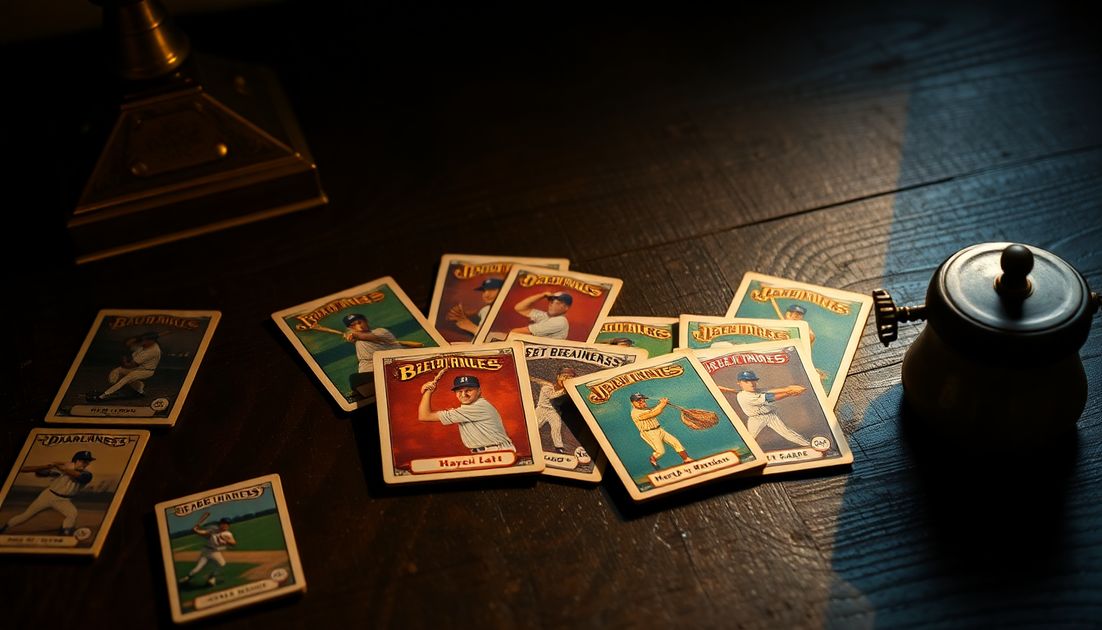
Sports card investing has become a speculative bubble disguised as nostalgia. While influencers push $5,000 Prizm blasters and YouTubers crack $50,000 cases for views, smart money quietly accumulates vintage Hall of Famers and rookie cards with sustainable fundamentals.
The harsh reality? Most modern sports card investing strategies rely on artificial scarcity and hype cycles that collapse faster than a house of cards. Yet underneath the chaos, genuine opportunities exist for investors who understand market mechanics, population reports, and long-term demand drivers.
The Sports Card Investing Landscape: Separating Signal from Noise
Current sports card markets divide into three distinct tiers, each requiring different investment approaches and risk tolerances.
Vintage cards (pre-1980) represent the market's blue chips. A 1952 Topps Mickey Mantle PSA 8 sold for $312,000 on eBay in February 2024, up 18% from the $264,000 comp six months prior. Pop reports show only 783 PSA 8 examples exist versus 12,472 total graded, creating genuine scarcity. These cards benefit from finite supply and generational wealth transfer as baby boomers liquidate collections.
Rookie cards from the junk wax era (1980-1994) occupy the middle ground. The 1986 Fleer Michael Jordan #57 remains the crown jewel, with PSA 10 examples reaching $738,000 at auction. However, BGS 9.5 copies trade around $85,000-$95,000, while PSA 9s can be found for $12,000-$15,000. Population growth continues as collectors submit raw cards, but the Jordan mystique sustains premium valuations.
Modern cards (2010-present) create the most volatility in sports card investing. Panini's Prizm brand revolutionized the market with numbered parallels and artificial scarcity. A 2017 Panini Prizm Patrick Mahomes #247 Silver refractor /999 PSA 10 peaked at $42,000 in early 2021 before settling around $8,500-$12,000 today. Pop inflation killed the premium—PSA 10 population jumped from 312 to 1,847 copies.
Understanding Population Dynamics in Sports Card Investing
Population reports determine long-term value sustainability better than any other metric. PSA currently houses 47.2 million total submissions, with basketball cards comprising roughly 35% of volume. The company processes 2.5-3 million cards monthly during peak seasons.
CGC emerged as PSA's primary competitor, offering faster turnaround times and competitive pricing. Their 10 Pristine grade commands similar premiums to PSA 10, though market acceptance varies by sport. BGS maintains prestige for ultra-modern cards, particularly their Black Label 10 grade representing statistical perfection.
Smart sports card investing requires monitoring pop growth rates. Cards with rapidly expanding populations lose scarcity premiums quickly. The 2019 Panini Prizm Zion Williamson #248 base PSA 10 dropped from $7,500 to $1,200 as population grew from 1,200 to 8,400 copies over 18 months.
The Modern Boom and Bust Cycle
Sports card investing experienced unprecedented growth during the 2020-2021 pandemic boom. Stimulus money, closed casinos, and social media hype created perfect storm conditions. Topps Chrome Superfractor 1/1 cards routinely sold for six figures. A 2009 Mike Trout Bowman Chrome Draft #BDPP89 BGS 9.5 reached $922,500 at auction.
Reality struck hard in 2022. Interest rates rose, stimulus ended, and speculators fled. Most modern parallels lost 60-80% of peak values. The 2020 Panini Prizm Anthony Edwards #258 Silver refractor PSA 10 crashed from $18,000 to $3,500. Only true Hall of Fame talent and historically significant rookies maintained meaningful premiums.
Building a Sustainable Sports Card Investing Portfolio
Successful sports card investing requires treating cards like any other alternative asset class. Diversification, risk management, and fundamental analysis matter more than chasing hot rookies or following Twitter hype.
Allocation strategies should mirror traditional investment principles. Dedicate 60-70% of capital to established Hall of Fame vintage cards with proven track records. The 1955 Topps Roberto Clemente #164 PSA 8 has appreciated 127% over five years, from $8,200 to $18,600. Supply constraints and Clemente's cultural significance support continued growth.
Reserve 20-25% for emerging stars with sustainable career trajectories. Connor Bedard's 2023-24 Upper Deck Young Guns #201 represents generational NHL talent. Raw examples trade for $180-$220, while PSA 10 copies bring $850-$1,100. The card benefits from strong Upper Deck Young Guns brand recognition and Bedard's elite scoring ability.
Limit speculative plays to 10-15% of total allocation. This includes unproven rookies, short-print parallels, and trending players. The risk-reward profile favors small position sizes and quick profit-taking.
Geographic and Sport Diversification
Regional preferences create arbitrage opportunities in sports card investing. International markets often undervalue American stars while overpricing local heroes. Shohei Ohtani cards trade at significant premiums in Japanese markets. His 2018 Topps Update #US285 PSA 10 sells for $2,200-$2,800 in Japan versus $1,400-$1,700 in US markets.
European basketball interest drives demand for NBA stars popular overseas. Giannis Antetokounmpo and Luka Dončić command premium valuations on Cardmarket compared to US-based platforms. A 2018 Panini Prizm Luka Dončić #280 PSA 10 averages €1,850 on Cardmarket versus $2,100 on eBay US—but shipping costs and authentication risks complicate arbitrage.
Soccer cards remain undervalued relative to global popularity. The 2004 Panini Sports Mega Cracks Lionel Messi #71 BGS 9.5 sells for $25,000-$35,000, a fraction of comparable basketball or football stars' values. FIFA World Cup success and Messi's longevity support long-term appreciation potential.
Authentication and Condition Standards
Grading companies revolutionized sports card investing by standardizing condition assessment. Raw card purchases require extensive knowledge to avoid costly condition mistakes. A 1979 O-Pee-Chee Wayne Gretzky #18 in raw Near Mint condition costs $2,500-$3,200. The same card grades PSA 7 (Very Near Mint) 40% of the time, PSA 8 (Near Mint-Mint) 25% of the time, and PSA 9 (Mint) just 8% of the time.
PSA 8 Gretzky rookies trade for $4,800-$5,400. PSA 9 examples bring $12,500-$15,000. PSA 10 copies reach $65,000-$75,000 when available. The grading lottery adds substantial risk to raw purchases but creates opportunities for collectors with sharp eyes.
BGS subgrades provide additional transparency for modern cards. Their 9.5 Gem Mint grade requires minimum 9.0 subgrades across centering, corners, edges, and surface. Black Label 10s demand perfect 10 subgrades in all categories—achieving this grade occurs roughly 0.5% of the time for modern cards.
Market Timing and Exit Strategies in Sports Card Investing
Sports card investing success depends heavily on timing entry and exit points around predictable market cycles. Seasonal patterns create recurring opportunities for disciplined investors.
Football card values peak during NFL season (September-February) then decline through spring and summer. The 2021 Panini Prizm Mac Jones #371 PSA 10 traded for $1,800-$2,200 during the 2021 playoff run before falling to $450-$650 in summer 2022. Patient buyers accumulated positions during the off-season lull.
Basketball cards follow similar patterns, peaking during playoff season (April-June) and declining through summer months. Baseball cards maintain steadier demand due to the sport's longer season but still experience March-April spikes around Opening Day and October increases during playoffs.
Career Milestone Events
Hall of Fame elections create immediate value spikes for eligible players. The 1989 Upper Deck Ken Griffey Jr. #1 PSA 10 jumped from $18,500 to $26,000 within 48 hours of his 2016 Hall of Fame announcement. Smart sports card investing involves accumulating borderline Hall of Fame candidates before official selection.
Retirement announcements trigger similar reactions. Tom Brady's February 2022 retirement announcement (later reversed) pushed his 2000 Playoff Contenders Championship Ticket #144 BGS 9.5 from $415,000 to $518,000 in three weeks. His actual retirement in 2023 had muted impact since markets already priced in the inevitability.
Jersey retirement ceremonies and statue dedications provide additional catalysts. Kobe Bryant memorabilia experienced sustained demand following his January 2020 death and subsequent jersey retirement. His 1996 Topps Chrome #138 refractor PSA 10 appreciated from $65,000 to $125,000 over 12 months.
Technology Disruption and Market Evolution
Digital platforms transformed sports card investing accessibility and price discovery. COMC (Check Out My Cards) pioneered consignment selling, while PWCC Marketplace created auction environments for premium cards. Goldin Auctions specializes in seven-figure sports memorabilia sales.
Fractional ownership platforms like Collectable and Rally allow smaller investors to purchase shares in expensive cards. A 1952 Topps Mickey Mantle PSA 9 traded on Rally for $5.2 million in fractional shares, demonstrating institutional-level interest in sports card investing.
Blockchain authentication and NFT integration represent emerging trends. Panini's Blockchain technology embeds digital certificates in physical cards, combating counterfeiting concerns. While NFT sports cards collapsed alongside the broader crypto market, underlying authentication technology shows promise.
Risk Assessment and Common Pitfalls
Sports card investing carries unique risks absent in traditional asset classes. Counterfeiting poses the greatest threat to uninformed buyers. High-value vintage cards attract sophisticated counterfeiters using period-correct paper and printing techniques.
The 1933 Goudey Babe Ruth #53 represents a prime counterfeiting target. Authentic PSA 8 examples sell for $85,000-$110,000, incentivizing criminal reproduction. PSA's authentication process includes paper analysis, printing method verification, and database comparison—but sophisticated fakes occasionally slip through.
Modern card counterfeiting focuses on autographed memorabilia and low-population parallels. Panini National Treasures printing plates (1/1) and Topps Dynasty autographed patches command five-figure premiums, making replication profitable for criminal enterprises.
Print Run Manipulation and Market Manipulation
Card manufacturers deliberately create artificial scarcity through numbered parallels and short-print techniques. Panini's Prizm line includes base cards, Silver refractors (/999), Gold refractors (/10), Black refractors (/1), and various retail-exclusive parallels. This complexity confuses casual collectors while enriching sophisticated flippers.
Panini announced 2023-24 NBA Hoops production would be limited compared to previous years, immediately driving box prices from $120 to $180. However, "limited" remains undefined, allowing flexibility in actual print runs. Smart sports card investing requires skepticism about manufacturer claims.
Shill bidding on auction platforms artificially inflates final sale prices. Multiple accounts controlled by single sellers bid against legitimate buyers, creating false price discovery. eBay's feedback system helps identify suspicious patterns, but sophisticated operations use aged accounts with established histories.
Long-term Threats to Sports Card Investing
Digital entertainment threatens traditional sports viewership among younger demographics. NFL ratings decline 3-5% annually among 18-34 viewers while video game engagement grows. Fortnite and League of Legends command larger audiences than many sporting events.
Cryptocurrency adoption among younger collectors diverts disposable income from physical cards toward digital assets. Pokemon card sales peaked in 2021 alongside crypto markets, then declined together through 2022-2023. Sports cards face similar competition for speculative investment dollars.
Generational wealth transfer poses both opportunity and threat. Baby boomer liquidation provides buying opportunities but also increases supply. Millennials inherit collections but often lack emotional attachment to 1960s-1980s stars. The 1975 Topps Hank Aaron #660 PSA 9 has stagnated around $2,200-$2,800 for three years despite Aaron's passing and general card market growth.
However, contrarian investors might find value in overlooked legends as younger collectors eventually appreciate historical significance. Willie Mays cards remain undervalued relative to his statistical achievements and cultural impact. His 1951 Bowman #305 PSA 8 trades for just $12,000-$15,000—less than many modern rookies with uncertain futures.
Sports card investing rewards patience, research, and contrarian thinking over momentum chasing and social media hype. Focus on sustainable demand drivers, monitor population growth, and maintain realistic expectations about returns. The cards that survive multiple boom-bust cycles typically share common characteristics: Hall of Fame talent, iconic designs, and genuine scarcity supported by fundamentals rather than artificial manipulation.