The Real Guide to Finding the Best Baseball Card Shop Near Me
Find quality baseball card shops near you. Expert guide covering pricing, authentication, grading services, and red flags to avoid when choosing local dealers.
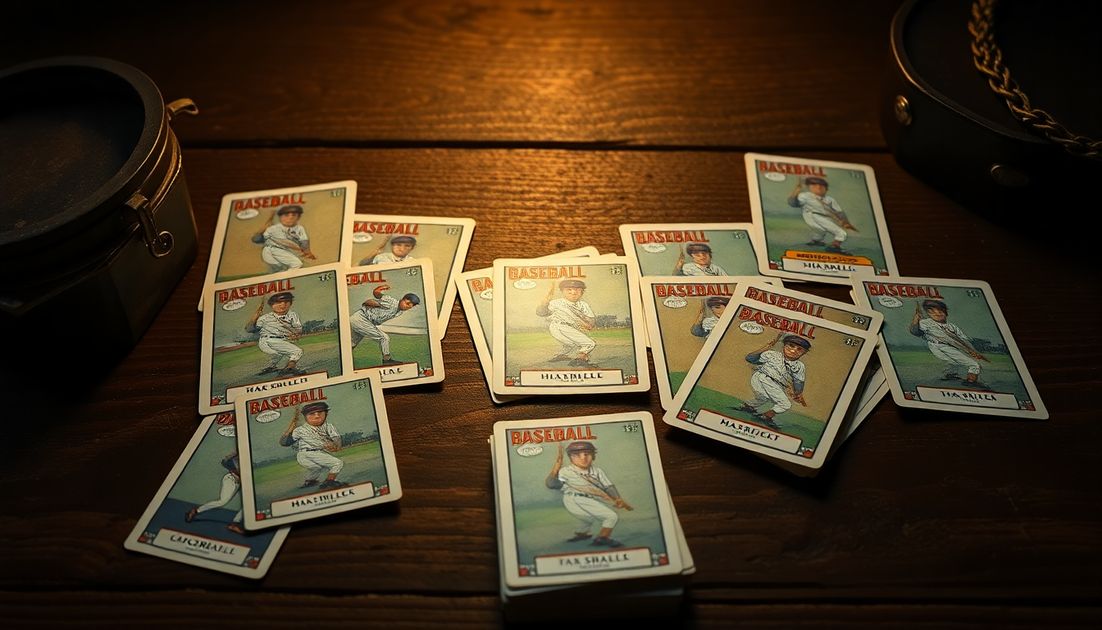
Only 23% of card shops nationwide carry graded vintage baseball cards worth more than $500, according to PSA's 2024 dealer census. Finding a quality baseball card shop near me isn't just about proximity—it's about expertise, inventory depth, and fair pricing that can make or break your collecting goals.
Your local card shop should be more than a place to buy packs. The best shops authenticate raw cards, provide grading submission services, and maintain relationships with serious collectors who consign high-value pieces. They know the difference between a 1989 Upper Deck Ken Griffey Jr. RC #1 in PSA 9 ($180) versus PSA 10 ($850), and they price accordingly.
What Makes a Baseball Card Shop Near Me Worth Visiting
Premium shops distinguish themselves through several concrete metrics. First, they maintain active eBay stores with 99%+ feedback ratings and regular sold comps. Second, they offer PSA, BGS, and CGC submission services at competitive rates—typically $20-25 per card for standard service versus $35-50 you'd pay going direct. Third, they stock singles across all eras, not just modern releases.
Quality shops also understand condition nuances that casual sellers miss. A 1952 Topps Mickey Mantle #311 in authentic PSA 3 condition sells for $15,000-18,000, while doctored copies flood the market at $8,000-12,000. Reputable dealers can spot trimming, recoloring, and surface alterations that destroy card value.
Grading Services and Authentication
Your local shop should offer direct relationships with major grading companies. PSA submissions through authorized dealers often receive faster turnaround—45 days versus 90+ for individual collectors. BGS submissions benefit from dealer bulk rates, reducing per-card costs from $35 to $25 for 9.5 potential cards.
Authentication services extend beyond grading. Quality shops identify reprints, altered cards, and counterfeits that plague vintage markets. The 1909-11 T206 Honus Wagner has hundreds of known reprints, but experienced dealers recognize paper stock differences, printing anomalies, and aging patterns that separate authentic cards from reproductions.
Inventory Depth Across All Eras
Top-tier shops maintain inventory spanning 1950s-present, not just current releases. They stock key rookie cards: 1993 SP Derek Jeter #279 (PSA 10: $2,800), 2001 Bowman Chrome Albert Pujols #264 (PSA 10: $4,200), and 2009 Bowman Chrome Mike Trout #101 (PSA 10: $8,500). Modern parallels receive equal attention—2023 Topps Chrome Julio Rodriguez Superfractor 1/1 recently sold for $18,000.
Vintage singles require specialized knowledge. A 1933 Goudey Babe Ruth #53 in PSA 6 condition commands $8,000-10,000, while PSA 7 examples reach $18,000-22,000. Quality shops understand these premiums and price accordingly rather than using outdated price guides.
How to Evaluate Baseball Card Shop Quality and Pricing
Price comparison reveals shop quality immediately. Compare their singles prices against TCGplayer market rates, eBay sold comps, and Cardmarket trends. Premium shops price within 5-10% of market rates for raw cards and 10-15% above for graded pieces—justified by authentication guarantees and return policies.
Graded card premiums tell the complete story. A 2020 Topps Chrome Luis Robert Base RC #58 in PSA 10 sells for $120-140 on eBay but commands $160-180 at quality shops due to authentication guarantees. Conversely, shops pricing PSA 9 examples at $200+ demonstrate either outdated knowledge or predatory pricing.
Check their consignment policies and commission rates. Reputable shops charge 15-25% commission on sales under $500 and 10-20% on higher-value pieces. They provide detailed sale reports, payment within 30 days, and comprehensive insurance coverage during consignment periods.
Red Flags: Overpriced Inventory and Poor Condition Assessment
Several warning signs indicate subpar shops. First, prices exceeding market rates by 25%+ suggest either outdated systems or intentional overpricing. Second, poor condition assessment—selling LP cards as NM or MP cards as LP—indicates inexperience or dishonesty.
Graded card authentication issues present serious concerns. Shops selling altered PSA slabs, counterfeit BGS labels, or questionable CGC submissions damage collector trust. Authentic PSA cases feature specific security features: holographic labels, unique certification numbers, and tamper-evident seals that quality dealers verify before purchase.
Finding Baseball Card Shops Near Me: Local vs. Online Options
Geographic location significantly impacts shop quality and inventory. Major metropolitan areas support specialized vintage dealers, while smaller markets often focus on modern releases and gaming cards. Cities like New York, Los Angeles, and Chicago host multiple premium dealers competing on inventory depth and expertise.
Rural areas present unique challenges. Local shops might excel at customer service but lack vintage inventory or grading expertise. However, they often provide better prices on modern releases due to lower overhead costs. A 2024 Topps Series 1 hobby box retails for $85-95 at rural shops versus $100-110 in major markets.
Online purchasing complements local relationships rather than replacing them. eBay sold comps provide price discovery, but local shops offer authentication services and return policies unavailable through online marketplaces. Cardmarket serves European collectors similarly, with lower fees but variable shipping costs.
Building Relationships with Local Dealers
Long-term relationships yield significant benefits. Regular customers receive first access to new consignments, preferential pricing on bulk purchases, and expert authentication services. Quality dealers remember your collecting focus—vintage rookies, modern parallels, specific teams—and contact you when relevant pieces arrive.
Consignment relationships prove especially valuable. Established customers often receive reduced commission rates, expedited processing, and marketing support for high-value pieces. A 1952 Topps Mickey Mantle #311 in PSA 8 condition might command $85,000-95,000 through established dealer networks versus $75,000-85,000 through generic online auctions.
Specialty Services: Grading Submissions and Authentication
Professional grading transforms card values but requires expertise to execute profitably. A 1979 O-Pee-Chee Wayne Gretzky #18 in raw NM condition sells for $800-1,200, while PSA 9 examples command $2,800-3,200. However, grading costs ($35-50) and potential downgrades create financial risk that experienced dealers help navigate.
Submission timing affects both costs and turnaround. PSA peak seasons (January-March, September-November) extend processing to 120+ days, while summer submissions often complete within 60-75 days. Quality shops track these patterns and advise optimal submission timing for your cards.
Authentication extends beyond major grading companies. Raw card evaluation identifies reprints, alterations, and counterfeits before expensive grading submissions. A 1954 Topps Hank Aaron #128 reprint costs $50-100 but appears identical to authentic copies worth $15,000+ in equivalent condition.
Understanding Grading Standards and Population Reports
PSA population reports reveal scarcity and premium potential. The 1952 Topps Mickey Mantle #311 shows 3,592 total PSA submissions with only 290 PSA 8+ examples—explaining the dramatic price jump from PSA 7 ($35,000) to PSA 8 ($85,000). Quality shops analyze these reports before purchase recommendations.
BGS grading standards differ significantly from PSA, particularly for vintage cards. BGS emphasizes subgrades—centering, corners, edges, surface—that can penalize otherwise excellent cards. A 1975 Topps George Brett #228 might achieve PSA 9 status but receive BGS 8.5 due to centering issues, creating a $400-600 value difference.
The Future of Local Baseball Card Shops
Physical card shops face mounting pressure from online marketplaces, direct manufacturer sales, and changing collector habits. Successful shops adapt through specialized services: authentication, grading submission management, and curated vintage inventory that online platforms struggle to provide.
Younger collectors increasingly value convenience and price transparency over traditional dealer relationships. Shops responding with online presence, social media engagement, and competitive pricing maintain relevance. Those clinging to outdated models—high markups, limited inventory, poor customer service—face inevitable closure.
The contrarian take: Physical shops provide irreplaceable authentication services that become more valuable as counterfeiting sophistication increases. A 1986 Fleer Michael Jordan #57 counterfeit recently sold for $2,800 on eBay before authentication revealed printing anomalies. Local experts prevent these costly mistakes through hands-on evaluation impossible through online photos.
Regional markets demonstrate varying resilience. Affluent suburban areas support premium dealers despite online competition, while urban markets fragment between high-end specialists and budget-focused retailers. Rural shops often transition toward gaming cards and modern sports releases where margins remain stable.
Your optimal strategy combines local relationships with online research. Use eBay sold comps and TCGplayer data for price discovery, but rely on local expertise for authentication, grading advice, and access to consigned collections. Quality dealers earn their margins through knowledge, service, and risk assumption that online marketplaces cannot replicate.
Finding the right baseball card shop near me requires research, patience, and realistic expectations. Premium shops charge fair prices for expert services, while budget options suit casual collectors seeking modern releases. Your collecting goals—vintage investments, modern parallels, complete sets—should guide dealer selection more than pure proximity.