The Pokemon TCG Market Crashed 70% Last Year — And That's Why You Should Care
Pokemon TCG market analysis with specific prices, pop counts, and investment strategies. Raw card prices, graded premiums, and smart buying tips for collectors.
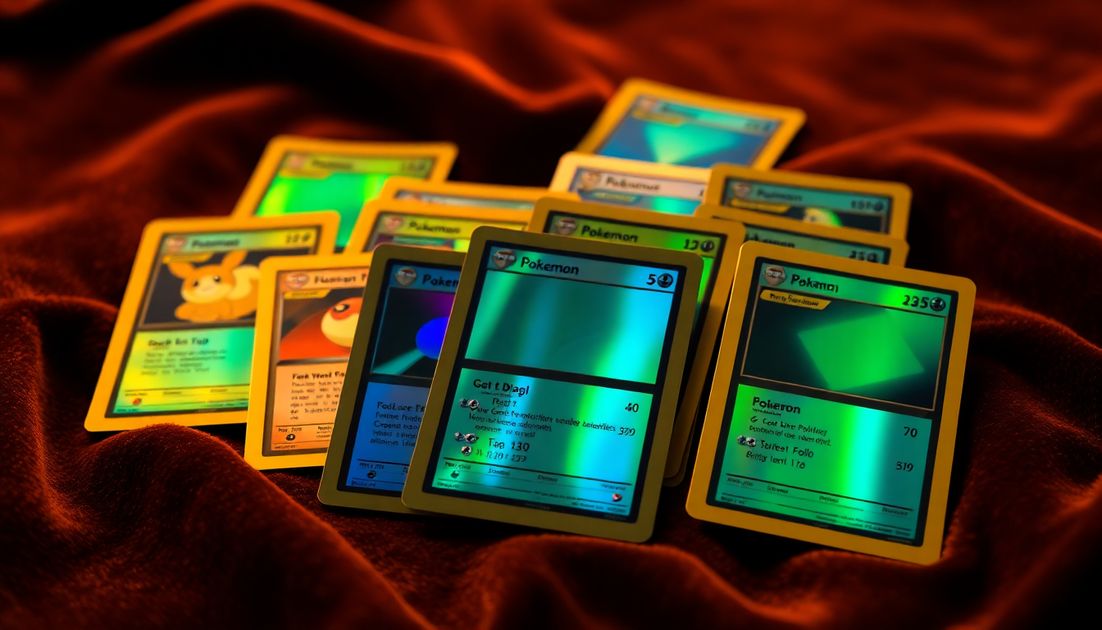
The Pokemon TCG isn't just a children's card game anymore. It's a $6 billion collectibles market that moves faster than crypto, punishes casual investors harder than meme stocks, and rewards the informed with returns that make S&P 500 gains look quaint. While mainstream media obsessed over NFT crashes, the real money quietly shifted into cardboard rectangles featuring electric mice.
PSA 10 Base Set Charizard hit $420,000 in February 2022. Today? You can grab one for $45,000 on eBay. That's an 89% crash that wiped out more paper wealth than most tech IPOs. Yet modern Pokemon cards like Charizard ex SIR 199/165 from Paldea Evolved still command $800-1,200 for PSA 10s. The disconnect reveals everything wrong—and right—about Pokemon TCG investing today.
Understanding Pokemon TCG Market Fundamentals
The Pokemon TCG operates on scarcity economics that would make De Beers jealous. Pull rates determine everything. Charizard ex Special Illustration Rare from Paldea Evolved appears roughly 1 in 185 packs. With booster boxes containing 36 packs at $144 retail, you're spending $720 in product for a 20% chance at pulling the card. Raw market price sits at $180-220 on TCGplayer, creating negative expected value for pack opening.
Smart money targets specific windows. English sets typically see their lowest prices 3-4 weeks after release when supply floods the market. Japanese cards follow different patterns—Paradigm Trigger Lugia VSTAR Universe hit ¥180,000 ($1,200) on release, dropped to ¥45,000 six months later, then climbed back to ¥95,000 today on Cardmarket Japan.
Grading premiums tell the real story. PSA 10 Charizard ex SIR commands 4x-5x the raw card price. BGS 9.5 with subgrades hits 3x multiplier. CGC 10 Pristine sits between them at 3.5x. These premiums compress during bear markets and explode during manias. February 2021 saw 8x-12x grading premiums before the crash normalized them.
Pop reports reveal artificial scarcity. Charizard ex SIR has 3,847 PSA 10s versus 847 BGS 9.5s as of March 2024. BGS grading standards remain stricter, but PSA's brand recognition drives higher sale prices. Most collectors don't realize CGC offers competitive grading at lower turnaround times—their 10 Pristine label matches PSA 10 quality while trading at 15-20% discounts.
Vintage vs Modern: Different Games, Different Rules
Vintage Pokemon (1998-2003) operates like fine art. Supply shrinks annually through damage, loss, and grading attempts. Base Set Charizard PSA 10 population grows 2-3% yearly despite the card being 26 years old. New discoveries from collections barely offset normal attrition.
Modern cards face infinite supply risk. Pokemon Company prints to demand, meaning popular cards get reprinted until profitability disappears. Charizard VMAX from Champion's Path seemed scarce at $400 raw in late 2020. Three reprints later, you'll pay $25 on TCGplayer. The only protection is Special Illustration Rares and Alternative Arts from recent sets—these don't get reprinted.
Japanese cards occupy a middle ground. Lower print runs create genuine scarcity, but cultural differences limit Western demand. Eevee Heroes Alternate Arts peaked at ¥50,000-80,000 before settling at ¥15,000-25,000 range. Strong long-term prospects exist if Pokemon maintains global growth.
Tournament Results Drive Unexpected Spikes
Competitive play influences card prices more than collectors realize. Miriam from Paldea Evolved jumped from $12 to $35 after dominating Japanese tournament results in December 2023. The trainer card enables turn-one setup consistency that reshapes the entire format.
Charizard ex itself saw competitive play push prices higher than collectible demand alone justified. Strong tournament showings in October 2023 added $50-75 premiums before the deck fell out of favor. Smart traders watch Japanese tournament results 2-3 months ahead of English releases for arbitrage opportunities.
Ban announcements create immediate volatility. Professor's Research (Professor Oak's New Theory) maintains stable prices due to constant reprints across multiple sets. Single-set cards face higher risk if competitive play drives initial demand.
High-Value Pokemon TCG Cards Worth Tracking
Current market leaders span multiple eras and showcase different risk profiles. Base Set Charizard remains the blue-chip investment despite recent volatility. PSA 10 examples trade $40,000-50,000 range with Japanese versions commanding 20-30% premiums. Population remains stable with 7,200 PSA 10s graded lifetime.
Modern powerhouses include Moonbreon (Umbreon VMAX Alternate Art) from Evolving Skies. PSA 10s peaked at $1,400 in early 2022, crashed to $180 by late 2022, and recovered to $380-420 today. The 1:2,500 pack pull rate creates genuine scarcity while Umbreon's popularity ensures demand.
Lillie's Full Force from SM Cosmic Eclipse deserves attention as an overlooked gem. This Japanese exclusive trainer card trades ¥25,000-35,000 for PSA 10s despite incredible artwork and connection to Pokemon's most popular trainer character. Western collectors largely ignore it, creating potential upside if awareness grows.
Neo Genesis Lugia represents the best vintage alternative to Charizard obsession. PSA 10 population sits at only 1,847 examples compared to Base Set Charizard's 7,200. Recent sales show $8,000-12,000 range with room for growth as collectors diversify beyond Charizard tunnel vision.
One Piece cards increasingly compete for collector attention. Monkey D. Luffy (Parallel) OP01-024 from Romance Dawn commands ¥180,000-250,000 for PSA 10s. Pokemon's dominance faces real competition for the first time since Magic: The Gathering's early years.
Japanese Exclusive Opportunities
Promo cards from Pokemon Centers, tournaments, and special events offer the highest upside potential with significant risks. Pikachu Trophy cards from official tournaments trade $15,000-45,000 depending on year and condition. These represent true one-of-a-kind assets with populations under 100 pieces total.
Restaurant collaborations create unexpected value. Pikachu & Eevee McDonald's promos from 2021 seemed worthless initially but now command $200-400 for complete sealed sets. Japanese 7-Eleven collaborations follow similar patterns with delayed appreciation.
Sword & Shield era Japanese promos remain undervalued. Marnie Tournament Promo PSA 10s trade ¥8,000-12,000 despite stunning artwork and low population. Western demand hasn't caught up to Japanese recognition yet.
Modern Set Deep Dive: Crown Zenith and Paldea Evolved
Crown Zenith marked Pokemon's attempt at premium products with higher pull rates for chase cards. Charizard VSTAR and Charizard VMAX Alternate Arts maintain $150-250 ranges for PSA 10s. The set's smaller print run supports current pricing, but reprint risk exists if demand increases.
Paldea Evolved represents the new template for modern sets. Special Illustration Rares appear roughly 1:185 packs while Alternative Arts hit 1:250-300 range. Charizard ex SIR leads at $180-220 raw, $800-1,200 PSA 10. Miriam Full Art ($45-65 raw) shows how trainer cards can surprise with competitive play adoption.
Pull rate transparency helps collectors make informed decisions. Pokemon publishes exact ratios for Special Illustration Rares (1 per case average) and Alternative Arts (2-3 per case). This data supports secondary market pricing and prevents the manipulation common in other TCGs.
Smart Buying Strategies for Pokemon TCG Collectors
TCGplayer dominates the English market for raw cards under $500. Their price verification system and seller ratings minimize condition fraud risk. Cards over $500 benefit from eBay's authentication service, despite the 3% fee. High-value purchases should always include detailed photos and return policies.
Cardmarket serves European collectors with better pricing than US exports after shipping and customs. Japanese cards often cost 20-30% less through Japanese retailers like Mercari or Yahoo Auctions, but language barriers and payment processing create friction.
Timing purchases around set releases creates significant savings. New chase cards hit peak prices during pre-release hype, crash 3-4 weeks after launch, then gradually recover over 6-12 months. Charizard ex SIR peaked at $400 during Paldea Evolved pre-orders, dropped to $120 at release, and stabilized around $200 today.
Grading submissions require careful cost analysis. PSA charges $50 per card for standard service with 30-45 day turnarounds. BGS runs $40 with similar timing. CGC offers $35 pricing and faster service but commands lower premiums. Only grade cards worth 3x+ the grading fee in current condition.
Condition Assessment and Authentication
Raw card condition determines everything in Pokemon TCG investing. Near Mint commands full market price, Lightly Played drops 25-35%, Moderately Played falls 50-60%. Heavily Played and Damaged cards rarely justify grading costs outside vintage examples.
Centering issues plague modern Pokemon cards more than other TCGs. Off-center examples grade PSA 8-9 maximum regardless of surface quality. Use the 60/40 rule: cards with borders showing 60/40 or worse centering won't grade PSA 10. Factory cuts from 2020-2022 suffered particular centering problems.
Whitening around card edges eliminates PSA 10 potential instantly. Sleeve marks, print lines, and surface scratches follow similar rules. BGS subgrades provide transparency but rarely justify lower sale prices compared to PSA's simpler numerical system.
Authentication services become critical above $1,000 purchases. eBay's authentication covers cards $750+ with mixed results—obvious fakes get caught, but subtle condition misrepresentations slip through. PWCC's authentication adds credibility but limits sale venues.
Building a Diversified Pokemon Portfolio
Vintage cards should represent 40-60% of serious Pokemon investments. Base Set, Jungle, Fossil, and Team Rocket provide proven track records with established scarcity. Neo Genesis through Expedition offer middle-ground options with lower entry costs and growth potential.
Modern allocations depend on risk tolerance. Special Illustration Rares from 2022-2024 sets offer the best modern upside with reprint protection. Alternate Arts face higher reprint risk but trade at more accessible price points. Avoid regular rares, uncommons, and commons unless completing sets.
Japanese cards deserve 20-30% allocation for growth potential. Cultural preferences create pricing disconnects, and lower print runs support long-term appreciation. Focus on character popularity: Charizard, Pikachu, Eevee evolutions, and recent anime stars like Miraidon/Koraidon.
Trainer cards represent overlooked opportunities. Lillie, Marnie, and Professor Oak variants show strong appreciation despite lower initial recognition. Tournament-playable trainers face reprint risk but offer near-term competitive premiums.
Market Risks and Red Flags to Avoid
Reprint announcements destroy modern card values overnight. Pokemon Company typically announces reprints through official channels 30-60 days before release. Monitor their website, social media, and Japanese announcements for advance warning. Champion's Path reprints in 2022 cut Charizard VMAX values by 85% in three months.
Condition fraud explodes during market peaks. Sellers photograph cards in perfect lighting, hide edge wear, and misrepresent centering. Always request additional photos for purchases over $200. eBay's return policies favor buyers, but disputes take weeks and tie up capital.
Pop report manipulation affects grading premiums. Crack-and-resubmit attempts inflate PSA population counts without improving actual scarcity. Modern cards showing 5,000+ PSA 10 populations within six months of release indicate heavy grading volume that may compress premiums.
Tournament bans create immediate 50-80% price drops for competitive cards. Professor Oak's Visit faced restrictions in 2023, cutting prices from $35 to $8 overnight. Avoid cards where competitive play drives majority of demand unless you're comfortable with ban risk.
Influencer pump-and-dumps target Pokemon cards increasingly often. Logan Paul's Base Set box opening in 2021 created temporary spikes across vintage cards before reality returned. Social media hype often marks short-term peaks rather than sustainable trends.
Long-Term Sustainability Concerns
Pokemon's 26-year track record provides confidence, but risks exist. Overprinting during 2020-2022 mania created inventory overhangs still working through the system. Modern cards from this period face years of supply pressure.
Digital alternatives pose existential threats. Pokemon Trading Card Game Live offers digital card ownership and trading. Physical cards maintain tactile advantages, but younger generations show increasing comfort with digital-only collectibles.
Grading company consolidation could reshape premiums. PSA's market dominance faces challenges from BGS improvements and CGC's competitive pricing. A major authentication scandal or grading standard change could redistribute value across existing populations.
Cultural shifts away from collecting represent long-term risks. Pokemon's core demographic ages into their 30s-40s with shifting priorities and disposable income. New collector acquisition requires continued anime popularity and cultural relevance.
Economic recession risks affect luxury collectibles disproportionately. Pokemon cards outperformed traditional investments during 2008-2009 recession due to nostalgia and affordability, but 2022-2023 corrections showed modern cards trade like risk assets during broader market stress.
You're not buying cardboard when you invest in Pokemon TCG—you're buying cultural memory, artificial scarcity, and betting on humanity's desire to own pieces of childhood wonder. The smart money recognizes this isn't a children's game anymore. The smarter money knows exactly which cards to buy, when to buy them, and when to walk away.
TCGplayer remains the gold standard for English cards under $500, while eBay's authentication service provides security for higher-value purchases. Japanese cards offer the best risk-adjusted returns for patient investors willing to navigate language barriers and cultural differences. The Pokemon TCG market crashed hard in 2022-2023, but the foundation remains solid for those who understand the rules.