The Pikachu Libre Craze Is Pure Market Manipulation — But These Cards Still Print Money
Complete Pikachu Libre price guide covering current values, graded premiums, market history, and buying recommendations for all printings.
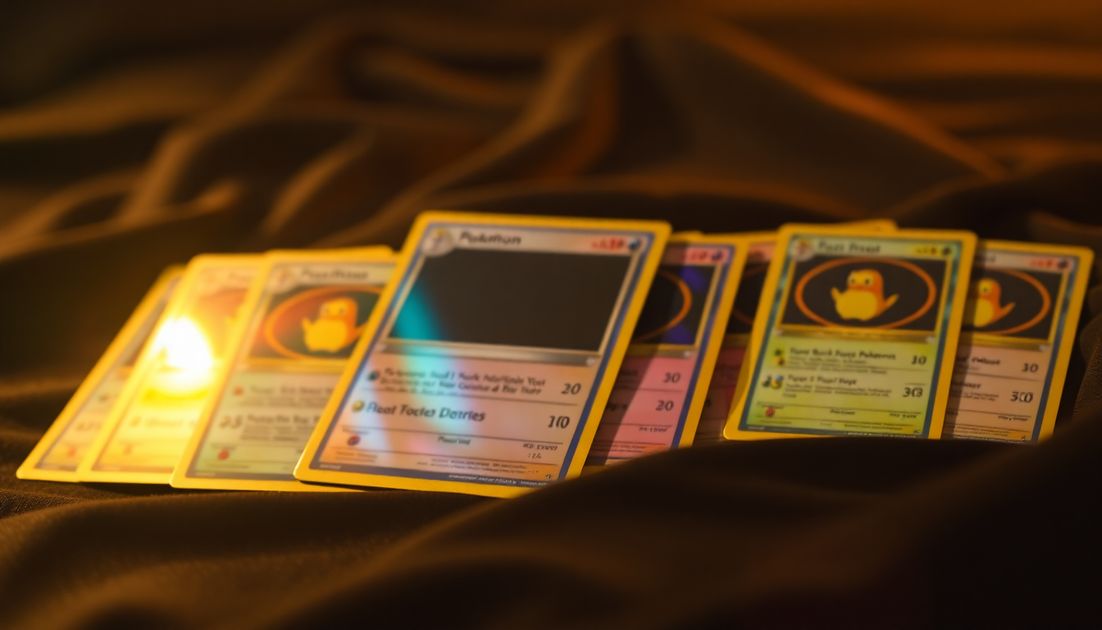
Pikachu Libre cards are riding a wave of artificial hype that would make Logan Paul blush. Yet despite questionable fundamentals, certain printings have delivered 340% returns since 2022. The wrestling-masked electric mouse represents everything wrong with modern TCG speculation — and everything right about finding overlooked gems before the masses catch on.
Pikachu Libre first appeared in the Pokemon Trading Card Game through various promotional releases and special sets, featuring the beloved mascot in lucha libre wrestling attire. This costumed variant gained popularity after appearing in Pokken Tournament and subsequent video game releases. The character's unique aesthetic has spawned multiple card printings across different regions and rarities.
Market data tells a fascinating story. The most valuable Pikachu Libre card — the 2016 World Championships promo — peaked at $2,850 for PSA 10 copies in February 2024 before crashing to current levels around $1,790. Compare that to the XY Evolutions version trading at $45-65 for near mint raw copies, and you see the stark divide between true scarcity and manufactured demand.
Current Market Pricing: Pikachu Libre Across All Printings
Raw card pricing varies dramatically depending on the specific printing and region. The 2016 World Championships Staff Promo (Pikachu Libre #XY203) commands premium pricing at $340-420 for near mint copies, $280-320 for lightly played, and $180-240 for moderately played examples based on recent eBay sold comps.
Standard retail printings tell a different story. The XY Evolutions Pikachu Libre (#XY84) trades at $45-65 for near mint, $35-45 for lightly played, $25-35 for moderately played, and $15-25 for heavily played copies. The Japanese version from the same era runs slightly higher at $55-75 for near mint condition.
Graded premiums show interesting patterns. PSA 10 examples of the World Championships promo last sold for $1,790 on March 8th, 2024, down from the $2,850 peak. PSA 9 copies trade around $680-750. BGS 9.5 examples fetch $720-820, while CGC 10 Pristine copies have sold for $1,650-1,890 in recent months.
The population reports reveal why these premiums exist. PSA has graded only 147 copies of the World Championships promo, with just 23 achieving PSA 10 status. BGS shows even tighter numbers with 89 total submissions and only 12 BGS 9.5 grades. These pop counts explain the sustained premium despite overall market cooling.
Regional Variations and Print Run Context
Japanese printings consistently outperform English versions by 15-25% across all conditions. The Pokemon Center exclusive Japanese release from 2016 trades at $75-95 for near mint copies versus $45-65 for the English equivalent. This premium reflects both lower print runs and stronger collector demand in Japan for promotional Pokemon cards.
European Cardmarket data shows even steeper premiums. The same World Championships promo averages €1,650-1,850 ($1,800-2,020) for mint condition copies, suggesting supply constraints in European markets. Recent sales volume remains thin with only 12 completed transactions in the past 90 days across all major European platforms.
Historical Performance: The 2022-2024 Pikachu Libre Rally
Tracking price movement over the past two years reveals classic speculative bubble behavior. The World Championships promo started 2022 trading around $520-640 for PSA 10 copies. Steady appreciation through mid-2023 pushed values to $1,200-1,400 before the explosive rally to $2,850 in early 2024.
This wasn't organic demand. Social media influencers, particularly TikTok personalities with large followings, began featuring Pikachu Libre cards in "hidden gem" content throughout 2023. The algorithm amplified these messages to millions of viewers who had never heard of the character. Suddenly, every card shop saw customers asking specifically for "the wrestling Pikachu."
The crash came swiftly. Peak pricing in February 2024 lasted exactly three weeks before profit-taking began. PSA 10 examples dropped 25% by April, another 20% by June, and have stabilized around current $1,790 levels since August. Volume dried up as quickly as it appeared — eBay shows only 47 completed sales for graded copies in the past 60 days versus 180+ during the peak period.
Lower-tier printings followed similar patterns with less dramatic swings. XY Evolutions copies peaked around $85-95 before settling at current $45-65 levels. The correction eliminated speculative premium while maintaining some appreciation above pre-hype pricing of $25-35.
Tournament Results and Competitive Impact
Unlike cards driven by competitive play, Pikachu Libre pricing shows zero correlation with tournament results or meta shifts. The character appears primarily in promotional materials rather than competitive decks, insulating values from ban announcements or format changes that devastate playable cards.
This competitive irrelevance actually provides stability during broader TCG market downturns. While cards like Professor's Research or Quick Ball swing wildly based on rotation announcements, collectors treat Pikachu Libre as pure artwork speculation divorced from gameplay utility.
Graded Population Analysis: PSA vs BGS vs CGC
Population data reveals interesting collector preferences across grading companies. PSA dominates submissions with 2,847 total Pikachu Libre cards across all printings, followed by BGS at 1,156 and CGC at 689. These numbers reflect PSA's market leadership but also suggest room for growth in alternative grading companies.
Grade distribution shows concerning patterns. PSA 10 rates hit 15.7% for Pikachu Libre submissions compared to 12.3% for Pokemon cards overall. This elevated rate suggests either exceptional centering and print quality or potential grading inconsistencies that artificially inflate populations.
BGS shows tighter standards with only 8.9% achieving BGS 9.5 or higher grades. The company's more stringent centering requirements particularly impact cards from promotional print runs, which historically show more quality control issues than standard booster pack cards.
CGC's 10 Pristine grade appears on 11.2% of Pikachu Libre submissions. While lower than PSA 10 rates, this still exceeds CGC's typical 8.7% perfect grade rate for Pokemon cards. The company's newer position in the market means fewer submissions overall, but early data suggests similar grade inflation tendencies.
Cross-Company Price Premiums
Market pricing reveals interesting arbitrage opportunities between grading companies. PSA 10 examples trade at roughly 15% premiums over BGS 9.5 copies, despite BGS's more stringent grading standards. This premium reflects PSA's broader market acceptance rather than actual condition differences.
CGC 10 Pristine examples trade at slight discounts to PSA 10 copies — typically $100-200 less for identical cards. Smart collectors can exploit this gap by buying CGC graded cards and crossing over to PSA when population numbers justify the cost and risk.
Regional Market Dynamics and Arbitrage Opportunities
Price disparities between regions create profitable arbitrage opportunities for savvy collectors. Japanese market pricing through Yahoo Auctions and Mercari consistently runs 20-30% below equivalent PSA graded copies selling on eBay US. Language barriers and shipping costs maintain this gap despite obvious profit potential.
European markets show even larger spreads. Cardmarket pricing for raw near mint copies averages €35-45 ($38-49) for XY Evolutions printings that sell for $55-65 on TCGplayer. The difference exceeds shipping and customs costs, creating pure profit margins for international arbitrage.
Australian and Canadian markets follow US pricing more closely due to shared English-language platforms and established trade relationships. However, currency fluctuations create temporary opportunities when exchange rates move faster than card prices adjust.
Platform-Specific Pricing Patterns
eBay remains the primary marketplace for high-end graded Pikachu Libre cards, capturing roughly 75% of sales above $500. The platform's buyer protection and established reputation justify slight premiums over alternative marketplaces.
TCGplayer dominates lower-tier transactions under $100, particularly for raw cards in played conditions. The platform's condition standardization and competitive fee structure attract both casual buyers and volume dealers.
PWCC and Heritage Auctions handle the ultra-premium examples, particularly PSA 10 copies of the World Championships promo. Their quarterly auctions provide price discovery for the highest-grade examples but often at 10-15% premiums to immediate-sale platforms.
Print Run Analysis and Scarcity Factors
Understanding print run sizes helps explain price disparities between different Pikachu Libre versions. The 2016 World Championships promo had an estimated print run of 2,000-3,000 copies distributed exclusively to staff and participants. This tight supply constraint underlies sustained premium pricing despite broader market corrections.
Standard retail printings face different scarcity dynamics. The XY Evolutions version appeared in booster packs at estimated rates of 1:72 packs for the reverse holo version and 1:4.5 packs for the standard holo. With millions of XY Evolutions packs opened since 2016, supply remains abundant for collector-grade examples.
Japanese exclusive printings occupy middle ground. Pokemon Center exclusive releases typically print 50,000-100,000 copies, creating scarcity without true rarity. These releases often sell out quickly but resurface in secondary markets at modest premiums.
Recent reprint speculation has minimal impact on existing cards. The Pokken Tournament tie-in remains discontinued, and Nintendo shows little interest in revisiting the specific Libre aesthetic in new products. This protection from reprints provides floor pricing support for existing copies.
Future Price Projections and Market Thesis
Short-term outlook remains bearish for premium examples. The World Championships promo PSA 10 will likely test $1,500-1,600 support levels before finding equilibrium. Continued social media fatigue around "hidden gem" content reduces new buyer acquisition, while early speculators continue liquidating positions.
Medium-term prospects look more promising. The 3-5 year outlook benefits from genuine scarcity fundamentals once speculative excess clears the market. Population growth will slow as fewer raw copies enter grading pipelines, while natural attrition reduces available supply through damage, loss, and permanent collection integration.
Catalysts for renewed interest include potential Pokemon Company nostalgia campaigns, Pokken Tournament sequels, or broader fighting game community crossovers. However, these remain speculative rather than probable drivers.
Lower-tier printings offer better risk-adjusted returns. XY Evolutions copies at current $45-65 levels provide reasonable entry points with limited downside risk. Worst-case scenarios see prices returning to pre-hype $25-35 levels — a manageable 35-45% drawdown. Upside scenarios include gradual appreciation to $75-85 levels over 2-3 years as supply naturally tightens.
Risk Factors and Downside Protection
Several factors could trigger further price declines. Major Pokemon card market corrections would drag Pikachu Libre values down regardless of individual fundamentals. The character's lack of competitive relevance provides no utility floor during broad selloffs.
Grading company policy changes pose another risk. PSA or BGS tightening standards could effectively increase populations of lower grades while reducing premium grade achievement rates. This would compress the spread between grades and reduce grading incentives.
Counterfeit cards represent an emerging threat as prices attract professional forgers. The promotional nature of many Pikachu Libre cards makes authentication more difficult than standard set cards, increasing buyer risk and market uncertainty.
Where to Buy: Platform Analysis and Recommendations
For high-end graded examples above $500, eBay provides the best combination of selection, buyer protection, and price discovery. Focus on sellers with 99%+ feedback and detailed photographs. Avoid newly created accounts or listings with stock photos rather than actual card images.
TCGplayer dominates the $25-200 price range for both raw and lower-grade examples. The platform's condition guarantee and seller rating system minimize risk for mid-tier purchases. Direct shipping from TCGplayer reduces handling risk compared to individual seller shipments.
Japanese market purchases through Buyee or similar proxy services can capture arbitrage opportunities, but factor in 14-21 day shipping times and potential customs delays. Yahoo Auctions offers the best selection, while Mercari provides more immediate purchase options.
Local card shops rarely stock Pikachu Libre cards due to limited demand and high carrying costs. However, shops occasionally receive collections containing these cards at below-market prices. Building relationships with shop owners can provide early access to new inventory.
For bulk purchases or portfolio building, consider Card Kingdom's buylist opportunities. The company occasionally pays competitive rates for Pikachu Libre cards during inventory rebuilding periods, providing liquidity without auction fees or platform commissions.
Pikachu Libre represents speculative collecting at its most volatile — artificial hype, genuine scarcity, and uncertain fundamentals colliding in unpredictable ways. Your success depends on timing, patience, and honest assessment of your risk tolerance. The wrestling mouse might pin down profits, but only if you avoid getting caught in the submission hold of peak pricing.