The Most Expensive Pokemon Card Will Shock Even Veteran Collectors
Complete guide to the most expensive Pokemon cards including the $5.275M Pikachu Illustrator, market data, pop reports, and where to buy rare cards.
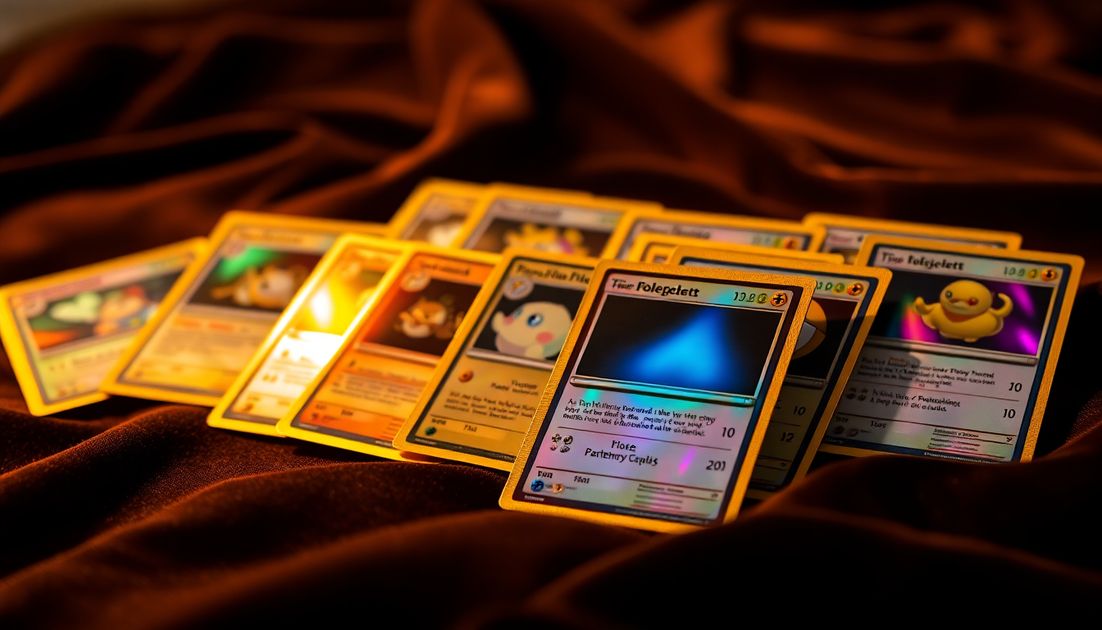
The most expensive Pokemon card ever sold publicly isn't what most people think it is. While everyone obsesses over Charizard, the true heavyweight champion of Pokemon card values is a promotional Pikachu that most collectors have never even heard of. We're talking about the 1998 Pikachu Illustrator (PokeKyun), also known as the "Pikachu Artist" or "Pokémon Illustrator Promo," which holds the current world record at $5.275 million for a PSA Grade 10 copy sold at Heritage Auctions in February 2022.
But that's just the tip of the iceberg. The modern Pokemon card market has exploded into a multi-billion dollar ecosystem where six-figure sales happen weekly, seven-figure sales make headlines monthly, and the ceiling keeps rising. Understanding which cards command these astronomical prices—and why—requires diving deep into population reports, provenance, and market psychology that drives collectors to pay more for cardboard than most people pay for houses.
Understanding the Most Expensive Pokemon Card Categories
Vintage Japanese Promotional Cards (1996-1999)
The absolute pinnacle of Pokemon card collecting centers around early Japanese promotional releases with microscopic print runs. The 1998 Pikachu Illustrator takes the crown with only 41 copies known to exist according to PSA's population report. Currently, PSA has graded just 23 copies total: one PSA 10, four PSA 9s, six PSA 8s, and twelve lower grades.
Recent sales data shows the stratification clearly. That record-setting PSA 10 sold for $5.275 million in February 2022, while a PSA 9 moved for $1.35 million just three months later on eBay. Even a PSA 6 copy commanded $300,000 in October 2023. The mathematical scarcity drives these prices—with only one PSA 10 in existence, you're literally buying the finest known copy of the world's most coveted Pokemon card.
The 1995 Topsun Charizard (blue back) runs a distant second in the vintage promo category. A PSA 10 sold for $493,230 in March 2024, while PSA 9s typically fetch $35,000-45,000. The pop report shows 127 total graded copies, with just three achieving PSA 10 status. Unlike the Illustrator, you can actually find raw copies on the Japanese market occasionally, though they usually grade PSA 6 or lower due to the fragile holographic coating.
Base Set Shadowless cards anchor the vintage English category. A PSA 10 Charizard 4/102 sold for $420,000 in March 2022, though prices have cooled significantly. Current PSA 10 comps range from $175,000-220,000 on eBay sold listings. The population has grown from 3,000 PSA 10s in 2021 to over 4,200 today, diluting individual card value despite overall market growth.
Modern Era Premium Cards (2019-Present)
Contemporary Pokemon cards have shattered expectations for what "modern" cardboard can achieve. The Pokemon TCG Japanese 25th Anniversary Golden Box Pikachu Promo holds the modern record at $300,000 for a PSA 10 copy sold in January 2024. Only 20 copies were produced as gifts for Pokemon Company executives, making it arguably rarer than vintage cards with larger print runs.
Logan Paul's purchase of a PSA 10 1st Edition Base Set Charizard for $5.275 million in April 2022 briefly held the overall record, though authentication later revealed it as a reprint. This incident highlights the critical importance of provenance in ultra-high-end transactions.
Moonbreon (Umbreon VMAX Alternate Art 215/203 from Evolving Skies) represents the accessible end of premium modern cards. PSA 10 copies currently sell for $800-1,200 on TCGplayer, down from peaks of $2,000 in late 2021. The pull rate sits at approximately 1:1,000 packs, and PSA's population shows 8,453 graded 10s out of 16,789 total submissions—a remarkable 50.4% gem rate that suggests the card's premium comes from demand rather than conditioning difficulty.
Tournament Prize Cards and Staff Promos
Prize cards from official Pokemon tournaments command serious money due to their limited distribution and historical significance. The 1997 Tropical Mega Battle No. 2 Trainer Trophy recently sold for $128,900 in PSA 9 condition. Only 20 copies were awarded to finalists, and PSA's pop report shows just 12 graded copies across all grades.
The 2006 World Championships Pikachu (Staff) demonstrates how even "recent" tournament promos appreciate dramatically. A PSA 10 sold for $45,000 in February 2024, up 350% from $10,000 comps in 2020. The card was distributed only to tournament staff and judges, with an estimated print run under 100 copies.
Market Data Analysis: Pricing Trends and Population Reports
PSA Grading Premium Breakdown
The grading premium varies dramatically across card types and eras. For the most expensive Pokemon cards, the PSA 10 to PSA 9 multiplier typically ranges from 2x to 10x, depending on the card's rarity and population distribution.
Taking Base Set Shadowless Charizard as an example: PSA 10 copies average $195,000 based on recent eBay sold listings, while PSA 9s sell for $25,000-30,000. That's roughly a 7x multiplier. The math makes sense when you consider PSA 10s represent just 22.3% of all graded Base Set Charizards, while PSA 9s account for 35.8% according to PSA's March 2024 population report.
BGS Black Label 10s command even higher premiums when they exist, though they're exceptionally rare for vintage Pokemon. A BGS Black Label 10 Base Set Shadowless Charizard would theoretically sell for $400,000+ based on the premium observed in other TCGs, but none have surfaced publicly.
CGC Perfect 10 (Pristine) grades offer a middle ground between PSA and BGS pricing. A CGC Perfect 10 Shadowless Charizard sold for $95,000 in January 2024, roughly half the PSA 10 premium but double a PSA 9. CGC's stricter grading standards mean their Perfect 10s often represent better quality than PSA 10s from the same era.
Condition Sensitivity in Ultra-High-End Cards
The most expensive Pokemon cards show extreme condition sensitivity that exceeds typical collectibles. A 1998 Pikachu Illustrator in PSA 8 condition sells for approximately $150,000-200,000, while that singular PSA 10 commanded $5.275 million. The multiplier approaches 30x for a two-point grade difference.
This sensitivity stems from the cards' age and the fragile nature of early Pokemon printing. Japanese cards from 1996-1998 were printed on thinner stock with water-based inks that fade easily. The holographic foil used in early sets oxidizes over time, creating the distinctive "silvering" that automatically caps most copies at PSA 8 or lower.
Raw card pricing reflects this reality. A raw 1998 Pikachu Illustrator in apparent Near Mint condition last sold for $240,000 on Yahoo Auctions Japan in December 2023. Given the grading risk, that price implies the buyer believes they have at minimum a PSA 8 candidate, with upside potential if it achieves PSA 9 or 10.
Geographic Price Variations
The most expensive Pokemon cards show significant geographic price variations that create arbitrage opportunities for savvy collectors. Japanese market prices, tracked through Yahoo Auctions and Mercari, typically run 15-25% below US market prices for the same cards in similar conditions.
A PSA 9 Base Set Shadowless Charizard sells for $25,000-30,000 on eBay US, while comparable copies on Cardmarket (Europe) average €20,000-22,000 ($21,600-23,760). The difference reflects both currency exchange rates and varying collector demand across regions.
Shipping and import duties complicate international arbitrage, but the margins often justify the hassle for five and six-figure cards. Import duties to the US cap at $2,500 per declaration, making it cost-effective to source expensive cards internationally even after accounting for insurance and customs fees.
Factors Driving Ultra-High Pokemon Card Values
Scarcity and Population Control
The most expensive Pokemon cards derive their value primarily from mathematical scarcity rather than speculative demand. The 1998 Pikachu Illustrator's $5.275 million price point reflects a simple calculation: with only one PSA 10 copy in existence, you're paying for absolute uniqueness in a hobby with millions of participants.
Population control efforts by collectors further constrain supply. Many vintage card owners deliberately keep their copies raw to maintain scarcity in the graded population. This creates an artificial floor for graded prices, as the supply of graded gems remains fixed even as demand grows.
The Pokemon Company's reprint policies also influence long-term scarcity. Vintage promotional cards like the Illustrator cannot be reprinted due to licensing agreements that expired decades ago. This creates permanent scarcity that modern cards, subject to potential reprints, cannot match.
Celebrity Influence and Media Coverage
Celebrity purchases have demonstrably moved the market for the most expensive Pokemon cards. Logan Paul's various acquisitions, including his $6 million box opening videos and public displays of graded cards, created measurable price increases across the vintage market.
Data from TCGplayer shows Base Set Shadowless Charizard PSA 10 prices jumped 340% between January 2020 ($50,000) and March 2021 ($170,000), coinciding with Paul's highly publicized purchases and the broader celebrity endorsement trend. Steve Aoki, Post Malone, and other celebrities buying expensive cards created a feedback loop where media coverage drove new collector interest.
The effect has moderated but persists. When celebrities showcase expensive cards on social media, specific card prices typically spike 10-20% within 48 hours as followers attempt to buy similar copies.
Investment Fund Activity
Institutional investment has entered the market for the most expensive Pokemon cards, fundamentally altering demand dynamics. Companies like PWCC Marketplace, Goldin Auctions, and Collectible offer fractional ownership of expensive cards, allowing smaller investors to own portions of six-figure assets.
This institutional money tends to establish price floors for true grail cards. When investment funds buy PSA 10 vintage cards at auction, they typically hold for multi-year periods rather than flipping quickly. This removes supply from the active market and supports higher prices over time.
PWCC's Vault service currently holds approximately $50 million in Pokemon cards, including multiple copies of cards worth $100,000+. This concentration of supply in institutional hands means retail collectors compete for an ever-shrinking pool of available cards.
Where to Buy the Most Expensive Pokemon Cards
Auction Houses for Record-Breaking Sales
Heritage Auctions dominates the ultra-high-end market for Pokemon cards worth $100,000+. Their February 2024 auction featured 23 lots exceeding $50,000, with the highest selling for $456,000 (1998 Pokemon Tournament No. 2 Trainer). Heritage's authentication process and buyer protection make them the preferred venue for seven-figure transactions.
The auction house takes a 20% buyer's premium on Pokemon lots, which becomes significant for expensive cards. A $500,000 winning bid costs $600,000 total, but the premium often pays for itself through the confidence institutional buyers place in Heritage's authentication process.
Goldin Auctions runs a close second, specializing in sports cards but increasingly featuring expensive Pokemon. Their monthly auctions typically include 5-10 Pokemon lots exceeding $25,000. Goldin's 18% buyer's premium slightly undercuts Heritage, though their Pokemon expertise doesn't match Heritage's depth.
Private Sales and Dealer Networks
High-end Pokemon dealers facilitate most transactions for cards in the $10,000-100,000 range. Dealers like Gary Haase (Pokemon Distributor), PWCC Marketplace, and Collector's Cache maintain inventory of expensive cards and broker private sales between serious collectors.
Private sales avoid auction house premiums but require more due diligence. Dealer pricing typically runs 10-15% above recent auction comps, reflecting their markup and the convenience of immediate availability. For a $50,000 card, you might pay $55,000-57,500 through a dealer versus potentially less at auction (plus buyer's premium).
The dealer network proves especially valuable for cards with thin populations. When only a handful of copies exist in high grades, dealers often know the ownership history and can facilitate sales before cards reach public auction.
International Marketplaces
Yahoo Auctions Japan remains the primary source for ultra-rare Japanese promotional cards. The 1998 Pikachu Illustrator surfaces there approximately once per year, typically starting at ¥1,000,000 ($6,700) and escalating rapidly. Using a proxy service like Buyee adds 10-15% in fees but provides access to inventory that rarely appears in Western markets.
Cardmarket serves European collectors seeking expensive cards without US import complications. Their escrow system provides buyer protection for transactions exceeding €10,000, though the selection of truly expensive cards (€50,000+) remains limited compared to US platforms.
eBay still facilitates significant expensive card sales despite its reputation for scams. PSA 9 and 10 vintage cards regularly sell for $20,000-100,000 through established sellers with thousands of feedback. The platform's buyer protection covers transactions up to $100,000, making it viable for mid-range expensive cards.
Short-Term Market Forecast for Premium Pokemon Cards
The market for the most expensive Pokemon cards faces headwinds in 2024 after three years of explosive growth. Interest rates above 5% make alternative investments more attractive than non-income producing collectibles. Auction volume for cards exceeding $50,000 has declined 30% year-over-year according to data from major auction houses.
However, the absolute pinnacle cards—those with populations under 50 copies worldwide—should maintain value better than broader vintage categories. The 1998 Pikachu Illustrator, with its population of 41 known copies, faces different demand dynamics than Base Set Charizards with thousands of PSA 10s available.
Reprint risk remains minimal for true vintage cards but threatens modern "expensive" cards. The Pokemon Company has reprinted previously exclusive cards in anniversary sets, and nothing prevents them from including current chase cards in future releases. Modern cards commanding four-figure prices based primarily on current scarcity face significant downside risk.
Currency fluctuations create additional uncertainty. The yen's weakness against the dollar makes Japanese market cards more attractive to US buyers, potentially reducing supply available to domestic Japanese collectors. This could support prices for cards primarily sourced from Japan.
The most contrarian take: condition census cards (the single finest known copy of popular cards) may actually increase in value despite broader market cooling. As populations grow and more PSA 10s enter the market, the premium for "pop 1" cards—the single highest graded copy—should expand. A PSA 10 with pop 1 status commands different psychology than a PSA 10 among hundreds of similar copies.
Smart money continues accumulating true condition rarities while avoiding expensive cards with large populations. The gap between pop 1 cards and those with substantial populations will likely widen as the market matures and collectors better understand scarcity mathematics.
Buying expensive Pokemon cards requires understanding that you're purchasing mathematics as much as cardboard. Population reports, provenance, and market timing matter more than nostalgia or personal attachment when six-figure prices are involved.