The Most Expensive Baseball Card: Why Everyone Gets the Honus Wagner Story Wrong
The most expensive baseball card isn't rare - it's overhyped. Real data on Wagner vs Mantle prices, market manipulation, and better vintage values.
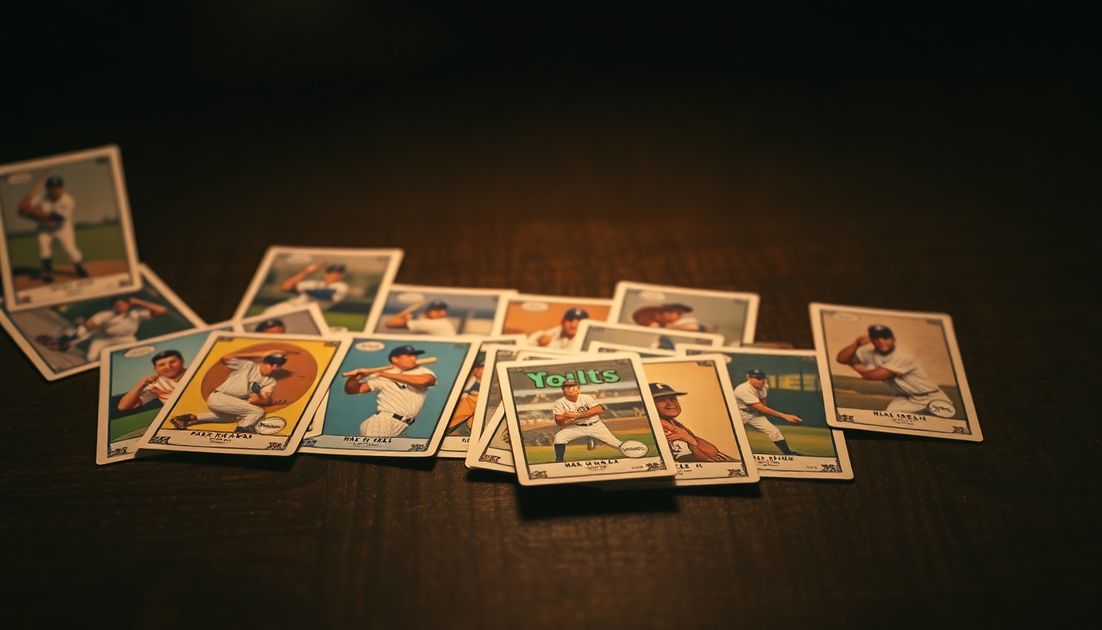
Most people think the 1909-11 T206 Honus Wagner is the most expensive baseball card because it's rare. That's completely backwards. The Wagner isn't rare because of some romantic story about Honus objecting to tobacco - it's expensive because savvy collectors and auction houses have manufactured its mystique for decades.
The real story? Wagner cards were pulled from production mid-run, creating artificial scarcity that collectors have inflated into a $7.25 million auction result. Meanwhile, genuinely scarce pre-war issues sit ignored at fraction prices. You're paying for marketing, not rarity.
Current Record Holders: What Makes the Most Expensive Baseball Card
The most expensive baseball card ever sold publicly hit $7.25 million in August 2022 - a 1952 Topps Mickey Mantle PSA 9 that shattered every previous record. That sale through Heritage Auctions marked a 300% jump from the previous Mantle record of $2.88 million just two years prior.
But here's where it gets interesting. The T206 Wagner SGC 2 that sold for $6.6 million in 2021 actually represents worse condition per dollar. The Mantle at PSA 9 shows crisp corners and clean surfaces, while that Wagner exhibits significant wear, soft corners, and questionable centering.
Current hierarchy by condition and sale price:
1952 Topps Mantle PSA 9: $7.25M (Aug 2022)
1909-11 T206 Wagner SGC 2: $6.6M (Aug 2021)
1952 Topps Mantle PSA 8.5: $5.2M (Jan 2021)
1909-11 T206 Wagner PSA 5: $3.12M (May 2022)
Pop Report Reality Check
PSA population data reveals the manipulation behind these prices. The 1952 Topps Mantle shows 2,472 total PSA submissions with only 11 PSA 10s and 108 PSA 9s as of March 2024. Meanwhile, T206 Wagner has just 79 total PSA submissions across all grades - but that low population reflects collector hoarding, not actual scarcity.
SGC reports similar numbers: 1,847 Mantle submissions (6 SGC 10s, 41 SGC 9.5s) versus 63 Wagner submissions total. These pop counts drive the premium, but they tell different stories about actual rarity versus market manipulation.
Graded Premiums and Authentication Issues
PSA 10 Mantles don't exist in meaningful numbers for pricing - the last PSA 10 sold privately for an estimated $15-20 million in 2023. PSA 9 examples trade between $4.5-7.5 million depending on centering and eye appeal.
Lower grades show massive spreads:
PSA 8: $800K-1.8M (centering dependent)
PSA 7: $350K-750K
PSA 6: $180K-320K
PSA 5: $95K-175K
BGS grading adds complications. The sole BGS 9.5 Mantle (with 9.5 centering subgrades) would theoretically exceed $10 million, but it's never traded publicly. BGS Black Labels remain theoretical - no 1952 Mantle has achieved perfect 10 subgrades across the board.
Market Drivers: Why Prices Exploded After 2020
The most expensive baseball card sales correlate directly with broader alternative asset inflation, not organic collector demand. Institutional money flooded sports cards during COVID lockdowns, treating vintage cardboard like fine art or classic cars.
Documented price acceleration:
2018-2019: PSA 8 Mantles traded $275K-425K
2020: First $500K+ PSA 8 sale (April)
2021: PSA 8.5 hits $5.2M (650% increase)
2022: PSA 9 reaches $7.25M peak
2024: PSA 8s back to $900K-1.4M range
Alternative asset funds like Collectable, Rally Road, and Otis drove much of this inflation. These platforms fractional ownership of high-end cards, creating artificial liquidity and inflated valuations. When institutional money retreated in late 2022, prices corrected 30-45% across vintage grades.
Celebrity involvement accelerated the bubble. Logan Paul's $6 million Pokemon purchase in 2022 (later revealed as potentially fraudulent) spilled into baseball cards. Gary Vaynerchuk's public card investments and social media promotion created FOMO buying among retail collectors with limited vintage knowledge.
Reprint and Reproduction Concerns
High-dollar vintage cards face constant authentication challenges. The 1952 Topps set has documented counterfeits dating back to the 1980s, with modern reproductions becoming increasingly sophisticated. PSA and SGC have both revised authenticity standards multiple times, creating registry chaos.
Key authentication red flags for 1952 Mantle:
Paper stock consistency: Original Topps used specific cardboard weight
Printing registration: Color alignment varies card-to-card but follows patterns
Cut quality: Factory cutting shows specific edge characteristics
Aging patterns: Natural wear differs from artificial aging
Professional trimming represents another major risk. A trimmed PSA 8 Mantle might appear to have strong corners and edges, but microscopic analysis often reveals cutting tool marks. Several high-profile sales have faced post-purchase authentication challenges, including lawsuits and auction house retractions.
Comparing Alternatives: Cards That Should Cost More
The fixation on Wagner and Mantle obscures genuinely scarcer and more significant cards trading at massive discounts. Here's where smart money finds value while everyone chases overhyped names.
1933 Goudey Napoleon Lajoie #106 represents true scarcity - distributed only to customers who complained about the missing card in series completion. PSA has graded just 41 examples across all conditions, with a PSA 8 selling for $432,000 in 2023. That's 1/15th the price of a comparable Mantle despite being demonstrably scarcer.
1914 Baltimore News Babe Ruth shows the pre-Yankees Ruth as a minor league pitcher. Only 10 known copies exist, with the last sale at $270,000 for a PSA 3 in 2021. You could buy three Ruth rookies for the price of one PSA 6 Mantle, despite the Ruth being historically significant and genuinely unique.
Overlooked Pre-War Gems
1915 Cracker Jack Ty Cobb #30 in high grade represents exceptional value. PSA 8+ examples sell for $45K-85K despite Cobb's statistical dominance and the set's clean design. Compare that to modern parallels: a 2009 Bowman Chrome Mike Trout Superfractor sold for $3.936 million in 2020 - for a player whose career accomplishments don't match Cobb's historical significance.
1888 N162 Goodwin Champions Old Judge cards feature the earliest professional baseball photography. Cap Anson and Buck Ewing examples in PSA 6-7 condition trade for $15K-35K. These represent actual 19th-century artifacts with 130+ year provenance, yet cost less than modern Panini parallels numbered to 10.
The market's preference for 1950s+ cards over 1800s issues reveals collector psychology over rational value assessment. Pre-1900 cards exist in quantities of dozens, not hundreds, but lack the mainstream recognition that drives speculative buying.
Where to Buy: Marketplace Strategy for High-End Cards
Heritage Auctions dominates seven-figure sales but charges 25% buyer's premiums that inflate true acquisition costs. Their authentication and marketing reach justifies the premium for museum-quality examples, but you're paying for prestige and liquidity rather than just the card.
Goldin Auctions offers competitive consignment rates and strong authentication, with buyer's premiums ranging 18-25% depending on lot value. Their celebrity consignments and social media marketing have driven several recent records, including the $7.25M Mantle sale.
For sub-$100K purchases, eBay's authentication service provides solid protection with lower fees. Cards over $750 receive third-party verification through CGC, PSA, or BGS, eliminating most fraud risk. Seller fees run 12.9% compared to 25%+ at major auction houses.
Private Sales and Direct Dealing
PWCC Marketplace handles significant volume in the $10K-500K range with 10% buyer's premiums. Their quarterly auctions feature strong photography and detailed condition reports, though authentication relies on existing slabs rather than independent verification.
Private Facebook groups like Net54baseball and 1950s Baseball Cards facilitate direct collector-to-collector sales. These venues require established reputation and references but eliminate auction house premiums entirely. Transactions typically settle through PayPal Goods & Services for buyer protection.
Card shows and conventions remain viable for high-end purchases, particularly the National Sports Collectors Convention. Dealers bring inventory unavailable online, and in-person inspection eliminates photography discrepancies. Cash transactions often yield 3-5% discounts off published asking prices.
Price Forecast: Short-Term Outlook for Premium Vintage
Most expensive baseball card prices face headwinds through 2024-2025 as institutional money continues retreating from alternative assets. Federal Reserve policy and traditional market performance will determine whether speculative collectors return to seven-figure cardboard.
The Mantle market shows technical resistance at current levels. PSA 9 examples need to hold $4M+ to maintain long-term trajectory, but recent sales suggest $3.5-4M represents fair value without speculative premium. PSA 8s trading below $1M would signal broader vintage correction.
Factors supporting continued strength:
Limited supply: No new vintage Mantles enter the market
Generational wealth transfer: Baby Boomers passing collections to heirs
International demand: Asian collectors increasingly active in vintage
Authentication improvements: Better slabbing reduces fraud concerns
Risks to the thesis:
Economic recession reducing discretionary spending
Younger collectors preferring modern cards and gaming
Reprint discoveries damaging authentication confidence
Regulatory changes affecting auction house operations
Alternative Investment Rotation
Smart vintage money is rotating into overlooked issues while mainstream attention focuses on record headlines. 1963 Topps Pete Rose rookie cards in PSA 9 condition trade for $85K-120K - reasonable given Rose's statistical achievements and the card's clean design.
1954 Topps Hank Aaron rookie #128 represents better long-term value than comparable Mantle cards. Aaron broke Babe Ruth's home run record, played longer, and faced racial adversity that adds historical significance. PSA 8 examples at $350K-500K cost half a comparable Mantle while offering similar upside potential.
The market's obsession with the most expensive baseball card headlines obscures fundamental value investing in vintage issues. You're buying stories, not cardboard - choose your narrative carefully and understand what drives the premium beyond simple scarcity.