Sports Cards Are Free Money - Debunking the Modern Myth
Sports cards aren't free money despite social media claims. Learn real market analysis, pop reports, pricing data, and where successful collectors actually buy
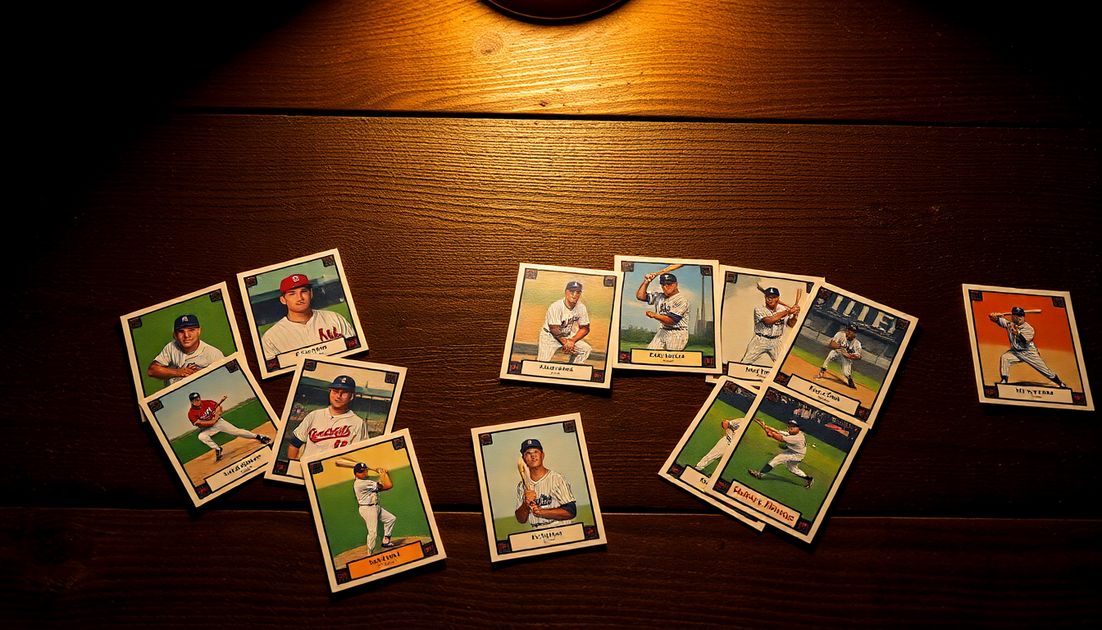
You've heard the claim countless times on Twitter and TikTok: "Sports are free xyz" – meaning sports cards are guaranteed profits waiting to be collected. This couldn't be further from reality. The sports card market operates like any other speculative asset class, complete with crashes, oversaturation, and plenty of ways to lose your shirt.
Modern sports cards carry significant risk alongside their potential rewards. 2021's bubble taught collectors harsh lessons about FOMO buying and chasing hype. Boxes of 2021 Prizm Football that peaked at $800 now sell for $320 on TCGplayer. Raw Ja Morant rookies from Prizm that hit $400 in February 2022 trade for $45 today. The market doesn't hand out participation trophies.
Yet opportunities still exist for informed collectors who understand pricing mechanics, population reports, and market cycles. Success requires treating cards like the collectible securities they've become – not lottery tickets.
Understanding Modern Sports Card Valuations
Card values depend on multiple interconnected factors that casual collectors often miss. Print runs matter more than star power in many cases. The 2019-20 Prizm Zion Williamson base rookie (#248) has a PSA 10 population of 14,847 cards. Compare that to his Silver Prizm parallel at 2,156 PSA 10s, explaining the $180 vs $850 price gap.
Player performance drives short-term volatility but long-term fundamentals matter more. Josh Allen's 2018 Prizm rookie spiked to $120 during Buffalo's 2020 playoff run, then settled back to $65 as supply caught up with demand. Meanwhile, his Silver Prizm maintained steady growth from $300 to $480, supported by lower population numbers.
Grading premiums vary dramatically by era and scarcity. Modern cards (2018-present) see modest PSA 10 bumps – often 2-3x raw Near Mint pricing. Vintage cards command exponentially higher premiums. A 1979 O-Pee-Chee Wayne Gretzky rookie in PSA 8 sells for $3,200 while raw copies in similar condition bring $800.
Pop Report Analysis for Investment Decisions
Population data from PSA, BGS, and SGC reveals market dynamics invisible to surface-level analysis. Take 2020-21 Prizm Basketball – the most submitted modern set in grading history. LaMelo Ball's base rookie has 18,943 PSA submissions with 6,247 achieving PSA 10 status (33% grade rate). His Silver parallel shows 2,891 submissions yielding 421 PSA 10s (14.6% rate).
These numbers explain pricing structures that confuse new collectors. Ball's base PSA 10 trades for $85 while Silver PSA 10s command $380. The 6x price difference reflects genuine scarcity, not arbitrary market manipulation.
BGS Black Label cards occupy their own tier entirely. A BGS 10 Black Label typically brings 3-5x the PSA 10 equivalent. Patrick Mahomes' 2017 Prizm Silver rookie achieved BGS Black Label status just 23 times from over 800 submissions. Recent sales hit $12,500 while PSA 10 copies trade around $2,800.
Condition Sensitivity Across Eras
Modern card condition tolerance differs drastically from vintage standards. Post-2010 cards show extreme condition sensitivity due to pristine pack-fresh expectations. A 2020 Prizm card in Light Play condition might bring 20% of Near Mint value. The same condition drop on a 1986 Fleer Michael Jordan rookie reduces value by only 40-50%.
This creates opportunities in vintage markets where collectors accept natural aging. A 1957 Topps Mickey Mantle in PSA 6 condition recently sold for $18,500 on Heritage Auctions. The same card in PSA 8 brought $47,000 – a 2.5x premium for two condition grades. Modern parallels show 5-10x differences between PSA 8 and PSA 10.
Breaking Down Sports Are Free XYZ Investment Strategies
The "sports are free money" mentality typically manifests in three flawed approaches: case breaking, rookie speculation, and vintage hunting. Each carries specific risks that social media rarely discusses.
Case breaking appeals to gamblers more than investors. A 2023 Prizm Football hobby box costs $485 on Blowout Cards. Expected value calculations show break-even scenarios requiring multiple hits. The Bryce Young base rookie brings $15, C.J. Stroud $18, Anthony Richardson $12. You need significant parallel hits or autographs to justify box pricing.
Successful breakers understand variance and bankroll management. Opening single boxes resembles casino gambling. Volume breakers buy cases (12 boxes) to smooth out hit rates, then sell excess base cards in lots. This approach requires $6,000+ capital and established selling channels.
Rookie Card Speculation Pitfalls
Rookie speculation drives much of the "free money" narrative, but results tell a different story. 2021 NFL rookies demonstrate the harsh reality. Trevor Lawrence Prizm rookies peaked at $85 in September 2021, now trade for $22. Mac Jones fell from $45 to $8. Jaylen Waddle dropped from $35 to $12.
Only transcendent talents maintain long-term premium pricing. Tom Brady's 2000 Playoff Contenders Championship Ticket autograph rookie has grown from $8,000 (2010) to $65,000 (2024) despite massive population increases. His combination of sustained excellence and championship pedigree creates lasting demand.
Draft position and team situation matter more than college stats. Justin Herbert's 2020 rookies initially traded below Tua Tagovailoa despite superior NFL performance expectations. Herbert's late first-round selection depressed initial pricing until his Rookie of the Year campaign. Smart money recognized the value discrepancy early.
Current opportunities exist in overlooked positions. Punter Tommy Townsend's 2020 rookies trade for $3-5 despite consistent Pro Bowl performance. Kickers and punters represent contrarian plays for collectors seeking undervalued NFL talent.
Vintage Market Dynamics
Vintage cards offer different risk/reward profiles than modern issues. Supply constraints create natural floors, but authentication concerns and condition disputes add complexity. The 1952 Topps Mickey Mantle market exemplifies these dynamics.
PSA has graded 2,742 copies of the iconic card across all conditions. PSA 8 examples trade in the $175,000-$225,000 range based on recent Heritage sales. PSA 9 copies command $750,000-$1,200,000. Only six PSA 10 examples exist, with the last public sale reaching $12.6 million in 2022.
Trimming and restoration pose significant risks in vintage markets. Modern authentication technology identifies most alterations, but sophisticated fakes occasionally slip through. A PSA 8 1952 Mantle discovered to be trimmed loses 80-90% of its value instantly. Due diligence includes reviewing cert numbers and pop report submission dates.
Regional variations create arbitrage opportunities. The same card often trades at different prices on eBay versus Heritage versus Memory Lane. A 1969 Topps Reggie Jackson rookie in PSA 8 might bring $850 on eBay but $950 at Heritage due to different buyer demographics.
Market Timing and Sports Are Free XYZ Cycles
Sports card markets move in predictable cycles tied to seasons, playoffs, and hobby box releases. Understanding these patterns helps optimize buying and selling decisions.
Football season drives autumn peaks in NFL card values. September through January typically sees 15-25% increases in star player cards as casual fans re-engage. Playoff runs amplify this effect. Bills cards spiked 40% during their 2020-2022 playoff appearances before normalizing in spring.
Basketball follows similar patterns but with extended seasons. NBA rookies peak during March Madness and again during playoff runs. Ja Morant's 2019-20 rookies hit local highs in March 2022 ($180 for Prizm Silver) during Memphis's playoff push, then crashed to $45 after his suspension issues.
Baseball cards show more muted seasonal effects but respond strongly to milestone achievements. Juan Soto's 2018 rookies doubled from $120 to $240 during his 2019 World Series run, then settled at $180. The "World Series bump" typically adds 20-30% temporarily to championship team stars.
Print Run Impact on Valuations
Modern print runs dwarf vintage quantities, creating different investment dynamics. 2023 Prizm Basketball likely printed 10-15x more units than 2019-20 Prizm despite similar retail pricing. This dilutes individual card values across larger populations.
Panini's exclusive NBA license (ending in 2026) adds urgency to current products. Topps's return to basketball could disrupt established hierarchies and create opportunities in overlooked Panini sets. Smart collectors are accumulating 2024-25 Prizm and Select as potential "last dance" products.
International markets offer arbitrage potential. European collectors on Cardmarket often value different players and sets. Soccer cards trade at premiums on US platforms while American sports struggle internationally. A Luka Dončić Prizm rookie brings $280 on TCGplayer but €190 ($205) on Cardmarket.
Where to Buy Sports Cards for Maximum Value
Marketplace selection dramatically impacts acquisition costs and selling potential. Each platform serves different collector segments with varying fee structures and buyer demographics.
eBay remains the largest marketplace but charges steep fees. Seller fees hit 13.25% including payment processing. Buyer demographics skew toward casual collectors willing to pay retail premiums. Auctions often exceed fair market value during prime-time endings (Sunday evenings).
TCGplayer offers better pricing for raw modern cards. Seller fees average 10-11% with lower listing requirements. The platform's focus on gaming cards creates opportunities in sports categories where competition stays lighter.
COMC (Check Out My Cards) provides storage and grading services but adds 20% selling commissions. Their strength lies in international shipping and long-tail inventory management. Collectors with deep inventories benefit from their consignment model.
Direct Facebook group sales eliminate platform fees but require established reputations. Groups like "Sports Card Marketplace" and "Basketball Card BST" facilitate peer-to-peer transactions. PayPal Goods & Services provides buyer protection despite 3% fees.
Local card shops offer immediate liquidity at wholesale pricing. Expect 50-70% of market value for quick sales. Shops excel for bulk lots and lower-end inventory that doesn't justify online selling fees. Building relationships with shop owners creates opportunities for better pricing and first dibs on collections.
Heritage Auctions commands premium pricing for vintage and high-end modern cards. Consignment minimums start at $500 but reach affluent collector demographics. Their authentication services and marketing reach justify 20-25% selling fees for appropriate material.
The sports card market rewards knowledge, patience, and realistic expectations. Cards aren't free money – they're collectible assets requiring research, timing, and risk management. Success comes from understanding population reports, market cycles, and platform dynamics rather than chasing social media hype.
Current opportunities exist in overlooked vintage sets, international arbitrage, and contrarian player speculation. Avoid the "sports are free xyz" mentality and approach collecting like the serious investment market it has become.