PSA Grading Cost Breakdown: What You'll Actually Pay to Grade Your Cards in 2024
Complete PSA grading cost breakdown for 2024. Real pricing examples, hidden fees, bulk discounts, and when grading actually pays off.
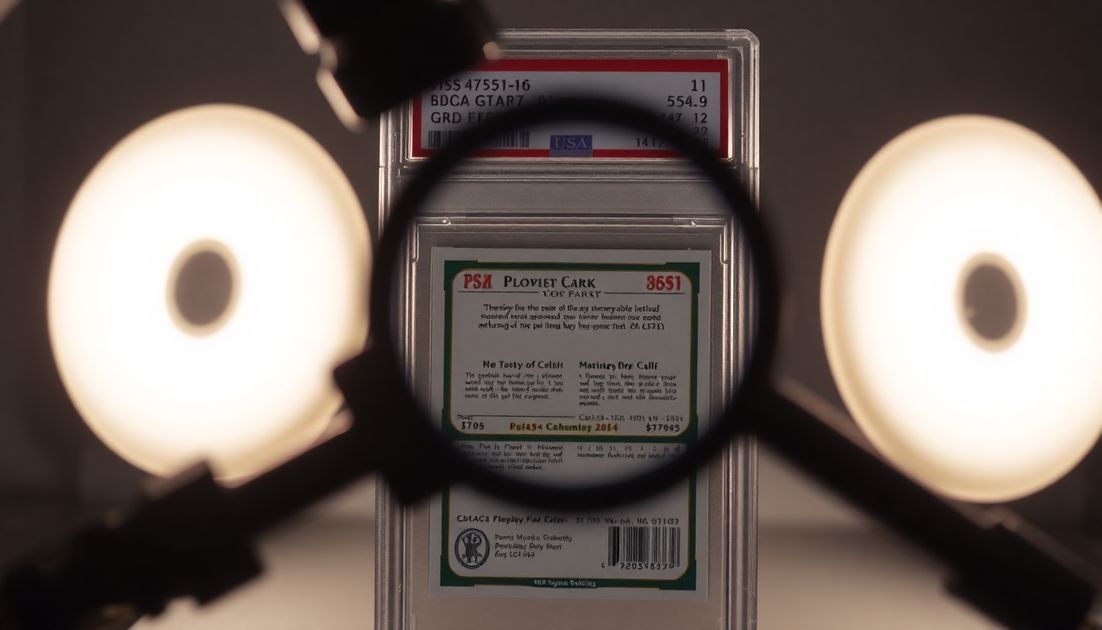
PSA has processed over 80 million cards since 1991, yet most collectors still get blindsided by the true cost of professional grading. Beyond the obvious submission fees, you're looking at shipping, insurance, potential return shipping charges, and opportunity costs that can easily double your initial budget.
Understanding how much does it cost to get a card PSA graded goes far beyond PSA's published price chart. You need to factor in service levels, bulk discounts, membership requirements, insurance thresholds, and the hidden costs that separate smart submitters from those who learn expensive lessons.
PSA Grading Service Levels and Pricing Structure
PSA operates on a tiered pricing system based on declared card value and turnaround time. Regular service costs $25 per card for items valued up to $499, with an estimated 65-day turnaround. Express service jumps to $75 per card (up to $2,499 value) for 20-day processing, while Super Express hits $200 per card for 5-day service.
The Economy service at $15 per card seems attractive until you read the fine print: 130-day turnaround and a $199 maximum declared value. Submit a Charizard Base Set shadowless that grades PSA 9 and sells for $800? You've violated the value limit and face potential upcharges or rejection.
Value Plus service ($40, up to $999 declared value) offers the sweet spot for most modern chase cards. A Liliana of the Veil from Innistrad or Pikachu VMAX Rainbow Rare fits comfortably within this tier's parameters.
Bulk submissions require minimum quantities but offer significant per-card savings. Bulk Economy drops to $12 per card for 20+ cards, while Bulk Plus ($18 per card) accommodates higher values with 50+ card minimums.
Membership Requirements and Hidden Costs
PSA requires an annual Collectors Club membership ($99) or Premium membership ($199) to submit cards directly. The Premium tier includes 12 Economy vouchers, essentially paying for itself if you grade monthly. Skip the membership and you'll pay third-party submission services $3-8 per card in handling fees.
Shipping costs vary dramatically based on location and insurance requirements. Domestic shipping typically runs $15-25 via FedEx or UPS with tracking. International submissions face $40-80 shipping charges plus potential customs delays and duties.
Insurance becomes mandatory for valuable submissions. PSA requires coverage for the full declared value, adding 1-3% of your total submission value. A $10,000 submission could cost an additional $300 in insurance alone.
How Much Does It Cost to Get a Card PSA Graded: Real-World Examples
Single card submission scenario: You're grading a Charizard ex SIR 199/165 from Pokemon 151. Using Value Plus service ($40), membership ($99 annual), shipping ($20), and insurance on a $300 declared value ($9), your total hits $168 for one card. That's a $128 premium over the base grading fee.
Bulk submission strategy: Twenty Pokemon 151 cards at Bulk Plus pricing ($18 each) totals $360 in grading fees. Add membership ($99), shipping ($25), and insurance ($15 for moderate values), reaching $499 total. Your per-card cost drops to $24.95 including all expenses.
High-value single card: A Black Lotus from Alpha requires Super Express ($200) due to value and time sensitivity. Membership ($99), expedited shipping ($35), insurance on $15,000 value ($450), and handling fees push total costs toward $800. You're paying $600 in ancillary costs beyond the grading fee.
These examples ignore opportunity costs. Your Charizard sits in PSA's facility for 65-130 days during Regular or Economy service. Market prices shifted $200+ on many Pokemon 151 cards during Q4 2023. Missing a selling window costs more than service upgrades.
Comparing PSA vs BGS vs CGC Grading Costs
BGS (Beckett Grading Services) charges $20 for Economy (45 days), $50 for Standard (20 days), and $150 for Express (5 days). BGS doesn't require membership fees, immediately saving $99 annually. However, BGS 9.5 cards typically sell for 10-20% less than PSA 10s in most categories.
CGC (Certified Guaranty Company) offers the most aggressive pricing: $16 Economy, $25 Standard, $60 Express. No membership requirements. CGC 10 Pristine grades command premiums on certain modern cards, particularly One Piece and Dragon Ball Super.
SGC (Sportscard Guaranty) focuses on vintage sports cards with $15 Economy pricing. For pre-1980 baseball cards, SGC grades often match PSA values while costing significantly less to obtain.
The grade premium matters more than submission costs for valuable cards. A Pokemon Base Set Charizard graded PSA 10 sells for $6,000+, while the same card in BGS 9.5 brings $4,200-4,800. That $1,200+ premium easily justifies PSA's higher costs and longer waits.
International Grading Options and Costs
Cardmarket's European presence makes PSA submissions from EU countries expensive due to shipping and customs. BGS maintains European operations, reducing costs for international collectors.
CGC's growing acceptance in Asian markets provides alternatives for collectors in Japan, Korea, and Southeast Asia. Shipping costs to CGC remain lower than PSA for Pacific region submitters.
Third-party submission services like Ludkins Collectibles or Card Collective handle international logistics but add $5-12 per card in handling fees. You're trading cost for convenience and reduced shipping risks.
Maximizing Value: When Grading Makes Financial Sense
Modern card thresholds: Don't grade cards worth less than $50 raw unless you're confident in gem mint condition. A $30 card needs PSA 10 status to break even after $40+ in total costs. Pokemon Paradox Rift chase cards illustrate this perfectly - most alternate arts need PSA 10 grades to justify submission costs.
Vintage card calculations: Pre-2000 cards offer better grading economics due to condition rarity. A 1998 Charizard Base Set Unlimited in Near Mint condition costs $40 to grade but adds $200+ in PSA 9 premium. The math works even with conservative grading outcomes.
Population report analysis reveals grading opportunities. Cards with low PSA 10 populations (under 100) command significant premiums. Check PSA's population report before submitting - a card with 2,000 PSA 10s faces different market dynamics than one with 50.
Tournament and anime catalysts create temporary grading rushes. Ash's Pikachu cards spiked during Pokemon's 25th anniversary. Smart collectors graded these cards before the hype, capitalizing on increased demand and population scarcity.
Bulk Grading Strategies and Economics
50+ card submissions unlock meaningful per-card savings. Organize submissions around set releases or collection themes. Submit your entire Pokemon 151 chase card collection together rather than piecemeal submissions.
Group submissions with local collectors reduce individual costs. Split membership fees, shipping, and insurance across multiple participants. A 100-card group submission might cost $20 per card including all expenses.
Timing submissions around PSA promotions saves money. PSA occasionally offers reduced pricing during slower periods. Black Friday 2023 featured $15 Standard service promotions.
Pre-screening conditions prevents costly mistakes. Cards with centering issues, corner wear, or surface scratches rarely grade 9+. Use a jeweler's loupe and compare against PSA's grading standards before submitting questionable cards.
Market Impact and Future Pricing Trends
PSA raised prices 25% in early 2023 due to submission volume increases. Turnaround times stretched to 150+ days for Economy service during peak periods. The company continues investing in capacity but struggles with demand management.
Grading alternatives gain market share as PSA costs rise. CGC's aggressive pricing and faster turnaround attract cost-conscious collectors. BGS maintains loyalty among vintage sports card collectors despite higher PSA premiums.
Authentication concerns justify grading costs for expensive cards. Counterfeit Pokemon cards flood marketplaces, making raw card purchases risky. A $500 grading investment protects against a $5,000 counterfeit loss.
Digital marketplaces increasingly require graded cards for high-value transactions. eBay's authenticity guarantee program covers graded cards differently than raw cards. PWCC and Heritage Auctions primarily sell graded material.
The grading economy faces headwinds from economic uncertainty and hobby cooling. Discretionary spending on grading services contracts during recessions. However, graded card premiums often increase during market stress as collectors seek authenticated assets.
You'll pay $40-200+ per card for comprehensive PSA grading when accounting for all costs. The investment makes sense for cards worth $100+ raw or those with strong grade premium potential. Budget $50 minimum per card for realistic total costs, including membership, shipping, and insurance.