Pokemon Cards Value: Why Your Vintage Collection Isn't Automatically Worth Millions (And What Actually Is)
Complete Pokemon cards value guide covering prices, grading premiums, market trends, and investment risks with specific examples and data.
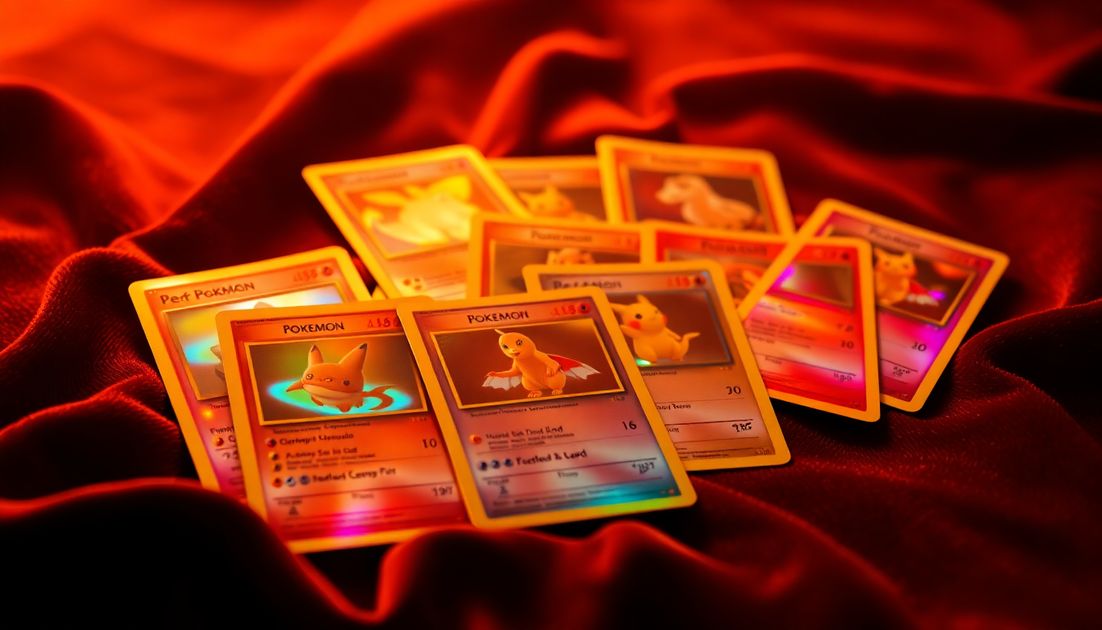
Most collectors believe their childhood Pokemon cards are sitting goldmines worth thousands. The harsh reality? Your played condition Base Set Charizard from 1998 isn't funding your retirement. Pokemon cards value depends on precise condition standards, print variations, and market timing that most casual collectors completely misunderstand.
That said, the Pokemon card market has exploded to unprecedented heights. PSA 10 1st Edition Base Set Charizards sold for $350,000+ in 2022. Even modern cards like Charizard ex SIR 199/165 from Paldea Evolved reached $1,400 for PSA 10s during peak hype. Understanding which factors drive real value separates profitable collecting from nostalgic wishful thinking.
How Pokemon Cards Value Actually Works: Condition and Print Run Reality
The Pokemon market operates on brutal condition sensitivity. A Base Set Charizard in Near Mint condition might fetch $800-1,200 on TCGplayer. The same card in Light Play drops to $400-600. Moderately Played? You're looking at $200-350. Heavily Played brings $100-200. Damaged condition barely moves for $50-100.
Grading amplifies these differences exponentially. PSA 10 Base Set Unlimited Charizards consistently sell for $3,000-4,500 on eBay. PSA 9 examples trade between $800-1,400. The gap between PSA 8 and 9 often represents hundreds of dollars. Pokemon cards value at high grades reflects the scarcity created by strict grading standards.
Population reports tell the full story. Base Set Charizard has over 50,000 PSA submissions, but only 8,247 achieved PSA 10 as of March 2024. That's roughly a 16% PSA 10 rate. Compare this to modern chase cards where PSA 10 rates often exceed 40-50% due to improved print quality and immediate grading.
First Edition vs Unlimited: The $200,000 Difference
1st Edition Base Set Charizard represents the holy grail. PSA 10 examples consistently trade above $200,000, with multiple sales confirming this floor. The population sits at just 3,117 PSA 10s from 25,000+ total submissions. That 12% PSA 10 rate reflects the challenging print quality from 1998.
Unlimited Base Set Charizards share identical artwork but lack the 1st Edition stamp. This seemingly minor difference creates a massive value gap. Where 1st Edition PSA 10s command six figures, Unlimited PSA 10s trade for $3,000-4,500. The print run difference explains everything - 1st Edition had limited production before Unlimited took over.
Shadowless variants add another layer. These early Unlimited prints lack the drop shadow around the artwork border. Shadowless Charizard PSA 10s sell for $15,000-25,000, bridging the gap between standard Unlimited and 1st Edition. The transitional nature makes Shadowless cards genuinely scarce without being impossible to find.
Modern Pokemon Cards Value: Why New Doesn't Mean Worthless
Modern Pokemon cards challenge the "older equals better" assumption. Charizard ex Special Illustration Rare from Paldea Evolved initially peaked at $800+ for raw Near Mint copies. PSA 10s reached $1,400 before settling around $600-800. The pull rate of approximately 1:185 packs created legitimate scarcity despite being printed in 2023.
Evolving Skies Alternate Art cards maintain strong values 18+ months post-release. Rayquaza V Alt Art (203/203) holds steady at $180-220 for Near Mint, with PSA 10s trading between $400-550. The set's popularity combined with Rayquaza's fanbase creates sustained demand. Umbreon VMAX Alt Art (215/203) shows similar resilience at $160-200 raw, $350-450 graded PSA 10.
Japanese exclusive cards often outperform English counterparts. Pikachu PROMO 279/S-P from Pokemon Center exclusive sets regularly sells for $300-500 despite recent printing. The limited distribution creates artificial scarcity that English collectors pay premiums to access.
The Modern Grading Premium
Current Pokemon cards value in grading premiums shows interesting patterns. Modern cards with strong artwork and low pull rates maintain 2-3x multipliers between raw Near Mint and PSA 10. Older cards often see 5-10x multipliers due to condition scarcity.
Take Lost Origin Giratina V Alt Art (186/196). Raw Near Mint copies trade for $45-60 on TCGplayer. PSA 10s consistently sell for $120-160 on eBay. That 2.5x multiplier reflects the card's accessibility in high grade. Compare this to Jungle Flareon, where PSA 10s command $800-1,200 while raw Near Mint examples sell for $80-120 - a 8-10x grading premium.
BGS Black Label 10s command the highest premiums but appear rarely. A BGS Black Label Base Set Charizard sold for $420,000 in 2022. Regular BGS 9.5s typically trade 10-20% below PSA 10 equivalents for most cards. CGC has gained traction with competitive pricing but lower resale premiums compared to PSA.
Investment Potential: Pokemon Cards Value Trends and Market Risks
Pokemon cards value peaked during 2020-2022's speculative bubble. Base Set Charizard PSA 10s reached $400,000+ before stabilizing around $200,000-250,000. Modern chase cards saw similar corrections. Charizard ex SIR from Paldea Evolved dropped from $1,400 PSA 10 highs to current $600-800 levels.
The correction created buying opportunities but also revealed market fragility. Celebrity purchases and social media hype drove artificial demand that couldn't sustain. Logan Paul's $6 million Base Set box purchase exemplified peak speculation. When mainstream attention faded, prices returned toward collector-driven fundamentals.
Supply increases pose ongoing risks. Pokemon Company International continues printing popular sets longer than historically normal. Evolving Skies received multiple waves through 2022-2023, keeping chase cards more accessible. This strategy supports player accessibility but limits investment upside for newer products.
Reprint Risk and Protection Strategies
Vintage cards enjoy reprint protection through mechanical limitations. Base Set cards feature outdated templates and energy symbols that modern reprints can't exactly replicate. Classic Collection attempts like Pokemon 25th Anniversary used updated templates, clearly distinguishing reprints from originals.
Modern cards face higher reprint risk. Special sets like Pokemon GO or Crown Zenith received extended print runs based on demand. Chase cards from these sets lost significant value as supply increased. Charizard V from Pokemon GO dropped from $80+ peaks to current $25-35 as reprints flooded the market.
Japanese exclusive products offer some reprint protection through regional distribution limits. Cards like Birthday Pikachu or Pokemon Center exclusives rarely receive worldwide releases. However, Japanese market dynamics differ significantly from English markets, requiring specialized knowledge for successful speculation.
Where to Buy Pokemon Cards: Marketplace Strategy by Card Type
TCGplayer dominates English Pokemon card sales with comprehensive condition descriptions and buyer protection. Their market price algorithm aggregates recent sales for accurate valuations. For cards under $50, TCGplayer typically offers the best selection and competitive pricing. Condition photos help verify card quality before purchase.
eBay excels for high-value vintage cards and graded specimens. The auction format reveals true market demand for rare cards. "Sold listings" provide historical price data crucial for Pokemon cards value research. Watch for condition discrepancies between photos and descriptions, especially on cards over $500.
Cardmarket serves European collectors with lower fees than eBay but requires currency conversion for US buyers. Japanese sellers often list exclusive cards at favorable rates before US importers add markup. The platform's condition standards differ slightly from US norms, requiring careful evaluation.
Grading Services: PSA vs BGS vs CGC
PSA maintains market leadership with highest resale values for most Pokemon cards. Their 10-point scale emphasizes centering and surface quality. Turnaround times fluctuate between 30-90 days depending on service level. Express options cost $100+ per card but provide faster returns during hot markets.
BGS offers the coveted Black Label 10 designation for perfect cards across all four subgrades. Regular BGS 9.5s typically trade below PSA 10 equivalents but BGS 10s often exceed PSA 10 prices. The subgrade system provides detailed feedback but creates complexity for casual collectors.
CGC provides competitive pricing and faster turnaround times. Their Perfect 10 designation competes with PSA 10s but commands lower market premiums currently. For modern cards under $200, CGC offers excellent value with solid holder quality and consistent grading standards.
Card Kingdom and local game stores work well for low-value purchases and immediate gratification. Their buylist prices reflect wholesale levels but provide instant liquidity. Store credit often adds 20-30% value compared to cash buyouts, useful for active collectors trading up their collections.
Pokemon cards value ultimately depends on understanding these marketplace dynamics, condition standards, and population constraints. The market rewards knowledge, patience, and realistic expectations while punishing emotional speculation and condition misconceptions.