Pokemon Cards Prices: Your Complete Guide to Current Values and Market Trends
Complete guide to Pokemon card prices with current values, graded premiums, vintage vs modern trends, and best buying strategies for collectors.
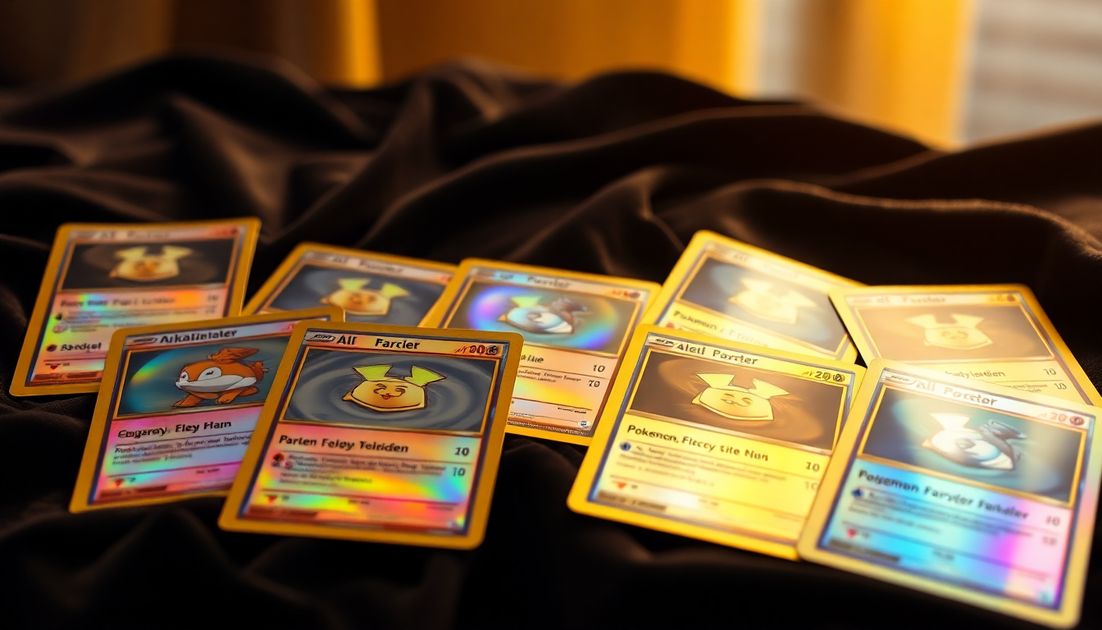
You're sitting at your kitchen table, staring at a pile of Pokemon cards you found in your childhood bedroom. The Charizard looks mint. Your friend mentioned something about Pokemon cards being worth thousands now. But how do you separate the wheat from the chaff? Understanding pokemon cards prices has become essential for anyone holding these colorful pieces of cardboard, whether you pulled them yesterday or stored them for decades.
The Pokemon TCG market reached $6.1 billion in 2023, making it the largest trading card category worldwide. Raw Charizard cards that sold for $50 in 2019 now command $800-1,500 in PSA 10. Yet not every Pokemon card follows this trajectory. Knowing which cards hold value—and which don't—separates profitable collecting from expensive mistakes.
Current Market Overview: Pokemon Cards Prices by Category
Modern Pokemon cards fall into distinct price tiers based on rarity, condition, and competitive playability. Base Set cards from 1998-2000 anchor the vintage market, with Shadowless Charizard PSA 10 specimens selling for $18,000-25,000 on eBay. Compare this to Unlimited Base Set Charizard PSA 10, which trades for $6,000-8,500.
Special Illustration Rares (SIR) from recent sets command premium pricing. Charizard ex SIR 199/165 from Obsidian Flames maintains a $280-320 raw price, while PSA 10 examples reach $850-950. The pull rate sits at approximately 1:185 packs, making it significantly scarcer than regular Pokemon ex cards.
Alternate Art cards represent the current high-end chase cards. Lugia V Alt Art 186/195 from Silver Tempest peaked at $450 raw in late 2022, then stabilized around $280-320 through 2023. PSA 10 populations remain low at 2,847 graded copies, supporting strong pricing.
Tournament staples fluctuate based on competitive play. Professor's Research (Professor Oak) maintains $8-12 regardless of set due to universal playability. Conversely, Pokestop from Pokemon GO Special Collection dropped from $25 to $8 once rotation removed it from Standard format.
Graded Card Premiums and Population Reports
PSA 10 examples typically command 3-5x raw pricing for modern cards, though vintage premiums stretch to 10-15x. Charizard VMAX Rainbow Rare from Champion's Path illustrates this perfectly. Raw Near Mint copies sell for $85-95 on TCGplayer. PSA 10 specimens reached $480-520 in early 2024.
BGS 9.5 Black Label commands the highest premiums when available. Base Set Shadowless Charizard BGS 9.5 sold for $55,000 in February 2024, nearly double the PSA 10 equivalent. However, BGS Black Label populations remain extraordinarily low—fewer than 50 Base Set Charizards have achieved this grade.
CGC 10 Pristine offers a middle ground, typically pricing 10-20% below PSA 10 equivalents. Pokemon collectors haven't fully embraced CGC yet, creating opportunities for value-conscious buyers. CGC 10 Charizard V Alt Art from Brilliant Stars sells for $320-380 versus $450-500 for PSA 10.
Vintage Pokemon Cards: The Foundation of High Pokemon Cards Prices
Base Set Shadowless remains the holy grail for Pokemon collectors. Charizard leads at $18,000-25,000 PSA 10, but Blastoise and Venusaur shouldn't be overlooked. Blastoise PSA 10 trades for $2,800-3,500, while Venusaur reaches $2,200-2,800. Pop reports show 6,324 PSA 10 Charizards versus 4,891 Blastoise and 4,567 Venusaur, making the starter trio relatively balanced in scarcity.
Japanese Base Set No Rarity cards command serious premiums over English versions. Charizard No Rarity PSA 10 sold for $128,900 at Heritage Auctions in 2022. Even Pikachu No Rarity PSA 10 reaches $15,000-20,000, demonstrating how Japanese vintage trumps English for serious collectors.
Neo Genesis provides more accessible vintage entry points. Lugia PSA 10 from this 2000 set sells for $800-1,200, while Typhlosion reaches $400-600. These cards offer vintage exposure without Base Set price tags.
Team Rocket holos carry unique appeal due to the "dark" Pokemon theme. Dark Charizard PSA 10 maintains $1,800-2,400 pricing, supported by lower pop counts (2,891 PSA 10) compared to Base Set.
Condition Sensitivity in Vintage Cards
Vintage Pokemon cards show extreme condition sensitivity. Base Set Shadowless Charizard in Near Mint condition sells for $800-1,200 raw. Light Play examples drop to $400-600. Moderately Played specimens fall further to $200-350. This 10:1 ratio between PSA 10 and MP makes condition paramount for vintage cards.
Centering issues plague vintage cards more than modern ones. Off-center Charizards that would grade PSA 8-9 sell for $2,000-4,500, still commanding premiums but far below PSA 10 pricing. Japanese cards typically show better centering than English, explaining some of their premium.
Modern Pokemon Sets: Current Pokemon Cards Prices and Trends
Scarlet & Violet era introduced Special Illustration Rares as the new chase cards. These feature full artwork extending beyond the typical frame, creating visual appeal that drives collector demand. Charizard ex SIR from Obsidian Flames leads the category at $280-320 raw.
Pokemon 151 brought massive nostalgia appeal with original 151 Pokemon in modern card frames. Charizard ex 006/165 peaked at $180 raw before settling at $120-140. Mew ex 151/165 maintains $80-100 despite higher pull rates than expected.
Crown Zenith delivered Galarian Gallery subset cards with unique texturing. Charizard V 018/159 from this subset reaches $85-110 raw, demonstrating how special subsets within sets can command premiums.
Pull rates significantly impact modern pricing. Special Illustration Rares appear approximately once per case (6 booster boxes), while regular Pokemon ex cards show up 2-3 times per case. This scarcity drives the 3-4x pricing difference between SIR and regular ex cards.
Tournament Impact on Modern Card Values
Competitive play heavily influences modern card pricing. Charizard ex from Obsidian Flames sees minimal tournament play, keeping prices purely collector-driven. Conversely, Miraidon ex from Paldea Evolved maintains $35-45 pricing due to consistent tournament results.
Professor's Research reprints demonstrate reprint risk. The Sword & Shield base version peaked at $15 before Professor's Research (Professor Oak) reprints crashed pricing to current $8-12 levels. Smart collectors avoid paying premiums for tournament staples facing imminent reprints.
Rotation announcements create dramatic price swings. Cards leaving Standard format typically lose 40-60% value overnight. Conversely, cards gaining new synergies can double in price within weeks of successful tournament performances.
Market Analysis: Factors Driving Pokemon Cards Prices
Influencer purchases create short-term price spikes that rarely sustain long-term. Logan Paul's $5.275 million Base Set Shadowless Charizard purchase in 2021 briefly inflated all Charizard pricing by 20-30%. However, prices normalized within 6 months as the market realized single high-profile sales don't shift fundamentals.
Reprint announcements devastate pricing for affected cards. Pokemon Classic Box reprints of Base Set cards in lower print runs maintain collector appeal while crashing played copies. Smart money distinguishes between collector-focused and player-focused reprints.
Anime releases provide temporary boosts. Pokemon cards featuring prominently in new anime episodes see 15-25% price bumps lasting 2-4 weeks. These represent trading opportunities rather than investment thesis changes.
Print run speculation drives much modern pricing volatility. Sets perceived as having lower print runs command premiums until distribution data proves otherwise. Pokemon 151 initially traded 40% above typical special sets before wider availability normalized pricing.
Supply Chain and Distribution Impact
Pokemon Center exclusive products consistently command premiums over mass retail releases. Elite Trainer Box Plus versions sell for 150-200% of regular ETB pricing due to limited availability and exclusive promos.
International market differences create arbitrage opportunities. Cardmarket prices for European cards often run 10-20% below TCGplayer equivalents after currency conversion. However, import costs and condition concerns limit practical arbitrage.
Japanese card popularity among Western collectors supports pricing premiums. Japanese Alternate Art cards typically sell for 20-30% above English versions despite language barriers. This premium reflects superior print quality and lower population reports.
Future Outlook and Investment Considerations
Short-term forecast points toward continued strength in vintage cards and selective modern cards. Base Set Shadowless should maintain pricing given fixed supply and growing collector base. However, modern card pricing faces headwinds from increased print runs and market maturation.
Population growth threatens graded card premiums. PSA 10 populations continue expanding for most cards, diluting scarcity premiums. Cards with stable pop counts (typically 2019 and earlier) offer better protection against this trend.
Reprint risk remains the primary threat to modern card values. Pokemon's willingness to reprint valuable cards in special products means only the scarcest chase cards maintain long-term premiums. Focus on cards with unique artwork or special finishes that resist easy reprinting.
Competitive format changes could dramatically impact playable cards. New mechanics or rule changes might vault overlooked cards to tournament staple status while rendering current favorites obsolete.
Where to Buy: Best Marketplaces for Pokemon Cards
TCGplayer offers the most comprehensive modern card selection with verified seller ratings and market price tracking. Their "TCG Direct" program provides additional buyer protection for higher-value purchases. Expect to pay market rates but with strong buyer protection.
eBay remains essential for vintage cards and rare variants not available elsewhere. Use sold listings to verify pricing and seller feedback for condition accuracy. Best Offer negotiations often yield 10-15% discounts on Buy It Now listings.
Cardmarket provides European access with often lower pricing than US markets. Currency conversion and international shipping add costs but create opportunities for patient buyers. Condition standards may differ from US expectations.
Local card shops offer hands-on condition evaluation but limited selection. Building relationships with shop owners creates access to private collections and first dibs on valuable singles. Prices typically run 10-20% above online markets.
Pokemon Center provides guaranteed authentic products for new releases. Pre-orders often sell out, making secondary market purchases necessary. Exclusive products command lasting premiums over mass retail equivalents.
Remember that pokemon cards prices fluctuate daily based on tournament results, reprint announcements, and collector sentiment. Successful collecting requires staying informed about these factors while maintaining realistic expectations about long-term value retention. The cards that commanded premium pricing five years ago aren't necessarily the same ones driving today's market.