Pokemon Cards Price Checker: The Complete Guide to Accurate Card Valuation in 2024
Master Pokemon card valuation with expert price checking strategies. Learn to use TCGplayer, PSA data, and market analysis beyond basic tools.
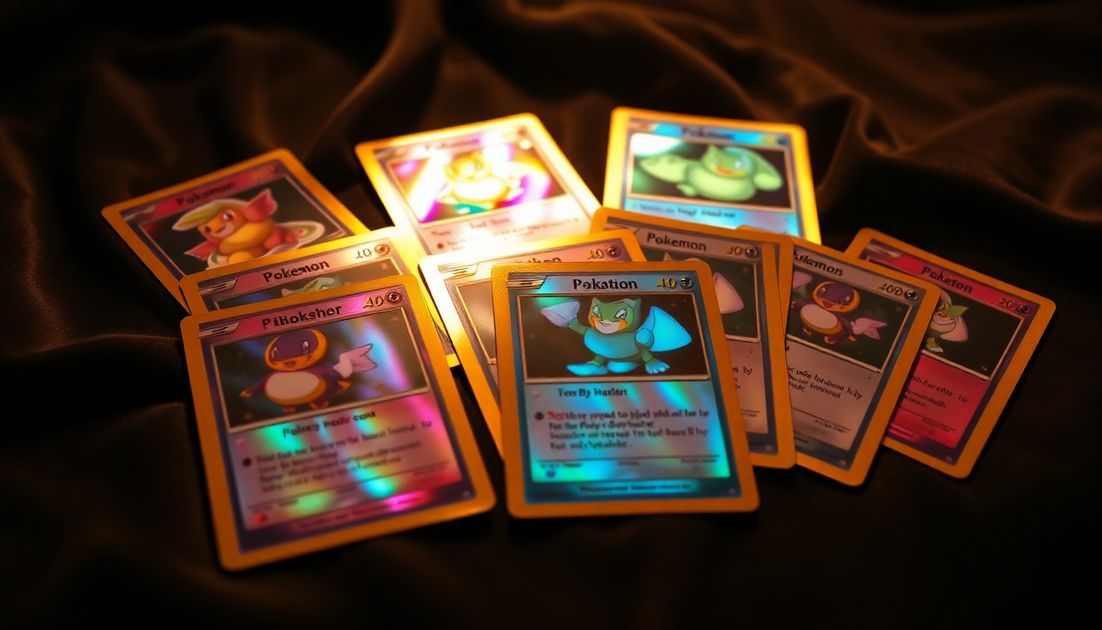
Most collectors think slapping their cards into any pokemon cards price checker will give them the real value. That's wrong. Dead wrong. These automated tools often miss the nuance between a Near Mint Charizard ex SIR 199/165 from Paldea Evolved selling for $180 versus the same card with a barely visible edge nick trading for $95.
Real price checking requires understanding multiple data sources, market conditions, and the specific factors that drive each card's value. You need to cross-reference TCGplayer's market price with eBay sold comps, factor in PSA population reports, and understand how recent tournament results or anime episodes can swing prices overnight.
The difference between using a basic pokemon cards price checker and doing proper market analysis can literally be hundreds of dollars per card. Miss the mark on a Base Set Shadowless Charizard and you could undersell by $2,000 or more.
Understanding Pokemon Card Price Checker Tools and Their Limitations
Free vs. Paid Price Checking Services
TCGplayer remains the gold standard for pokemon cards price checker functionality in North America. Their market price algorithm pulls from thousands of verified seller listings, but here's the catch: it weights recent sales more heavily than older comps. For volatile cards like Moonbreon (Umbreon VMAX Alternate Art 215/203), this can create misleading snapshots.
Cardmarket serves European collectors with arguably more accurate data. Their trending system shows 30-day price movements with visual graphs that TCGplayer lacks. A PSA 10 Moonbreon shows €850 on Cardmarket versus $1,100 on TCGplayer - that's not just currency conversion, it's different market dynamics.
eBay's "sold listings" filter functions as a free pokemon cards price checker, but you're doing manual labor. Search "Charizard Base Set PSA 10" and you'll find completed auctions ranging from $4,200 to $6,800 depending on centering, corners, and seller reputation. The variance tells the real story.
Reading Between the Lines of Price Data
Population reports change everything. PSA's website shows 3,847 Base Set Shadowless Charizards graded at PSA 10, but only 127 received the coveted PSA 10 grade before 2020. Those pre-2020 slabs command 20-30% premiums because collectors believe grading standards were stricter.
BGS Black Labels create their own market tier. A BGS 10 Black Label Charizard from Base Set Unlimited sold for $18,000 in February 2024, while regular BGS 10s trade around $8,500-$9,200. That's a 100% premium for perfect subgrades - the ultimate collector's badge.
Pull rates matter more than most price checkers acknowledge. The Charizard ex SIR from Paldea Evolved appears roughly 1:185 packs. Japanese sets often have different pull rates - the same card might be 1:144 packs in Japanese, explaining why Japanese versions sometimes trade 15-20% higher despite smaller Western demand.
How to Cross-Reference Multiple Pokemon Card Pricing Sources
The Three-Source Verification Method
Smart collectors never rely on a single pokemon cards price checker. Start with TCGplayer's market price as your baseline. A Near Mint Lilligant V Alternate Art from Astral Radiance shows $42 market price as of March 2024.
Next, check eBay sold listings for the past 30 days. Filter by "sold" and "used" to see actual transaction prices. That same Lilligant V shows sold comps between $35-$48, with most clustering around $40-$42. The TCGplayer data holds up.
Finally, cross-reference with PWCC Marketplace or Heritage Auctions for high-end cards. These platforms handle serious money - a PSA 10 Neo Genesis Lugia sold for $8,400 through PWCC versus $7,200-$7,800 on eBay. The premium reflects authentication and buyer confidence.
Spotting Red Flags in Price Data
Beware of single outlier sales. If every other comp shows $100-$120 but one sale hit $200, investigate deeper. Check the seller's feedback, listing photos, and sale date. Often these outliers involve condition misrepresentation or auction manipulation.
Population explosions kill values faster than any other factor. The Umbreon V Alternate Art from Evolving Skies jumped from 2,100 PSA 10s to 4,800 PSA 10s between January 2023 and January 2024. Prices dropped from $380 to $240 accordingly - your pokemon cards price checker should factor this grading velocity.
Reprint announcements devastate pricing overnight. When Pokemon confirmed Classic Collection reprints in March 2024, original Base Set values dropped 15-25% within 48 hours. Price checkers couldn't react fast enough to real-time market sentiment.
Advanced Pokemon Card Valuation Techniques Beyond Basic Price Checkers
Factoring Condition Into Real Value Assessment
Condition matters exponentially more than linear price checkers suggest. A Played condition Base Set Charizard might show 40% of Near Mint value on automated tools, but smart buyers know the real relationship isn't linear.
Surface scratches kill holographic cards. A Light Play Charizard with clean corners but micro-scratches on the foil trades closer to Moderately Played pricing. Conversely, a card with slight edge wear but pristine surface can command Near Mint pricing from collectors who plan to display rather than grade.
Japanese cards follow different condition standards. What grades PSA 9 from English sets might only achieve PSA 8.5-9 from Japanese cards due to stricter quality control during printing. Factor this when using any pokemon cards price checker - Japanese Near Mint cards often trade 10-15% below English equivalents despite superior print quality.
Understanding Market Timing and Cyclical Patterns
Pokemon card values follow predictable patterns most price checkers ignore. New set releases create 6-8 week selling windows for previous set cards before attention shifts. Astral Radiance alternate arts peaked in May-June 2022, then declined 30-40% as Lost Origin dominated collector interest.
Quarterly earnings calls from Pokemon Company International reveal print run data that affects long-term values. When TPC confirmed 9 billion cards printed in 2023 versus 7.4 billion in 2022, savvy collectors started rotating toward older, lower-print-run sets.
Championship seasons drive competitive card demand. Charizard ex from Obsidian Flames spiked 40% during World Championship preparation in July 2024. The card remains tournament-legal through 2026, creating sustained demand beyond collector interest.
Graded Card Premium Analysis
PSA 10 premiums vary wildly by card popularity and pop count. A PSA 10 Charizard ex SIR trades for 3.5x raw Near Mint pricing, while a PSA 10 common trainer might only achieve 1.8x raw pricing. The premium correlates with raw card value and collector demand, not just the grade itself.
BGS 9.5 grades create awkward pricing positions. Most collectors view BGS 9.5 as equivalent to PSA 9, but BGS markets them as premium products. A BGS 9.5 Moonbreon trades around $650-$700, while PSA 9 examples bring $580-$620. That's barely a 15% premium for supposedly superior grading standards.
CGC's Pristine 10 grade targets budget-conscious collectors seeking PSA 10 aesthetics at lower prices. A CGC 10 Pristine Base Set Charizard trades for $3,200-$3,600 versus $5,500-$6,200 for PSA 10. That's serious money saved for identical visual appeal, though resale liquidity remains lower.
Regional Price Variations and Where to Find the Best Deals
Geographic Arbitrage Opportunities
European collectors consistently overpay for English cards compared to American prices. A PSA 10 Charizard VMAX Shiny from Shining Fates trades around €420-€450 on Cardmarket but only $380-$400 on TCGplayer. Shipping and import duties explain some variance, but smart arbitrage opportunities exist.
Japanese collectors prize English cards for their nostalgia factor, particularly Base Set and Jungle cards from the late 1990s. A PSA 9 English Base Set Blastoise sells for ¥45,000-¥50,000 in Japan versus $650-$720 in America. Currency conversion makes this roughly equivalent, but Japanese buyers show stronger demand consistency.
Australian and Canadian markets remain underexplored. Canadian collectors often sell to American buyers through eBay, creating pricing gaps. A Near Mint Umbreon ex from Flareon ex Battle Deck listed from Canadian sellers averages 8-12% below American prices due to currency conversion and smaller collector base.
Best Marketplaces for Different Card Categories
High-end vintage cards belong on PWCC or Heritage Auctions. These platforms attract serious collectors willing to pay premium prices for authenticated items. A PSA 10 Base Set Shadowless Charizard through PWCC averaged $6,200 in Q1 2024 versus $5,800 on eBay.
Modern cards under $200 move fastest on TCGplayer. Their direct shipping program eliminates condition disputes and provides buyer protection. Sellers achieve 95-98% of market price versus 85-90% on eBay after fees and potential returns.
Facebook groups serve niche collecting communities. The "Pokemon TCG Buy Sell Trade" group has 40,000+ active members trading cards that major platforms miss. Obscure promos, foreign language cards, and condition-sensitive items find better audiences here than automated marketplaces.
Market Forecasting and Investment Considerations
Short-Term Price Drivers to Monitor
Netflix's Pokemon Concierge series boosted Psyduck and supporting character card values 25-40% in December 2023. Similar media tie-ins create temporary demand spikes that most price checkers can't predict. Monitor Pokemon Company's media calendar for investment opportunities.
Tournament ban announcements kill competitive card values overnight. When Radiant Charizard rotated from Standard format in August 2024, prices dropped from $45 to $28 within two weeks. Conversely, format announcements can spike cards unexpectedly.
Print run revelations affect long-term collecting demand. When collectors learned that Paldea Evolved had 40% higher print runs than initial estimates, alternate art values declined 15-20% across the board. Supply matters more than demand for pricing stability.
Long-Term Investment Thesis
Base Set cards remain the safest Pokemon investment vehicle. Psychological anchoring to childhood memories creates sustained demand regardless of new releases. A PSA 9 Base Set Charizard has never declined below $1,800 in any 12-month period since 2019, providing downside protection rare in collectibles.
Japanese exclusives offer asymmetric upside potential. Cards like Pokemon Center Lady Promo 086/XY-P exist in tiny quantities with no English equivalent. Current pricing around $400-$500 seems conservative given the 15,000+ estimated print run across multiple years.
Avoid tournament-legal cards as long-term holds. Rotation cycles and reprint possibilities create too much uncertainty. Focus on alternate arts, promos, and cards with artistic merit beyond competitive utility.
The pokemon cards price checker landscape will continue evolving as blockchain technology enables better provenance tracking and AI improves condition assessment. Smart collectors adapt their valuation methods accordingly while maintaining focus on fundamental rarity and demand drivers.