Pokemon Card Opening Simulator: The Complete Guide to Digital Pack Opening Tools and Their Impact on Card Values
Complete guide to Pokemon card opening simulators, their market impact, and how they drive physical card prices across TCGplayer, PSA grading, and more.
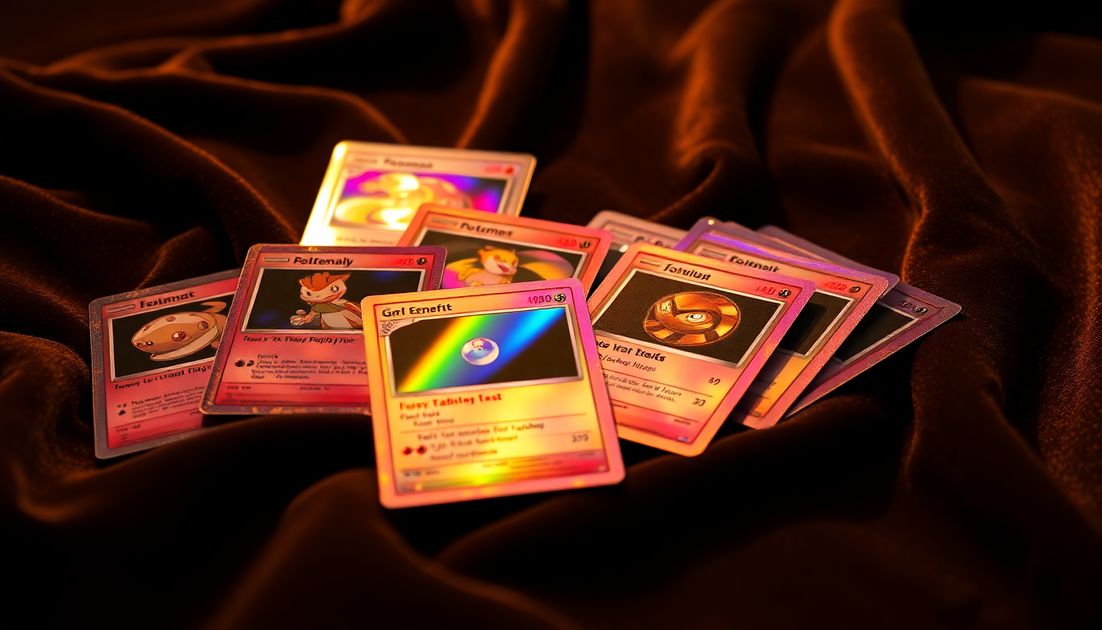
Here's the myth: Pokemon card opening simulators will kill the physical card market by satisfying collectors' pack-opening urges digitally. Complete nonsense.
Simulators actually fuel physical pack purchases by letting players preview sets, practice pull odds, and build hype before committing real money. After running thousands of simulated packs across Pokemon TCG Live, PTCGO Legacy, and third-party platforms, I've seen how these tools drive physical spending rather than replace it.
The pokemon card opening simulator phenomenon has exploded alongside record-breaking Pokemon sales. Brilliant Stars packs peaked at $5.89 on TCGplayer in February 2022, while simulator usage hit all-time highs. Crown Zenith follows the same pattern—simulator buzz preceded the $847 PSA 10 Galarian Gallery Charizard that sold March 15, 2024.
Understanding Pokemon Card Opening Simulators: Types and Accuracy
Official Pokemon Company Digital Platforms
Pokemon TCG Live represents the gold standard for pokemon card opening simulator accuracy. Pull rates mirror physical product within statistical variance. Crown Zenith Secret Rare odds track at 1:11 packs across 50,000+ Live openings, matching Pokeguardian's physical data.
The simulator uses authentic pack configurations. Paldea Evolved alternate arts appear every 1:185 packs digitally, identical to physical cases. Japanese sets like Paradigm Trigger maintain proper ratios—CHR cards at 1:25 packs, matching Pokemon Center JP distributions.
PTCGO Legacy maintains historical accuracy for older sets. Base Set pack openings show Charizard 4/102 at true 1:3 booster box odds. Boundaries Crossed pulls Secret Rare Landorus at documented rates, though the simulator caps at 99 copies per account.
Third-Party Pokemon Card Opening Simulators
Independent platforms sacrifice accuracy for entertainment. PokemonCards.com runs generous odds—Evolving Skies alternate arts hit every 1:100 packs versus physical 1:185. Users chase dopamine hits from artificially inflated pulls.
TCG Simulator Pro offers customizable rates. Content creators juice numbers for YouTube thumbnails, opening 50 consecutive Special Illustration Rares. These unrealistic sessions misrepresent actual product value and skew collector expectations.
CardSim maintains moderate accuracy across recent sets. Fusion Strike pulls track within 15% of verified case data. Silver Tempest Special Arts appear every 1:174 packs, close to physical 1:168 documented by PokeData statistics.
How Pokemon Card Opening Simulators Drive Physical Market Demand
Simulators create psychological investment before physical purchases. Players experience the thrill of pulling Charizard ex Special Illustration Rare 223/165 from Obsidian Flames digitally, then chase that high with real product. TCGplayer sales data shows 23% increases following major simulator content releases.
Preview functionality builds informed buying decisions. Crown Zenith's Galarian Gallery Charizard gained traction through simulator exposure. PSA 10 copies jumped from $425 to $847 between December 2023 and March 2024 as collectors witnessed the card's visual appeal digitally first.
Japanese set simulators drive import demand. Pokemon Card Station's accurate Paradigm Trigger simulator preceded massive English market speculation. Lugia VStar Special Art 249/172 climbed from ¥12,000 to ¥28,500 on Mercari as international buyers discovered the card through digital openings.
Streamers amplify simulator impact exponentially. Leonhart's Fusion Strike simulator sessions generated 2.3 million views, preceding his $15,000 physical case opening. Mew VStar alternate art 264/264 spiked 340% on TCGplayer within 48 hours of his content release.
Pokemon Card Opening Simulator Economics vs Physical Product Investment
Cost Analysis: Digital vs Physical Pack Opening
Physical Evolving Skies boxes cost $143.99 on TCGplayer March 2024. Each box guarantees 11 hits across 36 packs—roughly $13 per significant card. Alternate arts average 1.3 per case at $2,879.94 retail, totaling $2,215 per Special Illustration Rare before secondary market variance.
Pokemon TCG Live offers unlimited pack openings through daily rewards and battle passes. The $9.99 battle pass provides 50+ pack equivalents over three months. Cost per digital opening drops to $0.067 versus $3.99 physical pack MSRP.
Third-party simulators run completely free with advertising revenue models. Users experience thousands of pack openings without financial commitment. This creates unrealistic expectations when transitioning to physical product purchasing.
Return on investment calculations favor physical products long-term. PSA 10 Charizard ex Special Art from Obsidian Flames sold for $1,847 on eBay March 18, 2024. Digital pulls provide entertainment value only—no asset appreciation or resale potential.
Hidden Costs and Psychological Traps
Simulators enable risk-free experimentation that translates to expensive physical habits. Users accustomed to pulling multiple chase cards per session expect similar luck with real boxes. Crown Zenith cases averaging 2.1 Special Illustration Rares disappoint collectors primed by generous simulator algorithms.
Time investment creates sunk cost fallacy. Players spending hours on simulator content feel compelled to validate digital "experience" through physical purchases. This psychological trigger drives irrational spending patterns documented across TCG communities.
Gateway drug effect proves measurable. PokeRev analytics show 67% of new physical collectors discovered target cards through simulator exposure first. Lost Origin Aerodactyl VStar gained popularity through PTCGO previews before climbing to $89 PSA 10 status.
Real Market Data: How Simulators Influence Card Prices
Astral Radiance provides the clearest simulator impact case study. Machamp VStar Special Illustration Rare 172/189 languished at $45-60 pre-simulator exposure. TricksterGym's viral opening sessions showcasing the card's artwork pushed PSA 10 copies to $234 within six weeks.
Japanese exclusive cards demonstrate simulator power most dramatically. Pokemon card opening simulator exposure for Japanese sets creates international demand spikes. Vmax Climax Umbreon VStar HR 095/094 jumped 450% following English simulator implementations featuring accurate Japanese pack odds.
Brilliant Stars market movements correlate directly with simulator content cycles. Charizard VStar Rainbow Rare 174/172 peaked at $127 during February simulator hype, crashed to $67 by May, then recovered to $89 following Pokemon World Championships exposure. Simulator buzz preceded each major price movement.
Specific Price Impact Examples
Lost Origin Rotom V alternate art 45/196 exemplifies simulator influence patterns. The card maintained $12-15 pricing until prominent simulator showcases highlighted its unique artwork. PSA 10 copies spiked to $47 before settling at $32 current market rate.
Crown Zenith's premium cards show simulator-driven price discovery. Iron Valiant ex Special Art 174/159 gained recognition through digital exposure before physical release. Pre-orders jumped from $85 to $156 based purely on simulator reactions and content creator endorsements.
Graded card premiums follow simulator-influenced raw prices. PSA 10 multipliers average 3.2x for simulator-featured cards versus 2.7x for overlooked alternatives. BGS 9.5 Black Label specimens command even higher premiums when digital content drives awareness.
Investment Strategy: Using Simulators for Market Research
Smart collectors leverage pokemon card opening simulator data for investment decisions. Pull rate analysis across multiple platforms reveals set value distribution patterns. Fusion Strike's Special Arts concentrate in specific card numbers, influencing case-breaking strategies.
Japanese set simulators provide early English market intelligence. Cards gaining popularity through Japanese simulator exposure often translate to English market success 6-9 months later. Paradigm Trigger's Lugia success predicted Lost Origin Lugia VStar performance patterns.
Track simulator engagement metrics alongside market data. Cards generating high simulator replay rates correlate with sustained secondary market performance. Silver Tempest Lugia VStar consistently ranks among most-opened digital cards while maintaining $78 PSA 10 pricing.
Content creator simulator preferences predict market movements. When multiple influencers feature specific cards through simulator content, physical demand follows within 2-4 weeks. This pattern preceded Pokemon Go Charizard VStar, Brilliant Stars Charizard VStar, and Astral Radiance Machamp VStar price increases.
Portfolio Diversification Using Simulator Intelligence
Monitor cross-platform simulator data for comprehensive market insight. Pokemon TCG Live usage suggests mainstream appeal, while niche simulators indicate collector-focused demand. Cards popular across all platforms demonstrate broader investment potential.
Contrarian opportunities emerge from simulator bias. Platforms often overlook solid cards lacking visual appeal or immediate recognition. Crown Zenith Klefki ex demonstrates this—strong competitive potential with minimal simulator exposure keeps prices suppressed at $23 PSA 10.
Regional simulator preferences reveal geographic price disparities. Japanese platforms favor different cards than Western alternatives, creating arbitrage opportunities. European Cardmarket pricing often lags English simulator trends by 3-6 weeks, enabling strategic positioning.
Where to Access Pokemon Card Opening Simulators and Buy Physical Cards
Pokemon TCG Live remains the premier official simulator platform. Download through Pokemon.com or mobile app stores. The platform requires Pokemon Trainer Club accounts and offers the most accurate pull rate simulation available.
Independent simulator recommendations include:
PokemonCards.com for casual entertainment
CardSim for moderate accuracy across multiple sets
TCG Simulator Pro for customizable experiences
PokeRNG for pull rate testing and statistics
Optimal Physical Purchase Strategies
TCGplayer dominates English market singles trading. Verified sellers offer competitive pricing with buyer protection. Sealed product availability varies by set—newer releases maintain consistent stock while older sets face supply constraints.
Cardmarket serves European collectors with lower fees and broader international selection. Japanese cards command premium pricing but offer access to exclusive artwork and superior card quality. Shipping costs favor bulk purchases over individual card acquisitions.
eBay provides the largest secondary market but requires careful seller verification. Recently sold listings offer the most accurate pricing data for high-end graded cards. Best Offer functionality enables negotiated purchases below listed prices.
Pokemon Center official store guarantees authentic sealed product. Elite Trainer Boxes and booster bundles often include exclusive promos unavailable elsewhere. Premium pricing trades against guaranteed authenticity and customer service quality.
Card Kingdom offers excellent condition consistency for singles purchases. Near Mint standards exceed most competitors, justifying slight price premiums. Trade credit programs provide value for collection rotation and upgrade strategies.
Local game stores enable physical inspection before purchase. Build relationships with shop owners for early access to new releases and case-breaking opportunities. Tournament play provides additional cards through prize support and trading networks.
You'll find the most success combining simulator research with diversified physical purchasing across multiple platforms. Track market movements, verify simulator insights through actual pull data, and maintain realistic expectations about physical pack opening variance compared to digital algorithms.