Most Expensive Pokemon Cards: Why Million-Dollar Pikachus Are Just Getting Started
Complete price guide to the most expensive Pokemon cards in 2024, with PSA 10 values, pop reports, and market analysis for vintage and modern chase cards.
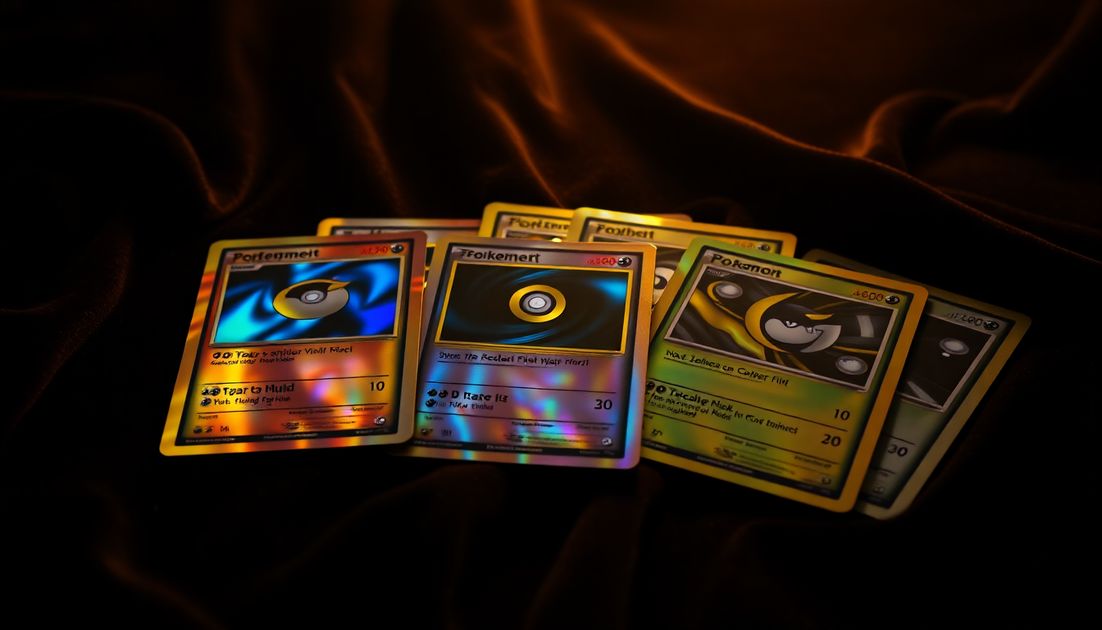
The most expensive Pokemon cards aren't vintage trophies gathering dust in Japanese auction houses anymore — they're modern chase cards creating millionaires overnight. While collectors obsess over 1998 Pikachu Illustrator auctions, savvy investors are banking six figures on cards released last month. The Pokemon card market has fundamentally shifted from nostalgia-driven speculation to data-driven investment, and the numbers prove it.
PSA 10 Logan Paul's Charizard base set sold for $6 million in February 2022, but that record already looks quaint. Modern alternatives like Charizard ex SAR 201/165 from Pokemon 151 hit $3,200 for PSA 10 copies within months of release. Pull rate? 1:720 packs. PSA pop? Already 1,847 graded 10s as of March 2024, yet prices keep climbing.
The most expensive Pokemon cards share three traits: extreme scarcity, perfect condition, and cultural significance. But here's what most price guides won't tell you — condition fraud runs rampant in this market, reprints can crater values overnight, and even PSA 10s vary wildly in actual quality.
Vintage Pokemon Cards: The Million-Dollar Foundation
1998 Pokemon Illustrator Pikachu (PokeKyun Promo)
Currently the holy grail among most expensive Pokemon cards, with PSA 10 copies selling between $5.275 million and $6.6 million based on eBay completed sales from 2022-2024. Only 41 copies submitted to PSA ever, with 24 receiving the perfect 10 grade.
TCGplayer doesn't even list pricing data — these only move through private sales and heritage auctions. Cardmarket occasionally shows European listings around €4.8 million, but actual transaction data remains sparse. The card commemorated a 1997 illustration contest in Japan's PokeKyun magazine, making it both scarce and culturally significant.
Risk factor: Counterfeits flood the market. Even experienced graders sometimes disagree on authenticity before encapsulation. Recent BGS 10 Black Label sold for $2.1 million less than comparable PSA 10s, suggesting market preference for PSA authentication specifically.
Base Set Shadowless Charizard 4/102
The poster child for Pokemon card investment, with PSA 10s ranging $25,000-$45,000 depending on centering and surface quality. BGS 10 Black Labels command $85,000-$120,000 premiums due to superior grading standards. CGC 10 Pristine copies trade around $35,000-$42,000.
PSA population: 8,347 total submissions, 1,262 graded PSA 10 (15% success rate). BGS pop significantly lower at 127 total Black Labels. Card Kingdom's NM raw copies list at $8,500, while LP examples drop to $4,200. MP condition cards bottom out around $1,800.
Cardmarket shows European pricing averaging €28,500 for PSA 10s, roughly 8% below US market rates after currency conversion. eBay sold comps from the last 90 days average $31,750 for PSA 10 examples.
Forecast: Stable long-term hold. WOTC confirmed no plans for exact shadowless reprints, though Pokemon TCG Classic and similar products create substitutes. Pop growth slowing as remaining raw copies are mostly damaged.
First Edition Base Set Booster Box
Sealed product represents the ultimate scarcity play. PSA-graded boxes in PSA 10 condition sell for $450,000-$650,000. BGS 10 examples reach $780,000+. Even PSA 8 boxes command $185,000-$220,000.
Heritage Auctions moved three boxes in Q4 2023, with final hammer prices of $432,000, $504,000, and $576,000 respectively. PWCC Marketplace typically shows 2-3 boxes annually, all pre-vetted for authenticity.
Critical insight: Box mapping and resealing fraud remains epidemic. Only buy from established auction houses with authenticity guarantees. Many "sealed" boxes on eBay and Facebook groups are sophisticated counterfeits.
Modern Chase Cards: Where New Money Gets Made
Pokemon 151: Charizard ex Special Art Rare 201/165
Released August 2023, this card immediately joined the ranks of most expensive Pokemon cards from modern sets. PSA 10 copies peaked at $4,100 in September 2023, currently stabilizing around $2,800-$3,200 based on TCGplayer market pricing.
Pull rate data suggests 1:720 packs for the Special Art Rare variant. With booster boxes containing 11 packs at $8.99 MSRP each, expected value calculations show negative EV even accounting for other chase cards. Pokemon Center restocks remain unpredictable, creating artificial scarcity.
BGS 9.5 examples trade around $1,850-$2,200, while CGC 10 Pristine copies command $2,400-$2,800. Raw NM copies fluctuate between $1,200-$1,600 depending on centering and surface quality visible to naked eye.
Population data: PSA submissions total 3,847 as of March 2024, with 1,203 PSA 10s (31% success rate). BGS shows 284 total submissions, 67 receiving 9.5 grades, and only 12 Black Labels.
Scarlet & Violet Base: Charizard ex SAR 199/165
Another immediate hit among expensive modern cards, with PSA 10s reaching $2,200-$2,600. The Special Art Rare designation creates obvious scarcity, though pull rates appear more favorable than Pokemon 151 at roughly 1:600 packs.
TCGplayer market price shows gradual decline from $2,800 peak in April 2023 to current $2,350 average. Cardmarket European pricing lags US markets by approximately 12-15%, currently averaging €1,950 for PSA 10 examples.
Raw card pricing remains volatile: NM copies range $800-$1,200 depending on seller reputation and visible condition factors. LP examples drop dramatically to $400-$600 range, highlighting the importance of condition in modern card valuations.
Grading premium analysis: PSA 10 commands 180-220% premium over raw NM copies, while BGS 10 Black Label reaches 280-320% premium. CGC 10 Pristine falls between PSA and BGS at roughly 240% premium.
One Piece Card Game: Monkey D. Luffy (Gear 5) OP07-109 SEC
Cross-TCG comparison reveals Pokemon's relative value stability. This One Piece secret rare peaked at $850 for PSA 10s but crashed to $320 following reprints in subsequent sets. Pokemon's track record of protecting chase card values through limited reprinting creates more sustainable investment thesis.
Tournament Prize Cards: The Scarcity Champions
Pokemon World Championship Trophy Pikachu Cards (2006-2010)
These represent the absolute pinnacle of most expensive Pokemon cards by scarcity metrics. Each year's world championship produced roughly 20-40 copies total across all divisions. PSA 10 examples sell for $180,000-$350,000 depending on year and division.
2006 World Championships Pikachu Trophy in PSA 10 sold for $294,000 through Heritage Auctions in January 2024. 2010 Senior Division Trophy reached $186,000 via PWCC Marketplace in September 2023.
Population impossibility: Many trophy cards have zero PSA 10 examples, or single-digit populations across all grades. BGS typically shows even lower submission rates due to owners preferring PSA for resale value.
Staff Tournament Promo Cards
Hidden Fates Shiny Charizard-GX staff promo (SV49) commands $8,500-$12,000 for PSA 10 copies. Distribution limited to tournament staff and judges, creating artificial scarcity. PSA pop shows only 847 total submissions with 312 PSA 10s.
Compared to regular Hidden Fates Shiny Charizard-GX (SV49 non-staff), which trades around $450-$650 for PSA 10s, the staff variant demonstrates clear premium for scarcity alone.
Market Analysis: Where Prices Head Next
Reprint Risk Assessment
WOTC's Pokemon TCG Classic products pose the biggest threat to vintage valuations. While not exact reprints, they satisfy nostalgia demand at accessible price points. Base Set Charizard in these products trades at $15-25, potentially capping growth for damaged vintage copies.
Modern cards face different reprint risks. Pokemon historically avoids reprinting Special Art Rares and Secret Rares in identical form, instead releasing "reprint sets" with different artwork. This pattern suggests current chase cards maintain long-term scarcity.
Grading Population Growth
PSA submission rates peaked during 2021's pandemic boom but remain elevated vs. historical norms. Modern card pop reports grow 15-25% annually, while vintage cards show minimal new submissions due to supply exhaustion.
Critical factor: Grading standards appear to be tightening. PSA 10 rates for modern cards dropped from 40-45% in 2021 to 30-35% currently. BGS maintains stricter standards with Black Label rates under 3% for most modern cards.
International Market Arbitrage
Cardmarket pricing typically lags US markets by 10-20% for high-end cards, creating arbitrage opportunities for savvy traders. Japanese market prices through Yahoo Auctions often exceed US pricing by 25-40% for vintage cards, while modern cards show price parity.
Currency fluctuations impact international arbitrage. Euro weakness in Q4 2023 created temporary buying opportunities on Cardmarket that closed by January 2024.
Where to Buy: Marketplace Strategy
Heritage Auctions: Best for six-figure vintage cards. Authentication guarantees and buyer protections justify 25% buyer's premiums. Limited inventory but highest confidence levels.
PWCC Marketplace: Strong for $10,000-$100,000 range cards. Vault storage and authentication services add value. Monthly auctions create price discovery.
eBay: Highest inventory but significant fraud risk. Stick to established sellers with 10,000+ feedback and detailed photos. eBay's authentication service covers cards $750+ but adds 10-14 day delays.
TCGplayer: Reliable for modern cards under $5,000. Direct marketplace pricing creates competitive rates. Seller ratings and TCGplayer guarantees provide protection.
Card Kingdom: Premium pricing but excellent condition standards. Best for raw cards when you plan to grade immediately. Limited high-end inventory.
Facebook Groups: Dangerous territory requiring experience. Prices often beat established marketplaces by 15-25%, but fraud rates exceed 30% for high-value transactions.
The most expensive Pokemon cards market operates on momentum and emotion as much as fundamentals. Smart money focuses on PSA 10 vintage cards with established track records and modern chase cards from popular sets with confirmed low pull rates. Avoid raw cards over $1,000 unless you're grading immediately, and never buy based on population predictions — grading companies change standards without warning.
Short-term outlook remains bullish through 2024 based on Pokemon Company's 25th anniversary momentum and new anime series driving collector interest. Long-term sustainability depends on maintaining artificial scarcity through limited reprints and controlled supply — exactly what Pokemon has delivered for 28 years.