Graded Pokemon Cards Are Making Millionaires While Raw Cards Collect Dust
Complete guide to graded Pokemon cards: PSA vs BGS pricing, vintage vs modern strategies, market data, and where smart collectors invest in 2024.
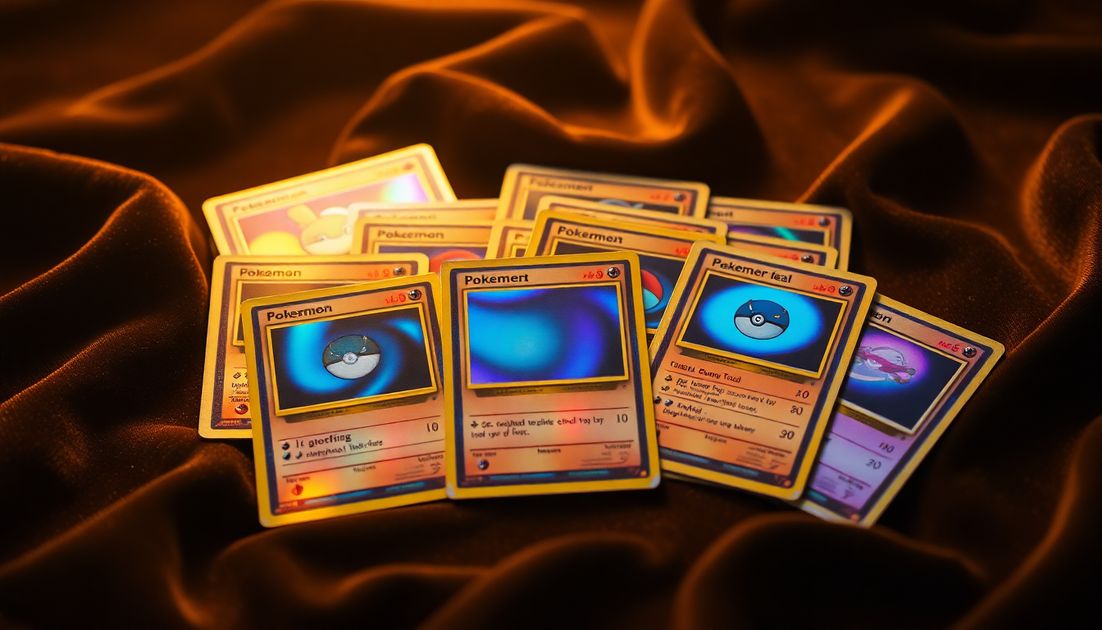
Graded Pokemon cards command 5x to 50x premiums over raw copies, and that gap isn't shrinking anytime soon. While raw Charizard Base Set holos sit at $300-400, PSA 10 specimens routinely sell for $15,000-25,000. BGS 9.5 Black Labels? Even higher. The grading revolution has fundamentally changed Pokemon collecting, creating new asset classes that behave more like fine art than trading cards.
Modern Pokemon cards face similar dynamics. A raw Charizard ex SIR 199/165 from Scarlet & Violet 151 trades around $80-120 depending on condition. PSA 10 examples? They're hitting $800-1,200 consistently. That's a 10x multiplier for a card that's barely six months old.
Why Graded Pokemon Cards Dominate the Market
Authentication drives everything. Pokemon cards suffer from rampant counterfeiting, especially vintage Base Set holos and modern chase cards. PSA, BGS, and CGC provide third-party verification that eliminates fraud risk. When you're spending four figures on cardboard, that peace of mind costs $50-100 in grading fees.
Condition standardization matters even more. Raw card condition descriptions are subjective nightmares. "Near Mint" means different things to different sellers. PSA's 1-10 scale removes guesswork. A PSA 9 Charizard has specific defect tolerances: slight corner wear, minor centering issues, but no creases or stains. BGS takes it further with subgrades for centering, corners, edges, and surface.
Population control creates artificial scarcity. PSA has graded 15,847 Base Set Charizards as of March 2024. Only 2,341 achieved PSA 10 status. That's a 14.8% gem rate. BGS numbers look even tighter: 412 BGS 10s and just 47 Black Labels from 3,200+ submissions. When collectors know exact populations, they bid accordingly.
Investment psychology shifted Pokemon from hobby to asset class. Graded cards feel more legitimate to traditional investors. They come in protective slabs with certificates. They have standardized condition reports. They track in databases. Raw cards feel too much like toys. Graded cards feel like investments.
PSA vs BGS vs CGC: The Great Grading Wars
PSA dominates market share but BGS commands higher premiums for perfect cards. BGS 10 Black Labels routinely sell for 2x-3x more than PSA 10s. A PSA 10 Base Set Charizard sells for $15,000-20,000. BGS 10 Black Label Charizards? They've hit $50,000+ at auction.
BGS subgrades provide more granular condition assessment. Four categories (Centering, Corners, Edges, Surface) each receive 1-10 scores. Black Labels require perfect 10s across all categories. Regular BGS 10s allow one 9.5 subgrade. This creates multiple tiers within the "perfect" grade.
CGC entered the Pokemon market aggressively with competitive pricing and faster turnaround times. Their Perfect 10 grade requires flawless cards but hasn't achieved BGS Black Label premium status yet. CGC 10 Pristine cards trade closer to PSA 10 levels. Time will tell if CGC builds enough market credibility to command BGS-level premiums.
Vintage vs Modern: Two Different Investment Strategies
Vintage graded Pokemon cards from 1998-2003 behave like blue-chip stocks with established track records. Base Set Charizard PSA 10 prices have grown from $6,000 in 2020 to $18,000+ in 2024. That's 15% annual appreciation despite market volatility. Neo Genesis Lugia PSA 10s jumped from $800 in 2020 to $4,000+ today.
Population growth threatens vintage premiums long-term. PSA 10 Base Set Charizards numbered under 1,000 in 2019. They're approaching 2,500 now. More vintage packs get opened. More raw cards get submitted. Eventually, population growth could outpace demand growth.
Modern graded cards offer higher risk and reward potential. Charizard UPC Promo PSA 10s hit $2,000 at peak hype before settling around $800-1,000. Moonbreon (Umbreon VMAX Alt Art 215/203) PSA 10s peaked at $1,500, now trade around $600-800. Modern cards can 5x or 10x quickly but also crash just as fast.
Print runs affect modern card investment potential dramatically. Evolving Skies had massive print runs. Base set Japanese cards had tiny print runs by comparison. Scarlet & Violet 151 appears heavily printed based on pack availability. Crown Zenith had smaller distribution. Print run estimates help predict long-term graded card supply.
Japanese vs English: The Premium Debate
Japanese Pokemon cards command premiums in perfect grades due to superior print quality and smaller Western collector populations. Japanese Base Set No Rarity Charizard PSA 10s sell for $25,000-35,000 versus $15,000-20,000 for English versions. Japanese cards typically have better centering and surface quality straight from packs.
Language barriers limit Japanese card accessibility for Western collectors. Most major auction houses and marketplaces focus on English cards. This creates inefficient pricing where Japanese cards might be undervalued relative to their scarcity and condition advantages.
Modern Grading Targets: Where Smart Money Goes
Graded Pokemon cards from recent sets offer the best risk-adjusted returns for most collectors. Vintage cards require massive capital and deep expertise. Modern cards let you participate with smaller budgets while learning grading nuances.
Alt art cards from Sword & Shield era represent prime grading candidates. Umbreon VMAX Alt Art 215/203 from Evolving Skies has a 1:185 pack pull rate. PSA 10s trade around $700-900 currently. BGS 10s with strong subgrades can hit $1,200+. The card remains popular competitively and aesthetically.
Charizard cards never go out of style for grading. Brilliant Stars Charizard V Alt Art 154/172 PSA 10s stabilized around $300-400. That's reasonable entry level exposure to Charizard grading dynamics without vintage card risk.
Special Illustration Rare cards from Scarlet & Violet sets show early promise. Charizard ex SIR 199/165 from 151 maintains strong demand. PSA 10 examples consistently sell for $900-1,200 on eBay. The card combines iconic Pokemon appeal with modern artwork and reasonable grading costs.
Grading Economics: When It Makes Sense
Grading costs $50-100 per card depending on service level and declared value. Express services cost more but reduce waiting times from months to weeks. Economy submissions save money but take 6-12 months currently.
Break-even analysis determines grading viability. If your raw card is worth $100 and PSA 10s sell for $300, grading makes sense assuming reasonable gem rate chances. If your raw card is worth $20 and PSA 10s sell for $50, skip grading. The math doesn't work.
Condition assessment skills determine grading success. Cards with obvious flaws won't gem regardless of wishful thinking. Centering outside 55/45 tolerances kills PSA 10 chances. Corner whitening visible under magnification prevents gem grades. Surface scratches from pack fresh cards happen more often than expected.
Market Data: Where to Buy and Sell
eBay dominates high-end graded card sales with the largest buyer pool and established feedback systems. Sold listings provide real market data for pricing research. Look for recent comps within 30-60 days. Auction results reflect true market value better than Buy It Now listings with inflated ask prices.
PWCC Marketplace specializes in high-end graded cards with professional photography and detailed descriptions. Their monthly auctions attract serious collectors and investors. Hammer prices often exceed eBay comps due to buyer quality and presentation standards.
Whatnot livestream auctions create dynamic pricing environments for modern graded cards. Popular breakers and sellers can drive prices above market rates through social proof and FOMO. Conversely, late-night streams sometimes offer deals on quality cards.
Cardmarket serves European collectors with competitive pricing and lower fees than eBay. Language barriers and shipping logistics limit US collector participation. This creates arbitrage opportunities for cards available cheaper in Europe.
TCGplayer focuses on raw cards but increasingly lists graded options. Their market price algorithms help establish baseline valuations. Direct checkout eliminates payment processing risks common on other platforms.
Storage and Insurance Considerations
Graded cards require different storage than raw cards. PSA and BGS slabs resist damage but can crack under pressure. Proper storage boxes prevent slab damage during transport and long-term storage. UV exposure can fade card colors even through graded slabs over decades.
Insurance becomes critical for high-value graded cards. Homeowner's insurance rarely covers collectible cards adequately. Specialized collectible insurance through companies like Collectibles Insurance Services provides proper coverage for graded card collections worth thousands or tens of thousands.
Future Outlook: Trends Shaping Graded Card Values
Population growth will continue pressuring vintage graded card premiums. More collectors discover attic finds. More investors submit borderline cards hoping for gem grades. PSA population reports show consistent monthly growth across most vintage sets.
Modern card grading will become more selective as collectors learn from expensive mistakes. Early pandemic grading submission volumes included many cards unworthy of grading costs. Market education is reducing low-value submissions gradually.
Authentication technology improvements might disrupt traditional grading models. Digital verification systems and blockchain authenticity tracking could reduce reliance on physical grading slabs. However, collector psychology strongly favors tangible authentication methods currently.
Alternative grading companies will challenge PSA and BGS market share through competitive pricing and faster service. CGC has gained traction in comic books and Pokemon cards. New entrants like TAG, AGS, and others attempt to capture market share through innovation or pricing advantages.
Investment fund participation will increase institutional demand for high-grade vintage cards. Collectible investment platforms like Masterworks, Otis, and Rally enable fractional ownership of expensive graded cards. This brings new capital sources to the market while reducing individual ownership opportunities.
Graded Pokemon cards represent the intersection of nostalgia, speculation, and authentic scarcity. Unlike raw cards where condition debates create friction, graded cards provide clear quality standards that enable efficient price discovery. Whether vintage blue-chips or modern lottery tickets, graded cards have fundamentally changed how Pokemon collecting works. The premiums aren't going away.