Free Pokemon TCGO Codes: The Complete Guide to Legitimate Code Sources and Alternative Trading Strategies
Complete guide to legitimate free Pokemon TCGO codes, market values, strategic alternatives, and risk analysis for collectors and competitive players.
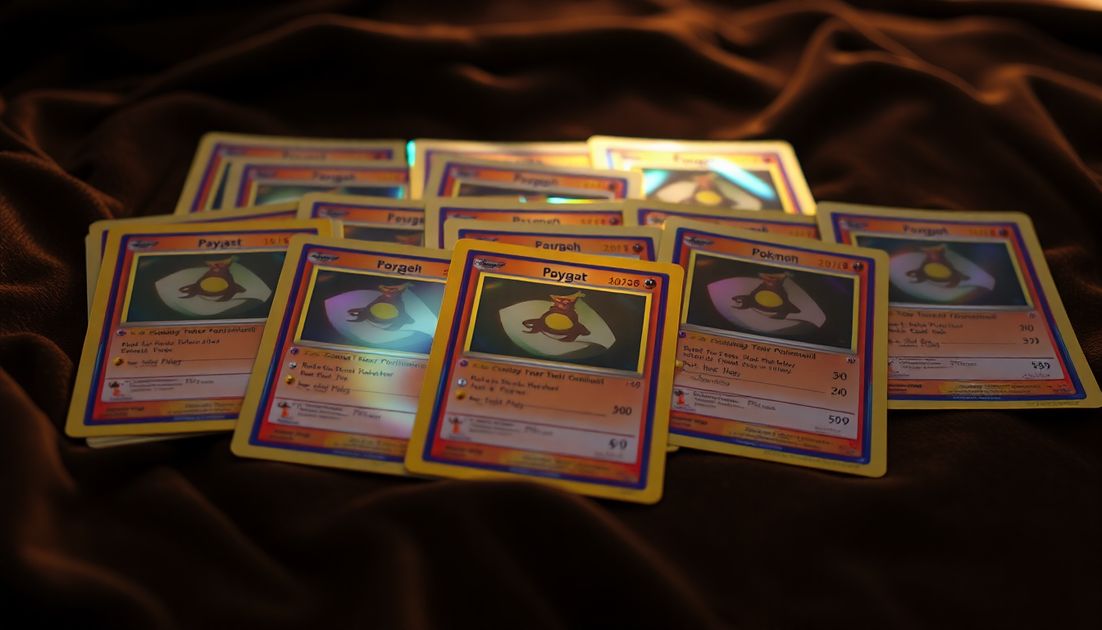
Most collectors believe free Pokemon TCGO codes are either scams or impossible to find legitimately. This couldn't be further from the truth. While genuine code giveaways exist through official channels, understanding the real value proposition requires looking beyond the myth of unlimited free packs.
The Pokemon Trading Card Game Online discontinued in June 2023, replaced by Pokemon TCG Live. This transition created a massive shift in how digital codes work, their market value, and what constitutes legitimate acquisition methods. Code cards from physical products now primarily feed into Pokemon TCG Live, fundamentally changing the economics of digital collecting.
Understanding this landscape means recognizing that free Pokemon TCGO codes (now Pokemon TCG Live codes) represent just one piece of a broader digital-physical arbitrage opportunity. Smart collectors focus on the intersection of physical pack EV, digital redemption value, and secondary market pricing to maximize returns.
Legitimate Sources for Free Pokemon TCG Live Codes
Official Pokemon channels provide genuine code opportunities, though quantities remain limited and timing proves crucial. Pokemon Center occasionally runs promotional campaigns tied to new set releases, offering code cards with qualifying purchases. The Spring 2024 Paldean Fates promotion gave customers one code card per $25 spent, translating to approximately 35-40 codes distributed per day during peak periods.
Pokemon Professor program members receive monthly allocations of promo codes for tournament organization and community events. These typically include 12-15 booster pack codes plus exclusive cosmetic items unavailable through standard pack openings. The barrier to entry requires passing the Professor exam and maintaining active tournament judging status.
YouTube content creators and Twitch streamers frequently host legitimate giveaways, though success rates hover around 0.3-0.8% for major channels. PokemonTCG, Tricky Gym, and AzulGG run monthly code drops with subscriber requirements ranging from 6 months to 2 years. MaxMoeFoe's code giveaways typically see 15,000-20,000 entries for 50-100 codes.
Reddit communities like r/ptcgo and r/PokemonTCG maintain weekly code-sharing threads where users post unused codes from their physical pack purchases. Response times average 2-4 minutes during peak hours, making automation tools or constant monitoring necessary for consistent acquisition.
Discord servers dedicated to Pokemon TCG trading operate similar rapid-fire code drops. The largest servers maintain 15,000+ members competing for 20-30 daily code postings. Success requires notification settings, quick reflexes, and understanding time zone patterns for when codes typically get posted.
Market Value Analysis: Why Free Codes Matter Less Than You Think
Digital pack codes from recent sets carry secondary market values ranging from $0.45-$1.20 depending on the set and pull rates. Paldean Fates code cards consistently trade for $0.85-$0.95 on eBay, while standard sets like Paradox Rift and Obsidian Flames hover around $0.50-$0.65. This creates an interesting arbitrage opportunity that makes hunting for free Pokemon TCGO codes less attractive than bulk purchasing.
Physical booster packs at wholesale rates ($2.80-$3.20 for standard sets) include code cards worth roughly $0.55 of that price. The remaining $2.25-$2.65 represents the physical card value, creating situations where digital redemption provides better expected value than physical pack openings for certain print runs.
Consider the Pokemon 151 Ultra Premium Collection released in November 2023. Each collection included 16 booster packs with code cards valued at $12.80-$14.40 in secondary markets. Collections selling for $110-$125 meant code cards represented 11-13% of the total product value, a significant portion often overlooked by physical collectors.
The transition from TCGO to Pokemon TCG Live eliminated trading functionality between accounts, fundamentally changing code economics. TCGO codes could generate tradeable digital cards worth $2.50-$4.20 for chase cards like Charizard ex from Pokemon 151 or Lugia VStar from Silver Tempest. Pokemon TCG Live's crafting system caps individual card value at predetermined credit costs, removing price discovery mechanisms.
Set-Specific Code Values and Pull Rates
Recent set analysis reveals significant variations in code card secondary pricing based on pull rates and chase card availability. Pokemon 151 codes maintain premium pricing ($0.90-$1.05) due to the set's 1:15.4 pack rate for special illustration rares and 1:71.3 pack rate for the coveted Charizard ex Special Illustration Rare.
Paldean Fates codes trade higher ($0.85-$0.95) despite lower individual chase card values because of the set's shiny Pokemon focus and 1:28 special rare pull rate. The Charizard ex Shiny commands $45-$65 in played condition, while PSA 10 examples reach $180-$220 based on recent eBay sold listings.
Standard sets show more volatile code pricing. Obsidian Flames codes dropped from $0.75 launch pricing to $0.45-$0.55 current rates as Charizard ex supply increased and meta viability decreased in competitive play. Tournament results from the 2024 World Championships showed only 3% of decks including Charizard ex variants, directly impacting both physical and digital demand.
Temporal Forces represents an outlier with codes maintaining $0.70-$0.80 pricing despite mediocre chase card values. The set's unique ancient/future mechanic and strong trainer cards like Professor's Research created sustained competitive demand that traditional pull rate analysis couldn't predict.
Strategic Approaches: Beyond Hunting for Free Pokemon TCGO Codes
Smart collectors recognize that chasing free Pokemon TCGO codes often yields lower returns than systematic market approaches. Bulk code purchasing during set launches provides better cost averaging than hoping for free distribution, especially when factoring in time investment and opportunity costs.
Japanese code cards offer compelling arbitrage opportunities for collectors willing to navigate import processes. Pokemon Card 151 Japanese codes trade for $0.30-$0.45 on Yahoo Auctions, compared to $0.85-$0.95 for English equivalents. Language barriers and shipping costs ($8-$12 for 20+ codes) create friction that maintains this pricing disparity.
Tournament prize support occasionally includes exclusive code distributions unavailable through retail channels. Regional Championships and Special Events provide promo codes for alternate art cards and exclusive cosmetics. The Pikachu VMAX Gigantamax promo code from 2024 regionals trades for $12-$18 on specialized Pokemon forums, representing 15-20x the value of standard booster codes.
Pre-release events offer guaranteed code allocation for attendance fees typically ranging $25-$35. Each participant receives 6 booster packs plus corresponding codes, creating a cost basis of $4.15-$5.85 per code when factoring in pack value. This beats secondary market pricing while providing tournament experience and potential physical pulls.
Local game store partnerships with distributors sometimes yield promotional code opportunities. Stores receiving case incentives (typically 1 case per 6 ordered) may distribute excess codes during slow periods. Building relationships with store owners and demonstrating consistent purchasing patterns increases access to these informal distributions.
Competitive Play Integration and Code Efficiency
Pokemon TCG Live's integration with competitive play creates unique value propositions for tournament players requiring specific deck configurations. Miraidon ex builds require 3-4 copies plus supporting cards, translating to 40-60 pack openings for complete deck assembly through random pulls.
Crafting systems provide guaranteed card acquisition at fixed credit costs, making code efficiency calculations more straightforward. Charizard ex costs 1,200 credits to craft, equivalent to approximately 24-30 booster pack codes depending on pack type and duplicate rates. Purchasing these codes at $0.55 each ($13.20-$16.50 total) beats most secondary market pricing for physical copies.
Tournament players often overlook the ladder climbing benefits of code redemption. Each booster pack provides 10-15 experience points toward battle pass progression, with premium tiers offering exclusive rewards and additional card crafting materials. Regular code redemption accelerates progression beyond what casual play allows.
The daily challenge system rewards consistent play with bonus credits and cosmetic unlocks. Players redeeming codes regularly accumulate these bonuses more efficiently than those relying solely on match rewards, creating compounding returns over 3-6 month periods.
Risk Assessment and Market Outlook
Code acquisition carries several underappreciated risks that collectors should understand before investing significant time or money. Pokemon Company International maintains strict policies against code reselling, though enforcement remains inconsistent and primarily targets large-scale commercial operations.
Account restrictions represent the primary risk for code trading. Pokemon TCG Live terms of service prohibit account selling and sharing, with violations resulting in permanent bans. This makes code stockpiling on multiple accounts a risky proposition, especially for codes obtained through questionable channels.
Reprint announcements can devastate code values overnight. Pokemon 151 experienced 15-20% code price drops when Pokemon Classic Collection was announced with identical card pool access. Similarly, Celebrations codes became nearly worthless when the set received unlimited print status in early 2024.
The physical-digital arbitrage opportunity faces long-term pressure as Pokemon Company optimizes product design. Recent products like Pokemon TCG Battle Academy include fewer booster packs relative to their price points, reducing code card density and affecting secondary market dynamics.
Future Market Considerations
Pokemon's digital strategy continues evolving with mobile game integration and cross-platform functionality. Pokemon GO collaboration events have begun including TCG Live codes as rewards, potentially flooding the market with free alternatives that undermine secondary trading.
Subscription models represent another threat to code economics. If Pokemon implements a monthly subscription service providing guaranteed pack access, individual code values would likely collapse as players shift to predictable recurring costs rather than variable pack purchasing.
International market expansion could provide new arbitrage opportunities as different regions receive varying promotional support. European markets typically lag 2-3 months behind North American promotions, creating temporary imbalances for collectors willing to navigate currency exchange and shipping logistics.
The competitive scene's growth trajectory will significantly impact code demand. If Pokemon maintains current tournament prize structures and grows the player base by 20-30% annually, code consumption should increase proportionally, supporting current pricing levels despite supply-side pressures.
Smart collectors should view free Pokemon TCGO codes as supplementary rather than primary acquisition strategies. The most consistent profits come from understanding market inefficiencies, timing purchases around set cycles, and maintaining realistic expectations about the time investment required for meaningful free code accumulation.