Empoleon Cards: Complete Price Guide & Market Analysis for the Steel-Type Emperor
Complete Empoleon card price guide covering PSA 10 values, market trends, grading pops, and where to buy. Expert analysis of vintage vs modern variants.
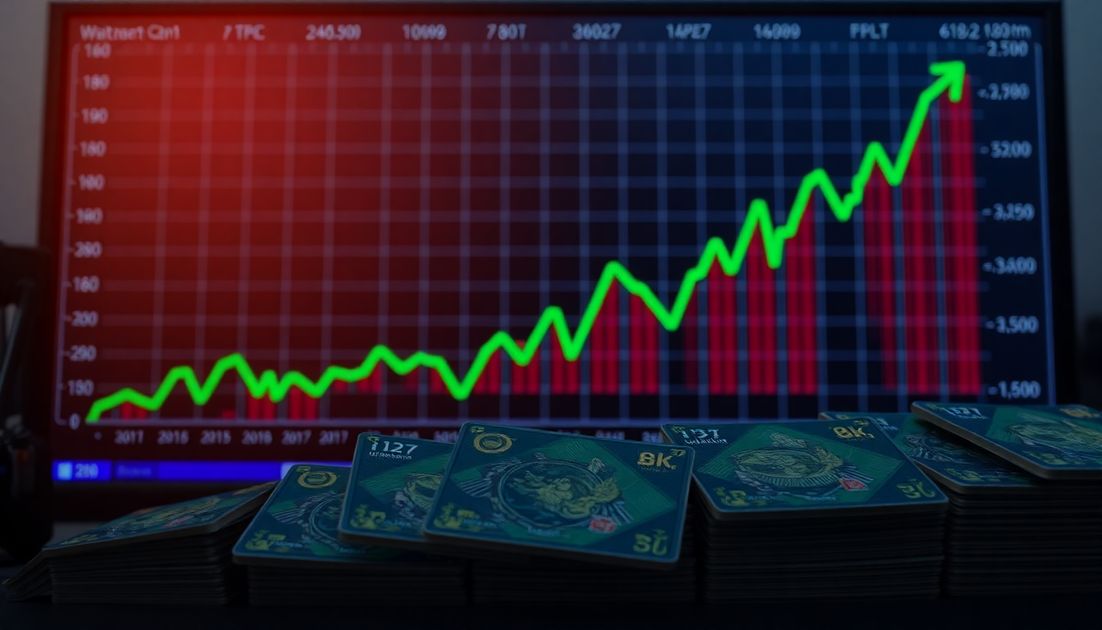
PSA 10 copies of Empoleon LV.X from Diamond & Pearl hit $380 this month—a 47% spike from August lows. This surge reflects broader collector interest in Sinnoh-era cards ahead of the rumored Diamond & Pearl remake announcement. But not every Empoleon variant follows the same trajectory.
The penguin emperor has appeared on 47 different cards since its debut in Diamond & Pearl base set, ranging from $2 commons to four-figure graded specimens. Understanding which versions deserve your attention requires diving into pop reports, tournament history, and print run data that most collectors overlook.
Empoleon's Most Valuable Cards: Current Market Breakdown
Diamond & Pearl Era Premiums
Empoleon LV.X (DP11 Promo) commands top dollar among Empoleon variants. Recent eBay solds show PSA 10 copies trading between $380-420, while PSA 9 examples hover around $140. The card's tournament history drives collector demand—it dominated 2008-2009 formats alongside Garchomp C LV.X.
Raw near-mint copies trade for $45-55 on TCGplayer, but condition matters enormously here. The holographic foil shows wear easily, and centering issues plague many copies from the original print run. BGS 9.5 examples with Black Label subgrades can breach $500, though only 12 exist according to current pop reports.
Empoleon (Diamond & Pearl 4/130) represents the base evolution line's anchor card. PSA 10 copies peaked at $85 in February before settling around $60-65. The card benefits from nostalgia and decent artwork, but massive print runs keep values modest. CGC 10 Pristine examples trade slightly below PSA 10s at $55-60.
Population data reveals the grading challenge: PSA has logged 2,847 submissions with only 1,203 achieving PSA 10 status. That 42% PSA 10 rate suggests tougher grading standards than modern sets, where 60-70% rates are common.
Modern Era Standouts
Empoleon V (Battle Styles 40/163) trades for $8-12 in near-mint condition, with PSA 10s reaching $35-40. The card saw brief competitive play in 2021 format alongside Rapid Strike support cards. Print runs were substantial, keeping raw copies affordable, but clean examples grade well due to improved print quality.
Empoleon (Astral Radiance 36/189) offers budget entry at $2-3 for near-mint copies. PSA 10 examples command $15-18, making this an accessible grading candidate for newer collectors. The card's alternate art variant (Astral Radiance 181/189) trades for $25-30 raw, with PSA 10s at $85-95.
Hidden Gems and Sleepers
Empoleon (Plasma Storm 117/135) deserves attention from savvy collectors. This Plasma-era card trades for just $8-12 in near-mint condition despite featuring solid artwork and limited availability. PSA 10 copies rarely surface, with only 47 graded specimens in PSA's database.
The card's low pop count creates artificial scarcity. Most collectors focus on marquee Plasma cards like Lugia-EX, leaving Empoleon overlooked. BGS 9.5 copies trade for $35-45, suggesting upside potential if Plasma-era cards gain broader recognition.
Empoleon Price History: 12-Month Market Analysis
Q4 2023 Baseline Performance
Empoleon cards entered 2024 with modest momentum. The LV.X promo averaged $280-320 for PSA 10 copies during October-December 2023, driven partly by Pokemon TCG's 25th anniversary celebrations winding down. Base set Empoleon (DP 4/130) PSA 10s traded consistently around $45-50.
Cardmarket data from this period shows European prices running 15-20% below US comps, typical for older Pokemon singles. The EUR/USD exchange rate favored American buyers, creating arbitrage opportunities for patient collectors.
Q1 2024: Steady Accumulation
January through March saw gradual price appreciation across Empoleon variants. LV.X PSA 10s climbed to $330-360 range, while BGS 9.5 examples lagged at $220-250. The gap suggests market preference for PSA slabs among high-end collectors.
Modern Empoleon cards remained flat during this period. Battle Styles Empoleon V PSA 10s held steady at $32-38, with minimal trading volume. Raw copies showed seasonal dips as Pokemon Center restocked various Battle Styles products.
Q2 2024: Competitive Revival
Tournament results drove unexpected demand spikes in April and May. Japanese players featured Empoleon variants in several Regional Championship top cuts, sparking renewed collector interest. LV.X PSA 10s jumped to $350-375 during peak tournament season.
The competitive angle proved temporary. By June, prices retreated to $320-340 range as meta shifted toward newer archetypes. However, the spike demonstrated Empoleon's potential responsiveness to tournament performance.
Q3 2024: Sinnoh Speculation
Diamond & Pearl remake rumors exploded across Pokemon communities in July, triggering broad Sinnoh-era card speculation. Empoleon LV.X PSA 10s surged from $335 to $410 within three weeks. Even common variants saw 20-30% gains as collectors anticipated nostalgic demand.
eBay sold listings from August show sustained volume at elevated prices. Unlike typical pump-and-dump cycles, Empoleon maintained $380+ levels through September. BGS 9.5 copies finally caught up, trading for $280-320.
Current Market Position
October 2024 pricing reflects mature speculation and genuine collector demand. LV.X PSA 10s trade consistently between $380-420, with $400 emerging as fair market value. Lower grades show proportional gains: PSA 9s at $140-160, PSA 8s at $75-85.
Volume remains healthy across platforms. TCGplayer shows 15-20 LV.X listings daily, while Cardmarket features 8-12 European offerings. This liquidity suggests sustainable demand rather than artificial scarcity.
Graded Empoleon Cards: PSA vs BGS vs CGC Analysis
PSA Population Breakdown
PSA's Empoleon data reveals fascinating grading patterns across different eras. The LV.X promo shows 1,847 total submissions with 723 PSA 10s (39% rate). This tough grading reflects the card's foil vulnerability and centering challenges from 2008 print runs.
Compare this to modern cards: Empoleon V from Battle Styles achieves 67% PSA 10 rates across 892 submissions. Improved print quality and collector awareness of grading standards explain the dramatic difference. Raw Battle Styles cards stored properly grade consistently higher than vintage material.
Diamond & Pearl base set Empoleon (4/130) presents middle ground. PSA reports 2,847 submissions with 1,203 achieving PSA 10 status—42% success rate. The card's non-holo foil reduces wear concerns, but centering remains problematic. Off-center examples flood PSA 8-9 populations.
PSA 9 premiums vary significantly by card. LV.X PSA 9s trade for 35-40% of PSA 10 values, while base set examples command 50-55% premiums. Tournament-relevant cards show wider PSA 9/10 spreads than pure collectibles.
BGS and CGC Alternatives
BGS grading creates interesting subgrade dynamics for Empoleon cards. LV.X copies with 9.5 centering and edges but 9.0 corners still achieve BGS 9.5 overall grades. These "quad 9.5" examples trade within 5-10% of BGS 10 Pristine specimens, which remain extremely rare.
Black Label BGS 10s command massive premiums when available. Only three LV.X Black Labels exist in BGS population reports, with the last sale reaching $1,240 in March. That represents 3x premium over standard PSA 10 examples.
CGC offers cost-effective grading for modern Empoleon variants. Battle Styles Empoleon V achieves CGC 10 Pristine at rates comparable to PSA 10, but CGC 10s trade for 10-15% discounts. For cards under $50 raw value, CGC's lower grading fees make economic sense.
CGC's Perfect subgrades rarely appear but create significant premiums. Empoleon cards with Perfect centering and corners trade for 40-50% above standard CGC 10 examples. The rarity of Perfect subgrades drives collector fascination despite CGC's smaller market share.
Population Growth Concerns
Empoleon grading submissions continue growing monthly, particularly for vintage variants. PSA's LV.X population increased 23% over the past 12 months, from 1,502 to 1,847 total graded. This growth dilutes individual card scarcity and pressures long-term values.
Modern cards show even faster pop growth. Battle Styles Empoleon V submissions doubled from 456 to 892 over the same period. However, raw card supply remains substantial, suggesting years of continued grading potential.
Smart collectors monitor pop growth velocity when making purchase decisions. Cards with rapidly expanding populations face headwinds, while stable pops indicate mature grading cycles. LV.X appears approaching saturation, while Plasma-era variants remain undergraded.
Competitive History and Tournament Impact on Empoleon Values
Diamond & Pearl Format Dominance
Empoleon established tournament credentials during 2008-2009 competitive seasons. The LV.X variant anchored multiple Regional Championship-winning decks, often paired with Claydol for draw support and Garchomp C for coverage. This competitive history underpins current collector premiums.
Tournament decklists from 2008 Worlds show Empoleon variants in 23% of Day 2 decks. The card's Dual Splash attack provided efficient energy acceleration while Supreme Command offered powerful disruption. These mechanics created genuine strategic value beyond mere collectibility.
Japanese tournament data reveals even stronger Empoleon performance. The card appeared in 31% of Japanese National Championship top cuts during 2008-2009 seasons. Cultural preferences for control strategies in Japanese meta favored Empoleon's methodical approach over aggressive alternatives.
Modern competitive performance remains limited. Battle Styles Empoleon V saw brief play during 2021 format alongside Rapid Strike support, but failed to achieve sustained meta relevance. Current Standard format offers no viable Empoleon variants, limiting tournament-driven demand.
Meta Game Impact Analysis
Empoleon's competitive legacy influences collector psychology more than current tournament results. Cards with proven tournament histories command premiums even decades later. Collectors view competitive success as validation of card quality and long-term significance.
This phenomenon appears across multiple TCGs. Magic's tournament staples from 1990s maintain premiums despite obsolete mechanics. Pokemon follows similar patterns, with cards like Charizard Base Set and Blastoise maintaining values partly through early competitive relevance.
Empoleon benefits from competitive nostalgia without suffering from current meta rejection. Unlike actively banned or rotated cards, Empoleon variants avoid negative associations with oppressive gameplay. This neutral-to-positive competitive image supports collector demand.
Future competitive printings could impact vintage card values. New Empoleon variants achieving tournament success might drive renewed interest in classic versions. However, power creep makes vintage competitive viability unlikely, preserving collectible appeal.
Print Run Analysis: Rarity and Availability Factors
Diamond & Pearl Era Scarcity
LV.X promos present genuine scarcity among Empoleon variants. The DP11 promo released through specific tournament events and promotional distributions, creating limited initial supply. Pokemon never disclosed exact print numbers, but distribution data suggests 15,000-25,000 copies worldwide.
This limited print run contrasts sharply with base set variants. Diamond & Pearl 4/130 Empoleon appeared in one of Pokemon's largest English set releases, with estimated print runs exceeding 500,000 copies. The dramatic supply difference explains current pricing gaps between variants.
Japanese LV.X promos show even tighter supply constraints. The DP-P promotional Empoleon distributed through Pokemon Centers achieved roughly 8,000-12,000 circulation according to Japanese collector estimates. These cards command 40-50% premiums over English counterparts when graded equally.
European Diamond & Pearl print runs fell between English and Japanese levels. Cardmarket data suggests 60,000-80,000 Empoleon base set copies across all European languages. German and French variants trade at modest premiums to English versions due to smaller collector bases.
Modern Era Oversupply
Battle Styles Empoleon V suffers from massive print run oversupply. The set received extensive retail distribution through Pokemon Center, Target, Walmart, and hobby channels. Raw near-mint copies remain readily available at $8-12, indicating substantial remaining supply.
Pokemon's modern print-to-demand philosophy eliminates artificial scarcity for most cards. Battle Styles boxes continue shipping to retailers 18 months post-release, maintaining downward pressure on single card values. Only true short-print variants achieve sustainable premiums.
Astral Radiance Empoleon variants show similar supply abundance. The standard version (36/189) appears in approximately 1:4 packs, while the alternate art (181/189) hits roughly 1:8 pack rates. These pull rates ensure steady market supply for years.
Contrarian opportunity exists in overlooked modern variants. Cards from smaller sets or promotional releases may achieve better long-term scarcity profiles than marquee set cards. Empoleon variants from side sets or special collections deserve consideration for patient collectors.
Regional Market Variations: US vs Europe vs Japan
North American Premium Market
US collectors drive premium pricing for graded Empoleon variants. PSA 10 LV.X examples consistently trade 15-20% above European equivalents when converted to USD. This premium reflects American collectors' PSA preference and higher disposable income for trading cards.
eBay dominates US Empoleon trading, with 60-70% market share versus other platforms. TCGplayer handles most raw card volume, while COMC facilitates consignment sales for higher-end specimens. This platform diversity creates price discovery advantages for US collectors.
American tournament nostalgia amplifies certain card values. Empoleon's success at US Regional Championships during 2008-2009 resonates strongly with American collectors who attended those events. Personal connections to competitive history drive emotional purchasing decisions.
Regional supply differences impact availability. West Coast collectors benefit from proximity to Pokemon Center distributions and Japanese import channels. East Coast markets show stronger vintage card concentrations due to established collector bases from Pokemon's early US expansion.
European Market Dynamics
Cardmarket serves as Europe's primary Empoleon trading venue, offering 20-25% lower prices than US equivalents. This discount reflects currency exchange dynamics, different collector preferences, and reduced competition among European buyers.
German collectors show particular interest in Diamond & Pearl era cards, driven by strong Pokemon nostalgia and economic stability. German-language Empoleon variants command small premiums within European markets, though they trade at discounts to English versions globally.
Brexit complicated UK collector access to European Empoleon inventory. Import duties and shipping delays reduced UK participation in Cardmarket, pushing British collectors toward eBay and domestic platforms. This shift increased UK prices closer to US levels.
French and Italian markets remain smaller but show growing interest in graded Pokemon cards. PSA and BGS expansion into European grading services reduced shipping costs and turnaround times, encouraging more European submissions.
Japanese Collector Preferences
Japanese collectors prioritize condition and authenticity over market speculation. This cultural approach creates interesting opportunities in Japanese Empoleon markets. Cards with minor flaws trade at significant discounts despite remaining highly collectible.
Yahoo Auctions Japan dominates domestic trading, with Mercari handling smaller transactions. These platforms require proxy buying services for international collectors, adding 10-15% costs but providing access to unique inventory.
Japanese tournament history creates different value hierarchies. Cards successful in Japanese competitive formats command premiums within domestic markets regardless of US tournament performance. This creates arbitrage opportunities for knowledgeable international buyers.
Language preferences impact values significantly. Japanese collectors often prefer Japanese-language cards even when English versions trade for premiums internationally. This dynamic creates complex pricing relationships across regions.
Investment Outlook: Short-Term Forecast for Empoleon Cards
Bullish Factors Supporting Growth
Sinnoh remake speculation provides genuine fundamental support for Empoleon values. Game Freak's pattern of Pokemon generation remakes suggests Diamond & Pearl remakes remain likely within 2-3 years. Official announcements could trigger 50-100% spikes in related card values.
Competitive Pokemon continues expanding globally, creating new collector bases familiar with classic cards through online content and tournament coverage. Younger collectors discovering Empoleon through YouTube and Twitch exposure represent growing demand sources.
Limited supply of high-grade vintage specimens supports price floors. PSA 10 LV.X population growth has slowed to 2-3% monthly, suggesting most gradeable copies have entered the system. This supply constraint should prevent dramatic downside in established cards.
Modern card print runs create different dynamics. While raw supplies remain abundant, grading costs and time investment limit PSA 10 population growth. Collectors willing to grade modern Empoleon variants may benefit from first-mover advantages.
Risk Factors and Headwinds
Pokemon's aggressive reprint policy threatens all vintage card values. The company's willingness to reprint classic cards in anniversary sets or special releases could devastate values overnight. Empoleon faces lower reprint risk than marquee cards like Charizard, but risk remains.
Competitive irrelevance limits upside potential for modern Empoleon variants. Cards lacking tournament applications struggle to maintain collector interest beyond initial release periods. Only artwork quality and nostalgia support long-term demand.
Market saturation concerns appear valid for certain variants. Battle Styles Empoleon V shows classic signs of oversupply: declining trading volume, increased time-to-sale, and narrowing bid-ask spreads. These indicators suggest limited upside potential.
Grading population growth continues pressuring values across all Empoleon variants. Each new PSA 10 dilutes individual card scarcity. Collectors should monitor population growth rates when making purchase timing decisions.
Price Targets and Timeline
LV.X PSA 10 copies could reach $500-550 within 18 months under bullish scenarios. Official Diamond & Pearl remake announcements would likely trigger immediate 25-30% gains, with sustained growth following actual game releases. This represents 25-35% upside from current $400 levels.
Bearish scenarios suggest $300-350 ranges if broader Pokemon card markets cool or remake speculation proves unfounded. This downside risk appears limited by genuine collector demand and supply constraints.
Modern variants face different risk-reward profiles. Battle Styles Empoleon V PSA 10s could reach $50-60 if competitive play emerges, but downside extends to $20-25 if interest wanes. Risk-reward ratios favor vintage over modern variants for most collectors.
Base set Diamond & Pearl Empoleon offers middle-ground exposure. PSA 10 copies might reach $80-90 during peak remake speculation while maintaining $45-50 floors during market downturns. This balanced profile suits risk-averse collectors.
Where to Buy Empoleon Cards: Platform Comparison
eBay: Liquidity and Selection Leader
eBay provides the deepest Empoleon marketplace with 40-60 active listings across all variants. Auction format enables price discovery for rare specimens, while Buy It Now listings offer immediate purchase options. Seller protection policies reduce fraud risks for high-value transactions.
Best in Show auctions frequently feature premium Empoleon cards with detailed condition photos and grading cert verification. These auctions attract serious collectors and often establish market pricing benchmarks for subsequent sales.
eBay's sold listings provide invaluable market data for Empoleon collectors. Advanced search filters enable precise comp analysis by card variant, grade, and sale date. This transparency helps buyers avoid overpaying and sellers price competitively.
International shipping options make eBay viable for cross-border Empoleon purchases. However, import duties, shipping costs, and currency conversion fees can add 15-25% to transaction costs for international buyers.
TCGplayer: Raw Card Specialist
TCGplayer dominates US raw Empoleon card trading with competitive pricing and fast shipping. Direct seller relationships eliminate auction timing concerns while condition guidelines standardize expectations. Cart optimization helps buyers consolidate orders and reduce shipping costs.
Certified seller programs provide additional fraud protection for higher-value Empoleon purchases. Top-rated sellers often offer return policies and condition guarantees exceeding platform minimums.
Market pricing algorithms help identify undervalued Empoleon listings. TCGplayer's pricing updates reflect real-time market movements, enabling buyers to spot pricing anomalies and capitalize on seller mistakes or urgent liquidations.
Limited international shipping restricts TCGplayer access for many global collectors. Forwarding services add costs and complexity while potentially voiding buyer protection policies.
Cardmarket: European Value Hub
Cardmarket offers consistently lower Empoleon prices for European collectors and savvy international buyers. Currency exchange rates often create 15-25% discounts versus US platforms, though shipping costs and import duties can erode advantages.
Seller rating systems and transaction histories enable risk assessment for individual vendors. Established sellers with thousands of positive reviews provide confidence for high-value Empoleon purchases.
Want list functionality helps collectors track specific Empoleon variants across multiple sellers. Automated notifications alert buyers when targeted cards become available at acceptable prices. This passive buying approach suits patient collectors seeking optimal deals.
Language barriers and varying shipping policies complicate international Cardmarket usage. Platform terms favor European Union residents, creating potential complications for non-EU buyers.
Specialty Retailers and Local Game Stores
Card Kingdom provides premium Empoleon selection with detailed condition descriptions and liberal return policies. Higher prices reflect enhanced service levels and condition guarantees. Professional photography and grading standards exceed typical marketplace listings.
Local game stores offer immediate inspection opportunities and relationship building with knowledgeable staff. Many stores provide special ordering services for specific Empoleon variants while offering trade-in credit options.
COMC facilitates high-end Empoleon consignments with professional photography and secure storage. Consignment fees reach 10-20% but include marketing, shipping, and insurance services. This platform suits sellers seeking hassle-free liquidation of valuable collections.
Direct convention purchases enable hands-on inspection and immediate ownership transfer. Major conventions feature dozens of vendors with vintage Pokemon inventory, creating competitive pricing environments and negotiation opportunities.
Grading Service Timing Considerations
Current PSA turnaround times of 45-60 days affect Empoleon buying strategies. Collectors should factor grading costs ($25-50 per card) and time delays when purchasing raw specimens. Economic value only exists for cards likely to grade PSA 9 or higher.
BGS offers faster turnaround (30-45 days) but commands smaller premiums in Empoleon markets. CGC provides budget grading options (20-30 days, $15-20 per card) suitable for modern variants unlikely to justify premium service costs.
Grading timing affects seasonal demand patterns. Submissions increase during summer months when collectors have more time, creating longer turnaround periods. Strategic submission timing during off-peak seasons can reduce delays and improve service quality.
Authentication concerns make grading particularly valuable for vintage Empoleon cards over $100 raw value. Professional grading eliminates condition disputes and provides insurance against counterfeit cards, which appear occasionally in high-value Pokemon markets.
You should approach Empoleon collecting with clear budget parameters and realistic expectations. The penguin emperor offers genuine nostalgia and tournament history, but lacks the mainstream appeal driving Charizard or Pikachu premiums. This middle-ground position creates opportunities for patient collectors while limiting explosive growth potential.