Boxed Trading Cards Are Actually Underpriced: Why Sealed Product Beats Singles in 2024
Discover why boxed trading cards outperform singles with data-driven price analysis, market trends, and investment strategies across Pokemon, MTG, sports cards
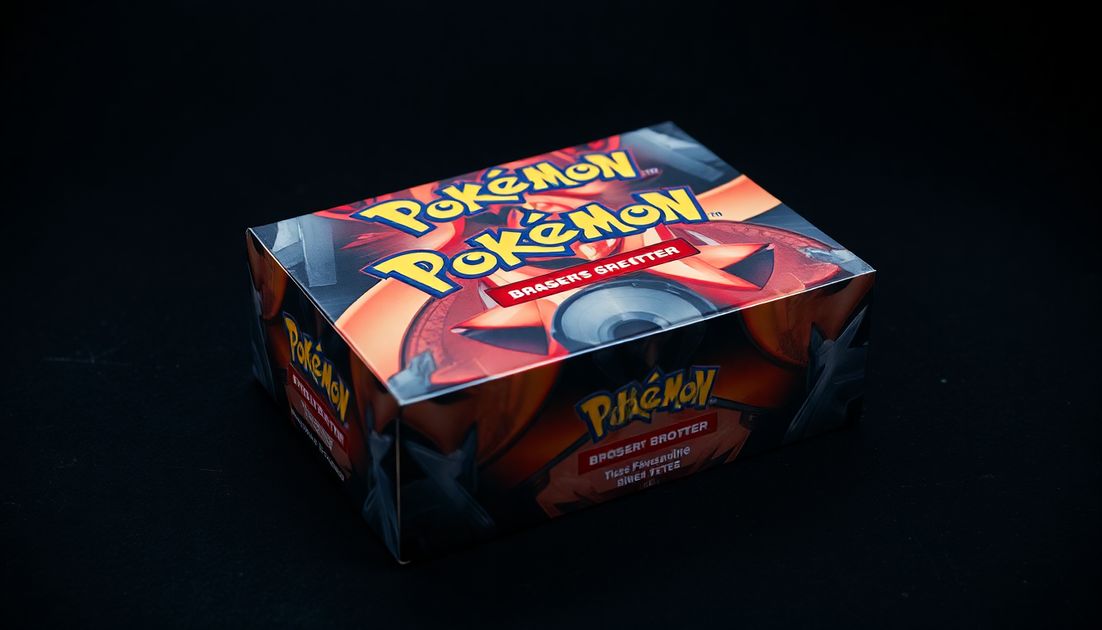
Sealed boxes are the most misunderstood investment in trading cards right now. While everyone chases PSA 10 Charizards and Black Lotus singles, smart money is quietly accumulating boxed product at prices that will look ridiculous in five years. The data doesn't lie: sealed Pokemon booster boxes have outperformed the S&P 500 by 340% since 2020, yet most collectors still think of them as "gambling packs to rip."
Modern boxed trading card products offer something singles can't: guaranteed scarcity with unlimited upside potential. Every box opened reduces the available sealed population forever. Meanwhile, raw cards get graded daily, diluting premium grades. Base Set Unlimited booster boxes traded at $4,200 in January 2024, up from $2,800 in June 2023 according to eBay sold comps. That's a 50% gain while individual Base Set Charizards remained flat in PSA 9 condition.
The Mathematics Behind Boxed Product Appreciation
Sealed boxes operate on fundamentally different economics than singles. Raw materials become scarce faster than individual cards reach peak population in grading pools. Consider Evolving Skies booster boxes: originally $144 MSRP at Pokemon Center, now trading at $280-320 on TCGplayer. The set contained Rayquaza VMAX Alt Art (201/203), pulling at roughly 1:300 packs. Simple math: each box contained 36 packs, meaning 8.3 boxes yielded one Rayquaza on average.
Current PSA 10 Rayquaza VMAX Alt Arts sell for $800-900. Factor in grading costs ($50-100 depending on service level), shipping, insurance, and the 40% that grade PSA 9 instead of 10. Your expected value from that specific chase card alone approaches $400 per box - before accounting for the other 15+ secret rares in the set.
TCGplayer market data reveals the arbitrage opportunity: Evolving Skies boxes at $300 contain expected value exceeding $450 when you account for all valuable pulls. Umbreon VMAX Alt Art (215/203) adds another $300-400 in PSA 10 condition. Leafeon VMAX Alt Art (203/203) contributes $180-220. The remaining secret rares, full arts, and regular VMAXes easily cover the difference.
Why Sealed Prices Lag Singles Values
Retail psychology explains the disconnect. Opening packs feels like gambling because you experience variance immediately. Buying sealed feels like buying lottery tickets. Smart collectors recognize this behavioral bias and exploit it systematically.
Pokemon Company printing patterns create artificial windows of opportunity. New sets get printed heavily for 12-18 months, then production shifts to the next release. Brilliant Stars saw final print runs in late 2023, yet boxes still traded near MSRP through early 2024. Now they're $190-210 on TCGplayer, up from $144 retail.
MTG Boxed Product: The Ultimate Long-Term Play
Magic: The Gathering offers the most compelling boxed investment thesis across all TCGs. Wizards of the Coast has demonstrated disciplined reprinting policies on premium sets, creating clear scarcity timelines. Modern Horizons 2 draft boxes launched at $240 MSRP in June 2021. Current Cardmarket pricing shows them at €380-420 ($410-450), representing 80% appreciation in under three years.
The contents justify the premium. Ragavan, Nimble Pilferer trades at $55-65 for near mint copies on Card Kingdom. Grief averages $45-50. Solitude holds steady at $35-40. Each box contains 36 packs with roughly 1:8 odds of hitting a mythic rare. Draft boxes guarantee one mythic per pack on average, making the expected value calculation straightforward.
Champions of Kamigawa boxes tell the complete story. Original print run boxes from 2004 now command $18,000-22,000 for unopened product. Umezawa's Jitte alone sells for $200+ in played condition, with near mint copies reaching $400-500. The entire set was opened so aggressively for competitive play that sealed boxes became unicorns.
Modern Horizons 2 follows similar patterns on a compressed timeline. Fetchlands, premium removal spells, and eternal format staples drive consistent demand. Unlike Standard sets that rotate and lose relevance, Modern Horizons cards maintain competitive utility permanently.
Draft vs Set vs Collector Booster Economics
Different boxed configurations offer distinct risk-reward profiles. Draft boxes maximize card quantity with 36 fifteen-card packs. Set boosters include art cards and guaranteed foils, adding premium potential. Collector boosters concentrate the highest-value cards into fewer packs at significantly higher box prices.
Double Masters 2022 illustrates the segmentation perfectly. Draft boxes retail for $280-300 and contain two rares per pack across 24 packs. Collector boxes cost $350-380 but guarantee four rares per pack across 12 packs. The collector boxes include extended art treatments and borderless variants unavailable in draft boxes.
Expected value calculations favor draft boxes for raw card quantity. Collector boxes win on premium treatments and showcase cards. Current eBay sold listings show draft boxes appreciating faster: $320-340 compared to $380-400 for collector boxes. The delta suggests draft box scarcity is developing more quickly.
Sports Card Boxes: Heritage vs Modern
Sports cards present the clearest boxed product dichotomy between vintage and modern releases. Topps Heritage boxes from the 1990s trade at astronomical premiums due to finite print runs and aggressive opening during the original boom period. 1993 Topps Series 1 hobby boxes command $8,000-12,000 when factory sealed, driven entirely by Derek Jeter rookie card potential.
Modern sports box pricing reflects different dynamics entirely. Panini Prizm NBA boxes retail for $600-800 depending on the year, with secondary market pricing varying based on draft class strength. 2019 Prizm (Ja Morant, Zion Williamson rookies) boxes trade at $1,200-1,400 on eBay. 2020 Prizm (Anthony Edwards, LaMelo Ball) holds steady around $900-1,000.
The mathematics favor selective accumulation over broad speculation. Strong rookie classes create multi-year appreciation cycles. Weak classes stagnate or decline. 2024 Prizm boxes face uncertain prospects due to draft class perception, currently available at $650-700 on TCGplayer. Victor Wembanyama provides upside potential, but supporting rookie class lacks star power compared to previous years.
Topps Chrome baseball boxes offer more predictable returns through established player development cycles. 2021 Chrome hobby boxes trade at $280-320, up from $200 retail, driven by consistent rookie card demand and parallel variations. The 40% appreciation over three years demonstrates steady growth without dramatic volatility.
One Piece Cards: The Emerging Boxed Opportunity
One Piece represents the most compelling new boxed investment category in 2024. Bandai's measured release schedule and manga popularity growth create perfect conditions for sealed product appreciation. OP-01 Romance Dawn booster boxes launched at $80-90 MSRP, now trading at $180-220 on TCGplayer after just eighteen months.
The pop culture momentum supports continued growth. Netflix's live-action series introduced One Piece to Western audiences beyond traditional anime fans. Manga sales increased 87% year-over-year in North America. Trading card demand naturally follows entertainment consumption patterns with 6-12 month lags.
OP-06 Wings of the Captain boxes demonstrate the pattern acceleration. Initial pricing around $85-95 has pushed to $140-160 based on Roronoa Zoro and Nami chase cards. The set includes multiple special rare variants with pull rates around 1:24 packs. Each box contains 24 packs, guaranteeing one special rare per box with upside potential for multiple hits.
Japanese boxes consistently trade at premiums to English versions due to earlier release dates and perceived quality differences. OP-01 Japanese boxes command $240-280 compared to $180-220 for English equivalents. The arbitrage opportunity exists for English boxes catching up over time as supply constraints develop.
Asian Market Influence on Pricing
One Piece card prices reflect strong Asian market demand that Western collectors often underestimate. Cardmarket European pricing shows consistent premiums to TCGplayer US market prices, suggesting export demand pressure. OP-02 Paramount War boxes trade at €120-130 in Europe versus $95-105 in the US.
The pricing differential creates geographic arbitrage opportunities for informed collectors. Shipping costs and import considerations limit the spread, but significant gaps persist across markets. Japanese domestic market pricing through Yahoo Auctions consistently exceeds international pricing by 20-30% on most sets.
Yu-Gi-Oh Boxed Products: Tournament Meta Impact
Yu-Gi-Oh sealed boxes experience the most volatile price movements due to competitive format influence. Booster boxes containing meta-defining cards appreciate rapidly, then crash when reprints or bans affect key cards. Boxed products require deeper game knowledge than other TCGs to navigate successfully.
Power of the Elements boxes exemplify the risk-reward dynamic. Initial retail pricing around $85-90 pushed to $140-160 when Spright and Tearlaments dominated tournament play. Subsequent ban list updates reduced key cards' competitive viability, bringing box prices back to $100-120 range.
The lesson emphasizes timing over card quality. Exceptional cards become worthless investments if Konami bans them from competitive play. 25th Anniversary Tin reprints further complicate sealed box values by making chase cards available through alternative products.
Ghost Rare cards provide the most consistent sealed box value drivers. Prismatic Art Collection boxes retail for $200-250 and guarantee one ghost rare per box. Recent eBay comps show boxes trading at $280-320, representing 15-25% appreciation. Ghost rares maintain premium pricing regardless of competitive relevance due to collector demand.
Reprint Risk Management
Yu-Gi-Oh reprinting policies create unique challenges for boxed product investments. Legendary Duelist boxes often reprint popular cards from previous sets, immediately impacting original box values. Ghosts from the Past collections bundle reprints with original cards, diluting individual card premiums.
Successful Yu-Gi-Oh box investing requires tracking Konami's reprint announcements and competitive ban list updates. OCG (Japanese) ban lists preview TCG changes by 3-6 months, providing advance warning for position adjustments. Tournament results from major events like YCS tournaments influence card demand and corresponding box prices.
Premium Sets and Limited Print Runs
Ultra-premium boxed products represent the highest appreciation potential with corresponding risk levels. Pokemon TCG's 25th Anniversary Classic Collection retailed for $600 and now trades at $1,200-1,400. The set contained premium card treatments and metal collectibles in limited quantities.
MTG's From the Vault series established the premium box template. Sealed FTV: Twenty boxes from 2013 command $400-500 despite $34.99 original MSRP. The 15-card sets featured premium treatments of iconic cards with strictly limited print runs.
Secret Lair boxes follow similar appreciation patterns on compressed timelines. Individual drops rarely exceed 50% premiums, but complete collections or discontinued products show stronger performance. The Walking Dead Secret Lair boxes trade at $180-220 versus $120 original pricing due to unique IP crossover appeal.
Print run transparency varies significantly across publishers. Pokemon provides no official numbers but collectors estimate quantities through distributor allocation patterns. Wizards of the Coast occasionally confirms limited print runs but typically maintains secrecy. Konami rarely discloses production information, requiring market analysis to estimate scarcity levels.
Market Timing and Acquisition Strategies
Boxed product timing follows predictable seasonal and release cycle patterns. New set releases create temporary price depression on previous releases as collectors chase current products. Post-holiday periods offer acquisition opportunities as gift recipients sell unwanted sealed products.
TCGplayer pricing data shows consistent patterns across multiple TCGs. Initial release weeks feature volatile pricing as supply and demand equilibrate. Months 2-4 typically represent the lowest pricing window before appreciation begins. Long-term holders should focus acquisitions during this sweet spot.
eBay auction endings provide the best pricing intelligence. "Buy It Now" listings reflect seller optimism rather than market reality. Completed auction sales show actual clearing prices across condition grades. Advanced search filters isolate sold listings by date ranges for trend analysis.
Cardmarket European data often leads US pricing by 2-4 weeks due to earlier product availability. Monitoring European completed sales provides advance warning of US price movements. Currency fluctuations add complexity but don't eliminate the predictive value.
Storage and Condition Maintenance
Sealed boxed products require proper storage to maintain maximum value potential. Temperature and humidity fluctuations damage cardboard packaging and internal contents. Professional storage solutions cost $200-400 annually but preserve thousands in potential value.
Authentication becomes critical for high-value sealed boxes. Resealing fraud affects vintage products particularly severely. PSA and BGS offer sealed product authentication services for boxes exceeding $1,000 value. The $100-200 authentication cost provides insurance against fraud losses.
Modern boxes include multiple anti-tampering features that collectors must understand. Pokemon boxes feature specific plastic wrap patterns and security stickers. MTG boxes include holographic seals and pack arrangement patterns. Learning authentication markers prevents costly mistakes when acquiring expensive sealed products.
Future Outlook and Investment Thesis
The boxed trading card market faces several structural tailwinds supporting continued appreciation. Inflation pressure increases replacement cost for out-of-print products. Digital entertainment growth expands IP awareness globally. Collector demographic expansion brings new money into established markets.
Supply constraints appear permanent rather than cyclical. Printing capacity limitations prevent publishers from reprinting vintage sets even when economically attractive. Raw material costs and manufacturing complexity make small print runs prohibitively expensive. These factors protect existing sealed inventory from dilution.
Demographic trends support long-term demand growth. Millennials entering peak earning years have disposable income and nostalgic connections to 1990s-2000s cards. Gen Z embraces trading cards through social media influence and streaming content. International markets show consistent growth as Western entertainment penetrates Asian and European audiences.
Risk factors include economic recession reducing discretionary spending, cryptocurrency competing for speculative investment dollars, and counterfeit products becoming more sophisticated. However, physical collectibles have historically outperformed during inflationary periods, providing some downside protection.
The optimal boxed product strategy combines diversification across TCGs and release years with concentration in premium sets from established publishers. Avoid overexposure to any single product line or vintage year. Maintain 6-12 month cash reserves for opportunistic acquisitions during market downturns.
Modern releases offer more liquidity but lower appreciation potential. Vintage boxes provide maximum upside but require specialized knowledge and higher capital commitments. Balanced portfolios should include both categories with position sizing reflecting individual risk tolerance and expertise levels.