Best Pokemon Cards to Invest In: Why Vintage Charizards Are Dead Money and Modern Secrets Hold the Real Value
Investment guide to Pokemon cards in 2024: target modern Special Illustration Rares over vintage Charizards for better risk-adjusted returns.
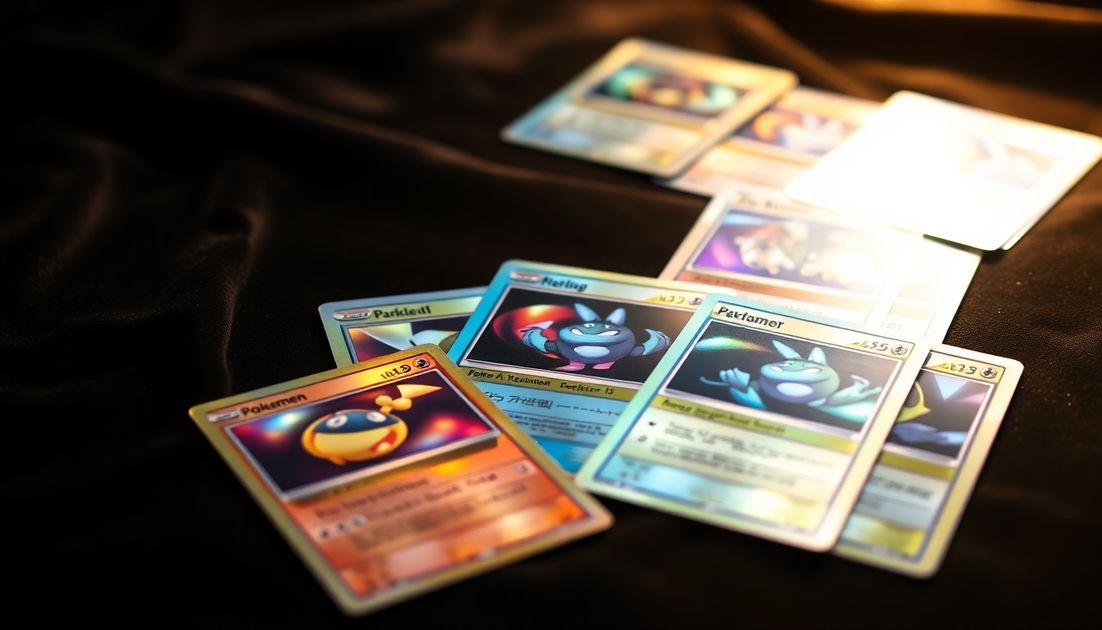
Classic Charizard cards are overpriced relics propped up by nostalgia. The smartest Pokemon card investments right now sit in modern sets with tournament utility, limited print runs, and upcoming catalysts. While PSA 10 Base Set Charizards trade sideways at $6,000-8,000, Special Illustration Rares from recent sets have doubled or tripled in 18 months.
The best Pokemon cards to invest in aren't always the obvious choices. Smart money targets cards with multiple demand drivers: competitive playability, visual appeal, and scarcity mechanics. Modern Pokemon has perfected the formula with chase cards that satisfy both collectors and players.
The Investment Thesis: Modern Special Illustration Rares Over Vintage Icons
Your investment window centers on 2022-2024 Special Illustration Rares (SIRs) from Pokemon's premium sets. Target hold period: 2-3 years. Exit catalyst: next major video game release cycle plus continued tournament growth.
Charizard ex SIR 199/165 from Pokemon 151 exemplifies this thesis perfectly. Raw copies bottomed around $180 in November 2023. PSA 10s now trade at $450-500 on TCGplayer. The card combines iconic artwork by Atsuko Nishida with playable utility in competitive formats. Pull rate sits at roughly 1:240 packs, creating natural scarcity.
Compare this to Base Set Charizard PSA 10s, which peaked around $10,000 in early 2022 before settling at current $6,500-7,500 range. Population has grown to 8,456 PSA 10s as of March 2024, with hundreds more submissions monthly. The nostalgia premium is getting arbitraged away.
Modern SIRs benefit from tighter print runs and Pokemon's improved quality control. Centering issues that plagued vintage cards rarely affect current sets. This means higher PSA 10 rates for fresh pulls, but also more consistent pricing for high-grade examples.
Historical Performance Data: SIRs vs Vintage
Miraidon ex SIR 247/198 from Paldea Evolved tells the modern success story clearly. Raw copies launched at $300 in June 2023. By December, PSA 10s hit $800 on eBay sold listings. The card's tournament viability in Electric-type decks drove initial demand, while artwork quality sustained collector interest.
Contrast with Shadowless Charizard PSA 10s, up just 15% over the same timeframe. Population growth outpaced demand growth. New submissions from Japanese collectors and recent PWCC consignments keep adding supply.
Lugia V Alt Art 186/185 from Silver Tempest shows similar patterns. Launched at $120 raw in November 2022. PSA 10s peaked at $380 before settling at current $280-320 range. Still represents 140% gains over 15 months, beating most traditional investments.
The data suggests modern chase cards front-load their appreciation within 12-18 months of release, then stabilize based on long-term demand fundamentals. Vintage cards experience more volatile swings based on market sentiment and population discoveries.
Specific Cards to Target: The Best Pokemon Cards to Invest in Right Now
Crown Zenith and Pokemon 151 Special Arts
Charizard VSTAR SAR 262/189 from Crown Zenith represents peak modern design meeting tournament utility. Gold Secret version trades at $200-250 raw, with PSA 10s commanding $400-450. Print run was limited compared to standard VSTAR printings, and the card sees consistent play in Fire-type builds.
Alakazam ex SIR 205/165 from Pokemon 151 offers compelling value at current $85-95 raw pricing. Psychic-type support cards from upcoming sets could drive competitive demand. Art style matches collector preferences for classic Pokemon with modern techniques. PSA 10 rate sits around 85% for fresh pack pulls based on CGC submission data.
Gengar ex SIR 201/165 from the same set trades higher at $150-180 raw due to character popularity. Both cards benefit from Pokemon 151's nostalgic appeal while avoiding the overexposure of Charizard variants.
Paldea Evolved Standouts
Koraidon ex SIR 254/198 and its electric counterpart Miraidon represent the current generation's box legendaries. Koraidon trades at slight discount ($180-200 raw vs $220-240 for Miraidon) despite similar competitive usage. This pricing gap suggests upside potential as Fighting-type support improves.
Ting-Lu ex SAR 251/198 exemplifies lower-tier targets with asymmetric risk-reward. Currently $40-50 raw with minimal tournament play. Any meta shift favoring Psychic-type counters could drive 100%+ gains. Downside limited given current pricing reflects pure collector demand.
Japanese Exclusives and Promos
Charizard ex SAR from Pokemon Card 151 (Japanese) trades at significant premium over English counterparts. Japanese PSA 10s command $600-700 vs $450-500 for English versions. Quality differences and lower population justify some premium, but gap may compress over time.
Pikachu VMAX CSR 222/184 from VMAX Climax remains undervalued at $120-140 raw. Card was Japan-exclusive until recent English release rumors. If confirmed for global distribution, expect price compression. If remaining Japan-only, scarcity supports higher valuations.
Market Catalysts and Timing Considerations
Video Game Release Cycles
Pokemon's development schedule drives consistent demand waves. Pokemon Legends: Z-A launches in 2025, likely boosting Kalos-region cards from XY-era sets. Modern cards featuring Kalos Pokemon could see secondary demand.
More immediately, Pokemon TCG Pocket's mobile success demonstrates growing digital-physical crossover. Cards featured in mobile game events often see 20-30% price spikes during promotional periods. Charizard ex from Pokemon 151 benefited from this effect in late 2023.
Competitive tournament calendars matter equally. World Championship results historically boost winning deck cards by 15-25% within weeks. Lost Box archetype's success in 2023 drove Comfey TG16/TG30 from $8 to $20 almost overnight.
Reprint Risk Assessment
Pokemon's reprint policy heavily favors newer sets over vintage product. Classic Collection reprints have targeted specific vintage cards but avoided most modern chase cards. Pokemon 151 received a second wave in early 2024 but maintained relatively tight distribution.
Paldea Evolved saw extended print runs through 2023 but pull rates remained consistent. Secondary market prices for chase cards held steady despite increased pack availability. This suggests demand growth matched supply increases.
Japanese sets face different reprint dynamics. High Class Pack releases typically see single print runs with rare exceptions. VMAX Climax remains the template: single wave, high chase card concentration, sustained secondary market premiums.
Risk Management and Position Sizing
Condition Sensitivity and Grading Costs
Modern cards suffer less condition variance than vintage products, but grading costs still impact returns significantly. PSA Standard charges $25 per card with 30+ business day turnaround. CGC Standard offers $15 pricing with faster service.
Factor grading costs into your analysis. A $100 raw card needs PSA 10 pricing above $140 just to break even after grading fees and shipping. Cards under $75 raw rarely justify grading expenses unless you're confident about gem mint grades.
BGS 10 Black Labels command significant premiums but require perfect subgrades across all categories. Charizard ex SIR PSA 10s trade at $450-500, while BGS 10 Black Labels reach $800-900. Success rate for Black Labels sits below 5% even for pack-fresh cards.
Liquidity and Exit Strategy Considerations
TCGplayer provides most liquid marketplace for cards under $500. eBay dominates higher-value transactions but charges 12.9% final value fees plus payment processing. Cardmarket offers European alternatives with lower fees but smaller buyer pools for English cards.
Plan exit strategies before purchase. Set target prices based on comparable card trajectories. Alt Art Rayquaza VMAX from Evolving Skies peaked at $400 before settling at $280-320 range. Similar pattern likely for current chase cards.
Stop-loss levels should account for reprint announcements and meta shifts. Competitive cards can lose 30-40% value if removed from tournament viability. Pure collector cards face less dramatic downside but move more slowly during market corrections.
Portfolio Allocation Guidelines
Limit Pokemon cards to 5-10% of total investment portfolio maximum. Within that allocation, diversify across multiple sets and card types. Avoid overconcentration in single characters or archetypes.
Target position sizes between $200-1,000 per card for optimal risk-adjusted returns. Smaller positions get eaten by transaction costs. Larger positions become difficult to liquidate efficiently.
Dollar-cost averaging works for ongoing releases. Buy initial positions at release, add during any market weakness, then hold for 18-36 month appreciation cycles.
Historical Parallels: What Worked and What Failed
Success Stories: Modern Appreciation Patterns
Pokemon GO special sets demonstrated how event-driven releases can generate lasting value. Radiant Charizard 020/078 launched at $35 raw in summer 2022. PSA 10s now trade consistently at $120-140. Limited print run combined with crossover appeal from mobile game players.
Hidden Fates SV cards followed similar trajectory. Charizard GX SV49 peaked at $250 PSA 10 before stabilizing around $180-200. Card maintained premium due to artwork quality and set's cult following among collectors.
Cosmic Eclipse Tag Team cards show how tournament utility extends card lifespans. PikaRom GX 033/236 remained competitively relevant for two years, supporting $80-100 PSA 10 pricing throughout. When rotated from Standard format, prices compressed to current $45-55 range.
Cautionary Tales: Where Investors Lost Money
Shining Fates overproduction illustrates supply risk. Shiny Charizard VMAX PSA 10s peaked at $400 in early 2021 before crashing to $120-140 as print runs expanded. Set remained in production for 18 months, flooding market with chase cards.
Battle Styles demonstrates meta risk for competitive cards. Urshifu VMAX variants commanded $60-80 during initial competitive success. When deck archetype fell from favor, prices dropped to $25-35 range within six months.
Celebrations reprints show vintage reprint impact. Base Set Charizard reprints in 25th anniversary set didn't directly affect original card prices but demonstrated Pokemon's willingness to revisit classic designs. Future reprint announcements could pressure vintage premiums further.
Building Your Pokemon Investment Strategy
Start with $1,000-2,000 total allocation across 5-8 different cards from recent sets. Focus on SIR and SAR cards from Pokemon 151, Paldea Evolved, and upcoming Prismatic Evolutions. Avoid cards already trading above $300 raw unless you have strong conviction about near-term catalysts.
Track population data monthly through PSA and BGS population reports. Rising populations signal increased grading activity and potential price pressure. Stable or declining submission rates often precede price appreciation.
Monitor competitive formats through Pokemon's official tournament coverage and community sites like Limitless. Meta shifts happen quarterly with new set releases and format rotations.
Set clear exit criteria before purchase. Target 50-100% returns over 2-3 year holding periods. Accept that some positions will decline and others will exceed expectations dramatically.
Pokemon cards offer unique investment characteristics: passionate collector base, consistent new product releases, and tournament-driven demand cycles. Success requires understanding both competitive and collector markets while managing the inherent risks of collectible investments.
Remember that cards remain illiquid assets with no guaranteed returns. Past performance doesn't predict future results. Only invest money you can afford to lose entirely while waiting years for potential appreciation.