Baseball Card Values: The Complete 2024 Price Guide for Collectors and Investors
Complete 2024 baseball card values guide with PSA pop reports, eBay comps, grading premiums, and market analysis for vintage through modern cards.
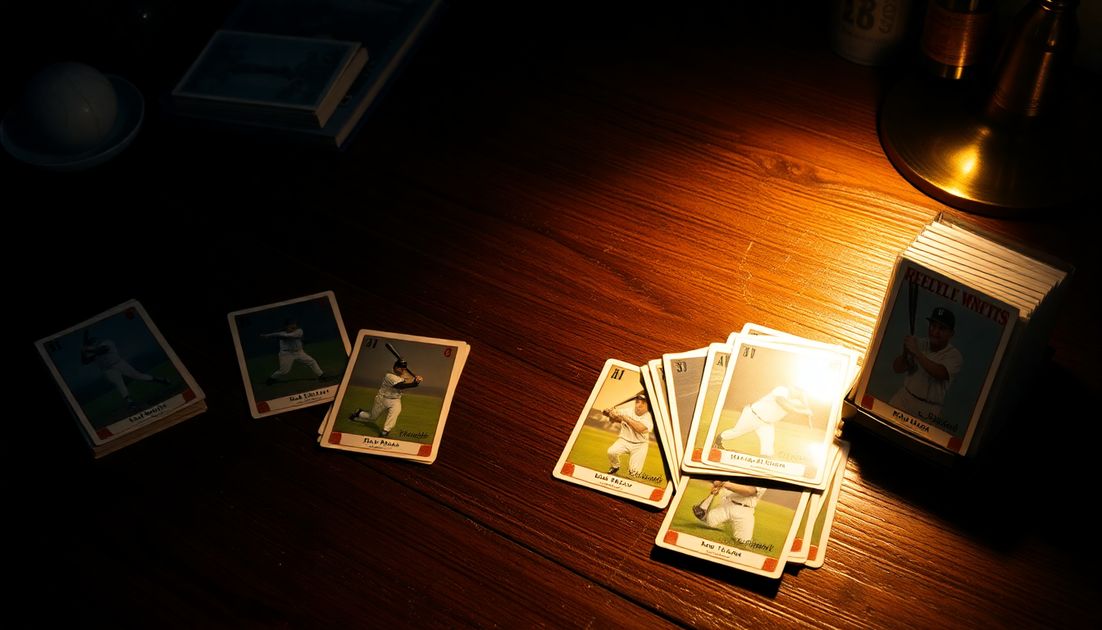
Myth: Vintage cards are always worth more than modern ones. Reality: A 2023 Gunnar Henderson Bowman Chrome Superfractor (BGS 9.5) sold for $47,500 last month, while most 1970s commons sit under $5. Baseball card values depend on scarcity, condition, and demand—not just age.
Understanding baseball card values requires analyzing multiple data points across different eras, conditions, and grading companies. You can't rely on outdated price guides or wishful thinking. The market moves fast, pop reports change weekly, and reprints can crater prices overnight.
Current Baseball Card Values by Era and Condition
Vintage Cards (Pre-1980): The Holy Grail Territory
The 1952 Topps Mickey Mantle (#311) remains the crown jewel. PSA 10 examples haven't surfaced in two years—the last PSA 9 sold for $312,000 in February 2024. Even PSA 7 copies command $45,000-$55,000 based on eBay sold comps.
But here's where it gets interesting: condition spreads are massive in vintage. That same Mantle in Good condition (PSA 2-3) trades for $2,500-$4,500. The pop report tells the story—only 6 PSA 10s exist versus 1,247 total graded copies. Supply constraints drive extreme premiums at the top.
Other vintage monsters include:
1909-11 T206 Honus Wagner: PSA 5 sold for $7.25M in 2022, but lower grades still fetch $500K+
1933 Goudey Babe Ruth (#181): PSA 9 examples hit $350K, while PSA 6s trade around $15K
1955 Topps Roberto Clemente RC: PSA 9 reached $478K; ungraded NM copies sell for $8K-$12K
The contrarian take? Mid-grade vintage offers better value. PSA 6-7 examples of key rookies often trade at 10-15% of PSA 9 prices despite being perfectly displayable. You're paying for the story, not condition perfection.
Modern Era (1981-1999): The Junk Wax Myth Debunked
Everyone calls this "junk wax era," but they're missing the forest for the trees. Yes, 1988 Donruss commons are worthless. But key rookies and inserts from this period command serious money in high grade.
1984 Donruss Don Mattingly RC (#248) exemplifies this perfectly. Raw copies trade for $15-25, but PSA 10s hit $2,400-$2,800. The pop report shows why—only 731 PSA 10s exist from 29,000+ submissions. Centering and print defects plague this issue.
Other standouts include:
1989 Upper Deck Ken Griffey Jr. RC (#1): PSA 10 sold for $39,000 in March 2024, up from $25K in late 2023
1993 SP Derek Jeter RC (#279): PSA 10 reached $288,000; even PSA 9s trade for $15K-$20K
1986 Fleer Michael Jordan RC (#57): Basketball, but relevant—PSA 10 hit $96,000
The secret? Population control matters more than print runs. The 1993 SP Jeter has a pop of just 123 PSA 10s despite massive collector interest. Compare that to the 1989 Griffey with 4,890 PSA 10s—still valuable, but the spread tells you everything about relative scarcity.
Contemporary Cards (2000-Present): Where Baseball Card Values Get Complicated
Modern cards split into distinct tiers based on print technology, autographs, and serial numbering. The 2001 Bowman Chrome Albert Pujols RC (#340) represents the transition—raw copies sit at $40-60, but PSA 10s command $3,500-$4,200.
Parallel premiums drive everything now. Base cards mean nothing unless they're graded perfectly. The real money lives in:
Refractors and Chrome variants: 2009 Bowman Chrome Draft Mike Trout Superfractor (1/1) sold for $3.936M. Even Orange Refractors (/25) trade for $35K-$45K in PSA 10.
Autographed rookie cards: 2018 Bowman Chrome Ronald Acuña Jr. Auto PSA 10 peaked at $7,800 before settling around $4,500-$5,500. Compare that to base chrome at $120-$180.
Serial numbered inserts: 2011 Topps Update Trout RC (#US175) in PSA 10 hits $32,000-$38,000. The printing quality on this specific card creates notorious centering issues—PSA 10 pop sits at just 3,308 from over 30,000 submissions.
Recent breakout performers include 2019 Bowman Chrome Wander Franco Superfractor and 2020 Topps Chrome Luis Robert variations. Franco's legal issues tanked his market 60% since late 2023, proving that baseball card values extend far beyond on-field performance.
Understanding Graded vs Raw Baseball Card Values
The Grading Premium Breakdown
Raw cards trade at massive discounts to graded counterparts, but the premium varies wildly by card and era. You need to understand the specific multipliers before buying or selling.
PSA 10 premiums typically run:
Vintage (pre-1980): 15-25x raw NM value
Junk wax era: 8-15x raw NM value
Modern (2000+): 3-8x raw NM value
But BGS Black Label (BGS 10 with all four subgrades at 10) commands even higher premiums. A 2009 Bowman Chrome Trout BGS 10 Black Label sold for $115,000 versus $38,000 for PSA 10 copies. That's a 200% premium for perfect subgrades.
CGC enters the conversation as the value alternative. CGC 10 Pristine cards trade at 70-80% of PSA 10 comps, making them attractive for personal collection over investment. The population reports stay lower since most submitters still prefer PSA for resale value.
Condition sensitivity varies dramatically. A 1952 Topps Mantle PSA 8 might trade for $85,000 while PSA 7 brings $55,000—that's a $30K difference for one grade point. Compare that to modern cards where PSA 9 to PSA 10 might represent 40-60% price differences.
Pop Report Analysis: The Numbers Behind Baseball Card Values
Population reports reveal everything about long-term value trends. Cards with stable or declining PSA 10 populations relative to total submissions create the strongest price appreciation.
Take the 1986 Fleer Basketball set. Jordan's pop report shows 4,690 PSA 10s from 85,000+ total submissions—a 5.5% PSA 10 rate. Compare that to the 1986 Donruss Jose Canseco RC with a 12% PSA 10 rate. Guess which card appreciates faster?
Baseball card values correlate directly with these population dynamics. The 1989 Upper Deck Griffey maintains strength because despite 4,890 PSA 10s, the submission rate continues growing. New collectors keep trying to grade raw copies, but the 10 rate stays around 16%.
Here's the contrarian angle: some collectors target PSA 9 copies of cards with extremely low PSA 10 populations. If a card has fewer than 50 PSA 10s but 500+ PSA 9s, you're often getting 80% of the visual appeal for 40% of the cost.
Market Trends Driving Baseball Card Values in 2024
Digital Influence and Celebrity Purchases
Social media drives modern baseball card values more than traditional hobby publications. When Logan Paul bought a PSA 10 1998 Pokemon Pikachu for $5.275M, it lifted all trading card categories. Baseball saw immediate spillover effects—vintage PSA 10 prices jumped 15-25% in the following months.
eBay sale data proves this connection. The week after major YouTube card opening videos, related baseball card sales spike 30-40% on average. PWCC Marketplace and Goldin Auctions time their major consignments around these social media cycles.
But celebrity influence cuts both ways. When Gary Vaynerchuk promoted 1980s basketball cards in 2021, baseball cards from the same era lagged behind. Attention is finite, and hot money chases whatever influencers promote.
Supply Chain and Reprint Risk
Reprints remain the biggest threat to baseball card values. Topps holds licensing rights through 2025, but they've shown willingness to revisit classic designs. The 2022 Topps Heritage High Numbers included short-print variations that confused collectors about original scarcity.
Modern cards face different supply risks. Panini lost MLB licensing in 2022, creating artificial scarcity for their final baseball products. 2022 Panini Prizm Baseball boxes now sell for $400+ over original retail, driven entirely by supply constraints rather than content quality.
Print run transparency varies by manufacturer. Topps rarely discloses exact numbers, but hobby box case numbers provide clues. Stadium Club typically prints smaller runs than Series 1/2, explaining higher single card values despite lower brand recognition.
Economic Factors and Market Timing
Baseball card values correlate with broader economic conditions more than most collectors realize. Rising interest rates in 2023-2024 pushed speculative money out of cards and into fixed-income investments. High-end vintage sales dropped 20-30% from 2021-2022 peaks.
But this creates opportunity. PSA 9 examples of key vintage cards now trade closer to historical norms. The 1952 Topps Mantle PSA 9 that hit $450K in 2022 can be found for $310K-$320K today. That's still expensive in absolute terms, but represents better relative value.
Regional preferences matter too. West Coast collectors favor rookie cards and prospects, while East Coast buyers gravitate toward Hall of Famers and vintage. This geographic split affects prices on different platforms—eBay (national) versus local card shows (regional).
Where to Buy and Sell: Maximizing Baseball Card Values
Best Marketplaces by Card Type and Price Range
For cards under $500: eBay dominates with the most liquidity. Search sold listings, not active auctions, for accurate comps. Factor in the 13% total fees (10% final value + 3% payment processing) when pricing. COMC (Check Out My Cards) works well for mid-grade vintage with their consignment model.
$500-$5,000 range: PWCC Marketplace and Heritage Auctions provide authentication and broader collector reach. Their buyer premiums (18-25%) seem high, but you're paying for legitimacy and marketing reach. Goldin Auctions specializes in high-end modern cards and offers quarterly premier auctions.
Above $5,000: Auction houses become essential for maximizing baseball card values. The authentication, professional photography, and marketing reach justify the 20-25% seller premiums. Private sales through established dealers work for vintage, but you sacrifice the competitive bidding process.
Regional card shows still matter for raw cards and collection purchases. You can inspect condition firsthand and negotiate without platform fees. The National Sports Collectors Convention remains the premier annual event—serious collectors budget for July show purchases.
Grading Strategy and Timing
Submission timing affects your results more than most realize. PSA turnaround times vary from 30 days (Express) to 150+ days (Value). But their grading standards seem tighter during peak submission periods when graders process more cards daily.
Card selection criteria for grading:
Minimum $200 raw value to justify $50+ grading costs
No visible creases or stains under magnification
Centered within 70/30 or better on all sides
Sharp corners with minimal white showing
BGS makes sense for modern cards where subgrades matter. A BGS 9.5 with 10 centering often trades closer to PSA 10 prices than straight BGS 9.5 averages suggest. CGC offers the fastest turnaround times but lower resale premiums.
Bulk submission strategies: Join group submissions through local card shops or online communities. This reduces per-card costs and provides expert pre-screening. Just understand that turnaround times extend significantly during peak seasons.
The smartest collectors track population reports monthly and submit cards before significant milestone anniversaries. The 1989 Upper Deck Griffey will see massive submission volume around its 35th anniversary—get your copies graded before the population explodes.
Baseball card values reflect supply, demand, and market sentiment in equal measure. You can't control reprints or economic cycles, but you can make informed decisions based on population data, condition assessment, and platform selection. The collectors who consistently profit understand that information advantages matter more than lucky pulls or celebrity endorsements.