Baseball Card Grading Services: The Complete 2024 Guide to PSA, BGS, CGC & SGC
Complete 2024 guide to baseball card grading services PSA, BGS, CGC, SGC with pricing, ROI calculations, submission strategies and pitfalls to avoid.
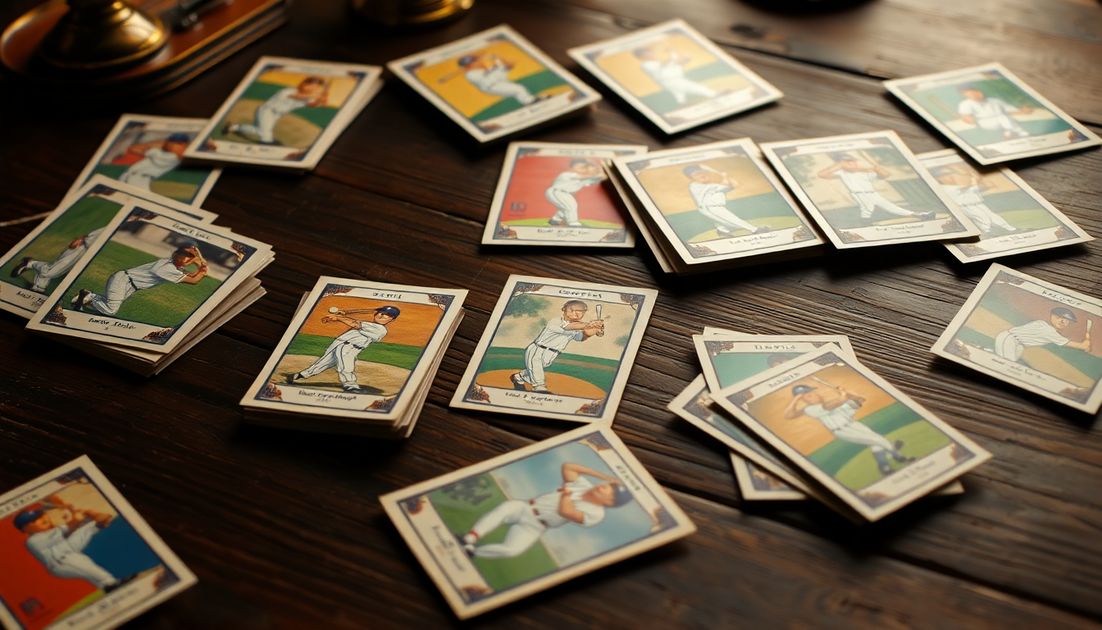
A PSA 10 1986 Fleer Michael Jordan sold for $350,100 in January 2022, while the same card in PSA 9 condition fetched just $31,200 — a staggering $318,900 difference for one grade bump. This price gap perfectly illustrates why choosing the right baseball card grading services has become the most critical decision for serious collectors and investors.
Modern baseball card grading transforms raw cardboard into liquid assets. The four major players — PSA, BGS, CGC, and SGC — each bring distinct advantages depending on your collection goals, budget, and timeline. Understanding their nuances separates profitable submissions from expensive mistakes.
Which Baseball Card Grading Service Should You Choose?
PSA: The Market Standard with Premium Recognition
PSA dominates market recognition, especially for vintage baseball cards. Their Population Report shows over 45 million cards graded since 1991, creating the most robust pricing data. A 1952 Topps Mickey Mantle PSA 9 commands $350,000+, while the same card in SGC 9 might fetch $280,000 — a $70,000 premium purely for the PSA holder.
Current PSA Pricing (2024):
Regular service: $25/card (20 business days)
Express: $75/card (10 business days)
Super Express: $300/card (2 business days)
Economy: $18/card (65 business days, $499 max value)
PSA's 10-point scale rewards eye appeal. Their graders show more forgiveness for minor print imperfections on vintage cards compared to BGS, making them ideal for pre-1980 submissions. However, PSA 10 population inflation has hurt some modern cards — the 2019 Topps Chrome Vladimir Guerrero Jr. Auto has 2,847 PSA 10s versus just 891 BGS 10s.
BGS: Subgrade Precision for Modern Cards
Beckett Grading Services excels with four subgrades (Centering, Corners, Edges, Surface) that provide granular condition assessment. A BGS 9.5 with 10 subgrades often sells for more than a straight PSA 10. The 2018 Topps Chrome Ronald Acuña Jr. Auto BGS 10 Black Label (quad 10s) reached $99,999 on eBay, while PSA 10 examples trade around $35,000.
BGS Service Levels:
Standard: $20/card (25 business days)
Express: $50/card (10 business days)
Premium: $100/card (5 business days)
BGS grades modern cards more strictly than PSA, particularly regarding print quality and surface imperfections. Their Black Label 10 (quad 10 subgrades) represents the hobby's holy grail, with population counts under 50 for most modern rookies.
CGC: The Value Play with Growing Acceptance
CGC entered baseball cards in 2020 but quickly gained traction with competitive pricing and consistent grading standards. Their holders feature superior tamper resistance and UV protection. Market acceptance grows steadily — a 1979 O-Pee-Chee Wayne Gretzky CGC 10 sold for $94,000 in 2023, roughly 85% of comparable PSA 10 sales.
CGC Current Rates:
Standard: $15/card (20 business days)
Fast Track: $35/card (10 business days)
Express: $70/card (5 business days)
CGC grades conservatively, with their 10s genuinely rare. The 2020 Topps Chrome Luis Robert Auto has 127 CGC 10s versus 891 PSA 10s. Smart money recognizes CGC 10s as potentially undervalued relative to their actual scarcity.
SGC: Vintage Specialist with Crossover Appeal
SGC built their reputation on vintage cards, using a 100-point scale that resonates with collectors familiar with coin grading. Their holders showcase cards beautifully with minimal borders. SGC 10 "Gem Mint" grades are exceptionally tight — the 1933 Goudey Babe Ruth #53 has zero SGC 10s in their population report.
SGC Pricing Structure:
Regular: $20/card (20 business days)
Express: $60/card (10 business days)
Expedited: $15/card (30 business days, $250 max value)
SGC shows the fastest turnaround times currently, with most regular submissions returning in 15-18 business days versus PSA's 25-30 day reality.
Submission Strategy and Declared Value Rules
Understanding declared value rules prevents costly insurance gaps and submission rejections. Each service requires accurate market value declarations based on raw card pricing, not graded premiums.
PSA Value Tiers:
Economy ($499 max): Perfect for modern rookies and prospects
Regular ($4,999 max): Covers most vintage stars and high-end modern
Express ($9,999 max): Premium vintage and ultra-modern
Super Express ($24,999 max): True investment pieces
Declaring a 1952 Topps Mickey Mantle at $2,000 when raw examples sell for $15,000+ violates PSA terms and voids insurance coverage. Research completed eBay auctions for accurate declared values — PSA tracks submission patterns and flags obvious undervaluations.
BGS and CGC use similar tier structures but show more flexibility with borderline cases. SGC's $250 expedited service works perfectly for vintage commons and modern prospects where upside exists but current values stay modest.
Card Preparation: Protecting Your Investment
Proper Sleeves and Storage
Card preparation determines grading success more than natural card condition in many cases. Start with penny sleeves — Ultra Pro or Dragon Shield brands prevent micro-scratches during handling. Never use top loaders for submissions; the card removal process damages edges and creates whitening.
Use Card Saver I semi-rigids exclusively for PSA submissions. Their specific dimensions fit PSA's machinery perfectly, while Card Saver II creates jamming issues. BGS accepts both Card Saver I and standard team bags with cardboard backing.
Packaging and Shipping Protection
Group submissions in sturdy boxes with bubble wrap padding. USPS Priority Mail provides $100 insurance automatically and tracking. For high-value submissions over $5,000, use FedEx or UPS with full declared value insurance.
Include submission forms in plastic sleeves to prevent moisture damage. Write card details legibly — misidentified cards delay processing and sometimes receive incorrect grades due to grader confusion.
Understanding Grading Criteria and Common Pitfalls
Centering Standards Across Services
Centering requirements vary significantly between graders. PSA accepts 60/40 centering for PSA 10, while BGS requires 55/45 for a 10 subgrade. Measure centering with digital calipers for borderline cards — a 1989 Upper Deck Ken Griffey Jr. with 65/35 centering might achieve PSA 9 but only BGS 8.5.
Modern cards from 2018+ show improved centering consistency, making BGS more viable for recent releases. Vintage cards benefit from PSA's more lenient centering standards, particularly 1970s Topps issues known for centering problems.
Corner and Edge Assessment
Microscopic corner wear kills grades faster than obvious surface damage. Use 10x magnification to inspect corners before submission. White spots smaller than pinheads often receive PSA 9, while BGS drops corner subgrades to 9 for similar issues.
Factory edge roughness on vintage cards receives different treatment by each service. SGC shows the most forgiveness for period-correct cutting variations on pre-1975 cards.
Surface Evaluation Secrets
Print dots differ from actual surface damage but hurt grades equally. The 1969 Topps set suffers from endemic print registration issues that PSA grades more harshly than surface scratches. Research known printing problems for your target set before submitting.
Modern chrome refractors show surface sensitivity to fingerprints and oils. Clean cards gently with microfiber cloths, never paper towels that create micro-scratches.
ROI Mathematics: When Grading Makes Financial Sense
Calculating Break-Even Points
Grading costs must be recovered through grade premiums to justify submission. A 2019 Topps Chrome Pete Alonso Auto costs $25 to grade at PSA regular service plus $15 shipping, creating a $40 investment. Raw cards trade for $180, PSA 9s bring $220, and PSA 10s reach $450.
Break-even analysis:
Raw cost: $180
Grading investment: $40
Total cost: $220
PSA 9 return: $0 (break-even)
PSA 10 return: $230 profit
This card only makes sense if you're confident in PSA 10 potential. Cards with thin grade premiums rarely justify submission costs unless you're building a long-term collection.
Vintage Card Premium Calculations
Vintage cards show wider grade premiums, making submissions more profitable. A 1975 Topps Robin Yount rookie in assumed NM condition:
Raw purchase: $400
PSA 8 sales: $650 (62% premium)
PSA 9 sales: $1,200 (200% premium)
PSA 10 sales: $4,500 (1,025% premium)
Even accounting for $40 grading costs, the upside justifies submission for properly selected cards.
Market Timing Considerations
Submit during peak demand cycles for maximum returns. Baseball rookies peak during playoff runs and award seasons. The 2019 Pete Alonso cards mentioned above traded 40% higher during his September ROY campaign than off-season levels.
Avoid submissions during market cooling periods. PSA 10 populations inflate during bear markets as collectors focus on grading rather than buying, hurting future premiums.
Advanced Submission Strategies
Portfolio Approach to Risk Management
Diversify submissions across certainty levels. Include "slam dunk" PSA 10 candidates with speculative higher-upside cards in each submission. A typical 20-card batch might include:
8 confident PSA 10s for steady returns
6 PSA 9 candidates with 10 upside
4 long-shot 10s with massive premium potential
2 vintage cards for portfolio balance
This approach smooths returns while maintaining upside exposure.
Service Selection by Card Era
Pre-1975 cards: SGC or PSA for vintage acceptance 1975-1995: PSA for market liquidity 1996-2010: BGS for subgrade value on stars 2010+: CGC for value, BGS for premium modern
These guidelines aren't absolute but reflect market preferences and grading tendencies for different eras.
Crossover Opportunities
BGS to PSA crossovers work for BGS 9.5s with strong subgrades, particularly 9.5 overall with centering and surface 10s. The crossover fee ($20) plus new holder often increases market value $50-100 for the right cards.
Never cross PSA 10s to other services — you risk downgrades with minimal upside potential.
Common Mistakes That Destroy Submission ROI
Oversubmitting Modern Cards
Modern card print runs dwarf vintage issues, limiting long-term grade premiums. The 2020 Topps Chrome set features 24 different Luis Robert cards across parallels and variations. Base cards show minimal PSA 10 premiums due to high populations and continued pack availability.
Focus modern submissions on true rookies, short prints, and parallels numbered under 499 copies.
Ignoring Market Cycles
Grading during market peaks often means receiving cards back during corrections. The February 2021 submission backlog meant cards returned during the summer 2021 market crash, turning profitable submissions into losses purely due to timing.
Monitor PSA's submission volume announcements and market sentiment before major submissions.
Misunderstanding Authentication vs Grading
Authentication-only services cost less but provide minimal market premiums. PSA Authentic commands small premiums over raw cards compared to numerical grades. Only authenticate obvious fakes or damaged high-value cards where documentation matters more than condition.
The Future of Baseball Card Grading Services
Population inflation affects all services as submission volumes increase annually. PSA processed over 74 million cards in 2023, triple their 2019 volume. This growth dilutes grade scarcity and pressures premiums downward for common cards.
Newer technologies like AI-assisted grading may standardize assessment criteria across services, potentially reducing current market inefficiencies between PSA, BGS, CGC, and SGC populations.
Smart collectors focus on truly scarce cards where grade premiums persist despite population growth. Pre-1970 Hall of Famers, short-print rookies, and numbered parallels maintain stronger grade premiums than base modern cards regardless of population trends.
Baseball card grading services transform collections from cardboard to investments, but success requires strategic thinking beyond simply submitting everything valuable. Understanding each service's strengths, calculating realistic ROI scenarios, and timing submissions properly separates profitable grading from expensive hobbies.