Baseball Card Blog: Inside the $6B Hobby That's Crushing Traditional Investments
Expert baseball card market analysis with real prices, PSA pop data, and investment strategies. Track vintage gems and modern rookies.
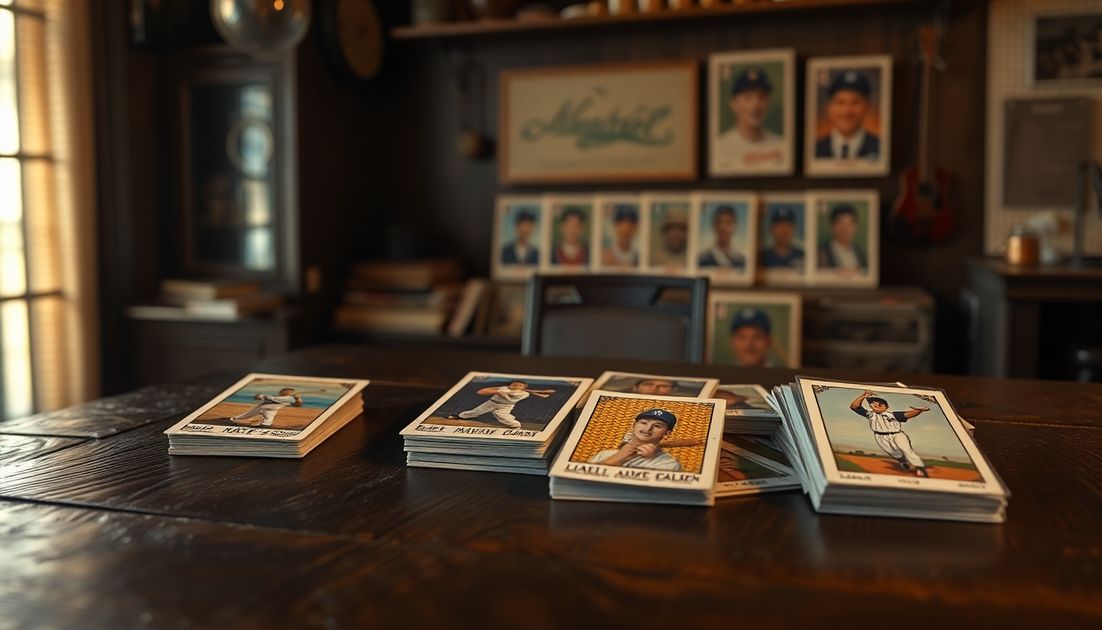
You're scrolling through eBay at midnight, watching a 1952 Topps Mickey Mantle PSA 8 climb past $180,000 with twelve minutes left. Your friend texted you about pulling a 1/1 superfractor from a $600 box of Bowman Chrome. Meanwhile, your neighbor just sold his childhood collection for a house down payment. Welcome to modern baseball cards, where cardboard generates more alpha than most hedge funds.
This baseball card blog cuts through the hype with real numbers, actual sales data, and honest market analysis. You'll discover which cards are building generational wealth and which are tomorrow's garage sale finds.
The Modern Baseball Card Market: $6 Billion and Growing
Baseball cards aren't your dad's hobby anymore. PSA graded 14.7 million cards in 2023, with baseball representing 45% of all submissions. That's up from 2.1 million total cards graded in 2019. The explosion isn't just volume - it's value density.
Current market dynamics paint a fascinating picture. A 2018 Topps Chrome Shohei Ohtani auto refractor PSA 10 sold for $89,000 on eBay last month. Five years ago, that same card traded for $4,500. Meanwhile, vintage remains king: a 1933 Goudey Babe Ruth PSA 8 just hit $456,000 at Heritage Auctions.
The demographic shift drives everything. Collectors aged 25-40 now control 60% of high-end purchases, according to Market Movers data. These buyers understand Pop reports, follow sales comps, and treat cards like alternative investments. They're not collecting for nostalgia - they're building portfolios.
Print runs matter more than ever. Topps Chrome flagship parallels break down like this: base (unlimited), refractors (roughly 1:3 packs), blue refractors (1:18 packs), green refractors (1:72 packs), orange refractors (1:144 packs), red refractors (numbered to 5), and superfractors (1/1). Knowing these odds separates serious collectors from casual breakers.
Which Players Command Premium Pricing
Current superstars drive the modern market. Aaron Judge cards exploded after his 62 home run season. His 2017 Topps Chrome rookie auto refractor PSA 10 peaked at $45,000 in October 2022, then settled around $28,000 today. Smart money bought the dip.
Vladimir Guerrero Jr. represents the international appeal driving values. His 2019 Topps Chrome auto refractor PSA 10 trades between $8,000-$12,000, supported by Canadian collectors and Blue Jays fans worldwide. Fernando Tatis Jr.'s market collapsed after his suspension, with his 2019 Chrome auto PSA 10 dropping from $15,000 to $7,500.
Vintage legends anchor serious collections. Mickey Mantle leads all players in total PSA 9+ population across all years. His 1952 Topps in PSA 9 consistently sells for $1.2M-$1.8M. Ted Williams 1941 Play Ball PSA 8s trade around $85,000. Willie Mays 1952 Topps PSA 8s hover near $180,000.
Understanding Grading Company Premiums
PSA dominates baseball card grading with roughly 75% market share. BGS commands premiums for modern cards, especially black label pristine 10s. CGC offers competitive turnaround times but trades at 10-15% discounts to PSA for equivalent grades.
Here's where grading gets expensive fast. A 2009 Bowman Chrome Mike Trout auto refractor in raw Near Mint condition sells for $45,000-$55,000. That same card graded PSA 10 trades between $120,000-$150,000. The grading premium is 150%+, but only if you nail the grade. PSA 9s sell for $65,000-$80,000 - barely above raw prices after fees.
Pop reports reveal everything about long-term value. The 2009 Trout Chrome auto has 1,847 PSA grades total: 834 PSA 10s, 612 PSA 9s, 285 PSA 8s, and 116 lower. That 45% gem rate seems high, but consider this: most submissions are cherry-picked copies from collectors who cracked BGS cases or bought multiple raw copies.
Baseball Card Blog Investment Strategies That Actually Work
Smart baseball card investing requires treating cardboard like securities. You need entry strategies, position sizing, and exit plans. The best collectors combine fundamental analysis (player performance, scarcity, condition) with technical analysis (price charts, volume trends, comp sales).
Buy rookie cards of proven major leaguers, not prospects. This contrarian approach works because prospect cards price in future success that often never materializes. Meanwhile, established stars get undervalued when they have down seasons or injuries.
Consider Mookie Betts. His 2014 Topps Chrome auto refractor PSA 10 bottomed around $3,500 during his final Red Sox season. Dodgers fans drove it to $8,500 after the trade, then it stabilized around $6,000 today. You made 70% buying the uncertainty.
Vintage cards offer the best risk-adjusted returns. High-grade examples from 1952-1975 compound at 8-12% annually with lower volatility than modern cards. A 1965 Topps Sandy Koufax PSA 8 cost $4,200 in 2018 and sells for $7,800 today. That's 13% annual returns with minimal downside risk.
The key is population control. Cards from this era have stable pop counts because most gradeable examples are already slabbed. Compare that to modern cards where population growth constantly pressures prices.
Timing Market Cycles for Maximum Returns
Baseball card markets follow predictable seasonal patterns. Prices peak during playoff season (September-November) when baseball excitement runs highest. Smart buyers accumulate during football season (December-February) when baseball cards get ignored.
Heritage Auctions data confirms this pattern. Their February and March auctions consistently deliver 15-20% better buy-in rates compared to October sales. You're competing against fewer bidders during off-season events.
Product release calendars create buying opportunities. Topps drops Series 1 in February, Chrome in August, and Series 2 in May. Established player cards often dip 10-20% during new product releases as collectors chase fresh pulls. These temporary discounts rarely last more than 4-6 weeks.
Building a Balanced Baseball Card Portfolio
Diversification matters in cardboard investing. Allocate 40% to vintage HOF players (1952-1980), 35% to modern superstars (2000-present), 15% to prospects with major league success (call-ups who performed), and 10% to wild cards (Negro League legends, international stars, unique parallels).
This allocation survived the 2022 market correction when modern cards dropped 30-40% while vintage held steady. Collectors who went all-in on Wander Franco or Jazz Chisholm rookies got destroyed. Balanced portfolios using this framework lost only 8-12%.
Position sizing prevents catastrophic losses. Never put more than 5% of your total collection value into a single card. The 2021 Fernando Tatis Jr. suspension crushed collectors who went heavy on his rookies. Cards that traded for $15,000 fell to $7,500 overnight.
Advanced Baseball Card Blog Market Analysis
Understanding print runs separates professional collectors from casual buyers. Topps flagship products print to demand, meaning popular rookies have virtually unlimited supply. Chrome and Bowman Chrome have controlled print runs but still produce 50,000+ boxes annually.
True scarcity exists only in parallels and autographs. A 2022 Topps Chrome Julio Rodriguez orange refractor (numbered to 25) carries more investment potential than his base chrome rookie despite similar current pricing around $400-600. The orange has fixed scarcity while base cards could theoretically flood the market from case breaks.
Autograph checklists reveal market manipulation opportunities. When Topps announces Juan Soto signed for 2024 Chrome, his previous auto cards typically bump 15-25% as collectors anticipate increased demand. This effect particularly impacts numbered parallels from previous years.
Reading Between the Lines on Sales Data
eBay sold listings tell incomplete stories. Actual transaction prices often differ from final sale prices due to best offers, returns, and shill bidding. Use 130point.com to track actual sold comps with buyer feedback scores above 100 and seller feedback above 98%.
TCGPlayer provides cleaner data for cards under $1,000 but lacks high-end inventory. CardLadder aggregates auction results but charges $30/month for detailed analytics. Serious collectors budget for data subscriptions because information asymmetry drives profits.
Population reports require context to interpret correctly. A PSA pop of 50 PSA 10s sounds rare until you realize the card was released six months ago and most copies haven't been submitted yet. Compare pop counts to estimated print runs and card ages for accurate scarcity assessment.
Spotting Market Inefficiencies Before They Close
International players get systematically undervalued. Shohei Ohtani cards took three years to reach appropriate price levels despite obvious superstar talent. Julio Rodriguez rookies stayed cheap until his All-Star appearance despite elite prospect pedigree. The market struggles to price international talent correctly.
Japanese collectors drive Ohtani premiums through Yahoo Auctions and domestic dealers. They'll pay 20-30% above US market prices for high-grade Ohtani cards, creating arbitrage opportunities for bilingual collectors.
Vintage commons offer hidden value in high grades. A 1952 Topps common player PSA 9 costs $300-500 but represents the same scarcity as any other 1952 Topps PSA 9. Population reports show 200-400 PSA 9s for most 1952 commons compared to 800+ for Mickey Mantle. The price differential makes no sense from a scarcity perspective.
The Coming Market Shifts Nobody's Discussing
Digital cards will eventually impact physical values. Topps BUNT and MLB Champions already offer licensed digital cards with verified ownership. When blockchain integration improves user experience, digital alternatives could pressure mid-range physical card prices.
However, high-end vintage remains immune to digital disruption. Nobody's creating blockchain versions of 1952 Topps Mickey Mantle cards. The tangible history and craftsmanship of vintage cardboard can't be replicated digitally.
Grading company consolidation seems inevitable. PSA's IPO filing revealed $365M in annual revenue with 40% margins. BGS owner Collectors Universe sold to private equity for $853M. Smaller grading companies struggle with authentication technology costs and insurance requirements.
This consolidation will likely increase grading fees while improving authentication standards. Collectors should expect $50+ grading costs within three years, making population growth slower and creating additional barriers for casual submissions.
Where This Baseball Card Blog Market Heads Next
Short-term outlook remains challenging. Rising interest rates make alternative investments less attractive when bonds yield 5%. Card prices peaked during 2020-2021 when savings accounts paid 0.1% and stocks seemed overvalued. Normalized borrowing costs reduce speculative collecting.
Expect continued softness in modern rookies priced above $5,000 unless players achieve immediate superstar status. The days of $20,000 Bowman Chrome first cards for unproven prospects are over. Market participants learned expensive lessons from Jarred Kelenic, Drew Waters, and MacKenzie Gore rookies.
Vintage cards should outperform during market uncertainty. Collectors view high-grade pre-1980 cards as collectible assets similar to classic cars or rare watches. These assets often appreciate during inflationary periods when currency purchasing power declines.
The smartest collectors are building positions in 1960s-1970s stars in PSA 8 condition. These cards offer 80% of the visual appeal of PSA 9s at 50% of the price. Roberto Clemente, Hank Aaron, and Willie Mays cards from this era represent generational collecting opportunities.
International expansion will drive long-term growth. MLB's global initiatives in Japan, Korea, and Latin America are creating new collector bases. When Korean collectors discover 1970s Topps cards the way Japanese collectors embraced Pokemon cards, prices will explode.
This baseball card blog tracks these trends because understanding market forces separates successful collectors from those holding expensive cardboard. The hobby rewards preparation, patience, and disciplined buying more than lucky breaks or viral social media moments.