Baseball Card Appraisal Near Me: Why Your Local Comic Shop Will Cost You Thousands
Find qualified baseball card appraisers with certified expertise. Learn costs, red flags, and why local shops often undervalue vintage collections by 50-70%.
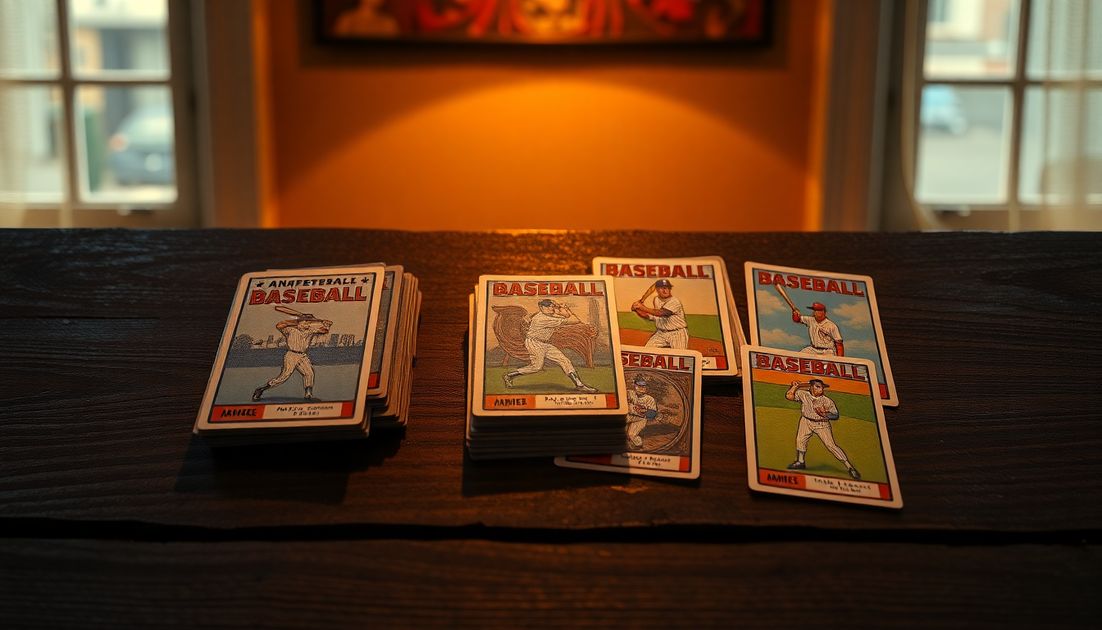
Most local card shops will lowball your vintage collection by 50-70% compared to true market value. The guy behind the counter at your neighborhood comic shop might know Pokémon, but he's probably clueless about the difference between a 1952 Topps Mickey Mantle PSA 7 ($45,000) and a 1956 Topps version ($8,500). When you need a proper baseball card appraisal near me, understanding the massive gap between local shop knowledge and professional assessment could save you from giving away a fortune.
After grading thousands of vintage cards and watching collectors get burned by inadequate appraisals, I've seen the same pattern repeatedly. Local shops excel at modern product but struggle with pre-1970 material. They miss print variations, condition nuances, and market timing that determine whether your Mickey Mantle rookie sells for $30,000 or $300,000.
Professional Baseball Card Appraisal Services vs Local Options
The appraisal landscape splits into three distinct tiers. Professional certified appraisers charge $150-400 per hour but provide detailed documentation suitable for insurance claims and estate planning. They understand population reports, condition census data, and comparable sales across multiple platforms.
Certified appraisers like those affiliated with the American Society of Appraisers track recent comps religiously. When they evaluate a 1963 Topps Pete Rose rookie, they reference the PSA 8 that sold for $18,750 on March 15th, the BGS 8.5 at $22,400, and factor in the PSA population of 2,847 graded examples versus 89 in PSA 9.
Local card shops typically charge $25-75 per appraisal but their knowledge varies wildly. The shop owner who opened in 1995 might nail vintage Topps but completely whiff on tobacco cards or regional issues. I've watched shop owners mistake a T206 Ty Cobb Green Portrait ($15,000 in PSA 5) for the more common Red Portrait ($3,500).
Online appraisal services occupy the middle ground. Heritage Auctions offers free preliminary evaluations for collections over $10,000. PWCC Marketplace provides condition estimates through their photo submission system. These services catch obvious gems but miss subtle variations that separate four-figure cards from five-figure specimens.
Understanding Grading Company Population Reports
Pop reports tell the real story behind card values. A 1955 Topps Sandy Koufax rookie might seem valuable in raw condition, but PSA has graded 5,421 examples with 847 in PSA 9 or higher. Compare that to the 1955 Topps Roberto Clemente rookie with only 1,967 PSA submissions and just 203 in PSA 9+.
BGS population data often differs significantly from PSA. The 1969 Topps Nolan Ryan rookie has 3,156 PSA 9s but only 891 BGS 9.5s. This scarcity drives BGS 9.5 sales to $8,200 while PSA 9s hover around $4,800.
Market Timing and Recent Sales Comps
Baseball card values fluctuate based on Hall of Fame announcements, anniversary years, and documentary releases. The 2020 Michael Jordan documentary pumped his baseball cards temporarily. His 1994 Upper Deck baseball rookie jumped from $400 to $1,200 before settling at $650.
Recent eBay sold comps provide the most accurate pricing data. A 1952 Topps Willie Mays PSA 8 sold for $87,500 on February 28th, but another example hit $94,000 just two weeks later. The difference? Sharp corners versus slight rounding that most local appraisers wouldn't detect.
How to Find Qualified Baseball Card Appraisers Near Me
Geographic location dramatically impacts appraisal quality. Major metropolitan areas house multiple certified appraisers with sports card expertise. Rural areas might force you to drive 200+ miles or rely on shipping services.
Northeast corridor advantages include proximity to established auction houses. Heritage Auctions maintains offices in New York, Dallas, and Beverly Hills. Goldin Auctions operates from New Jersey. These companies employ staff appraisers familiar with million-dollar collections.
Search the American Society of Appraisers database using their online directory. Filter results by "Sports Memorabilia" or "Collectibles" specializations. Certified appraisers must complete extensive education and maintain continuing education credits. They carry professional liability insurance covering appraisal errors.
Local coin and stamp dealers sometimes handle baseball cards professionally. These dealers understand condition grading concepts and possess proper lighting equipment. They typically charge reasonable rates ($50-100 per hour) while maintaining higher standards than comic shops.
University auction houses occasionally offer appraisal services. The Stanford Libraries Special Collections department maintains sports memorabilia expertise. Some state universities employ staff with relevant background knowledge.
Red Flags in Baseball Card Appraisals
Avoid appraisers who immediately suggest selling through their preferred channels. Legitimate appraisers maintain separation between valuation and sales recommendations. They provide written reports documenting methodology and comparable sales data.
Pressure tactics indicate problems. Professional appraisers schedule adequate time for thorough examination. They use magnification tools, measure card dimensions, and check for alterations. Rush jobs miss trimming, recoloring, and other condition issues.
Extremely high valuations often signal inexperience. An appraiser claiming your 1970s commons collection merits $10,000 probably lacks market knowledge. Most 1970s-1980s commons trade for $0.25-2.00 regardless of condition.
What Impacts Baseball Card Values During Appraisal
Condition assessment drives everything. The difference between PSA 7 and PSA 8 on a 1952 Topps Mickey Mantle equals $20,000+. Professional appraisers examine corners under magnification, measure centering percentages, and identify subtle surface issues invisible to casual observers.
Centering variations dramatically affect high-grade potential. A 1969 Topps Nolan Ryan rookie centered 60/40 might grade PSA 9 ($4,800), while 50/50 centering could achieve PSA 10 ($18,000). Most local shops lack tools to measure centering accurately.
Print defects versus damage requires expert knowledge. The 1971 Topps set suffers from notorious black border chipping. Appraisers distinguish between printing flaws (acceptable) and post-production damage (grade limiting). Similar expertise applies to 1975 Topps surface issues and 1981 Donruss condition sensitivity.
Regional variations affect certain sets significantly. 1957 Topps cards distributed in specific markets show different aging patterns. California examples often exhibit superior color retention compared to humid climate survivors.
Authentication and Alteration Detection
Trimmed cards plague vintage collections. Professional appraisers measure standard dimensions and identify size discrepancies indicating alteration. A properly sized 1952 Topps measures 2-5/8" by 3-3/4". Trimmed examples often measure 2-9/16" or smaller.
Recoloring detection requires specialized knowledge. Altered 1953 Topps cards sometimes show enhanced color saturation. Ultraviolet light examination reveals ink differences between original printing and restoration attempts.
Surface manipulation includes wax stain removal and crease pressing. These alterations might improve appearance temporarily but reduce long-term value. Authenticated examples command premiums over questionable material.
Cost Analysis: Professional vs Local Baseball Card Appraisals
Professional certified appraisals cost significantly more upfront but provide superior accuracy and legal documentation. Insurance companies require certified appraisals for coverage above $5,000. Estate planning situations mandate professional documentation for tax purposes.
Cost breakdown comparison:
Certified appraiser: $300-500 for typical collection
Local card shop: $50-150 for same collection
Online services: $25-100 for photo submissions
Auction house consultation: Free for valuable collections
The investment pays dividends when accurate valuations prevent costly mistakes. A certified appraiser correctly identifying a 1948 Leaf Satchel Paige rookie ($12,000 in PSA 7) versus the 1949 Bowman version ($800) justifies their fee immediately.
Insurance implications matter tremendously. Homeowner policies typically cap collectibles coverage at $2,500-5,000. Separate riders require certified appraisals updated every 2-3 years. Professional documentation ensures claim approval when disaster strikes.
Return on Investment Calculations
Collections valued above $10,000 benefit from professional appraisal investment. The cost differential between certified and local appraisals shrinks relative to potential value discovery. Missing a key variation or grade bump costs far more than appraisal fees.
Consider a collection containing 200 vintage cards. A local shop charges $100 total but misses subtle condition issues worth thousands. Professional appraisal costs $400 but identifies optimal grading candidates and selling strategies.
Market timing advice from experienced appraisers adds value beyond static pricing. They recognize when specific players or sets are trending upward. This knowledge helps optimize selling decisions and holding strategies.
Alternative Appraisal Methods and Digital Solutions
Modern technology enables remote appraisals through high-resolution photography. Several services accept detailed images for preliminary evaluation. These options work well for initial screening but cannot replace physical examination for valuable items.
PhotoGrade apps use artificial intelligence to estimate card conditions. While improving rapidly, these tools struggle with subtle issues affecting high-grade cards. They work reasonably well for modern cards in obvious conditions.
Video calling sessions allow real-time consultation with distant experts. Collectors can show cards under proper lighting while receiving immediate feedback. This approach costs less than travel expenses for in-person meetings.
Blockchain authentication services are emerging for high-value cards. These systems create tamper-proof ownership records and condition documentation. Early adoption remains limited but technology shows promise for future applications.
Building Long-Term Appraisal Relationships
Establishing relationships with qualified appraisers benefits serious collectors long-term. Regular consultations help track collection value changes and identify market opportunities. Trusted appraisers provide ongoing education about condition standards and market trends.
Annual appraisal updates make sense for insurance purposes and collection management. Markets shift significantly year-over-year, especially for vintage material experiencing renewed collector interest.
Professional appraisers often recommend grading submission strategies. They identify which cards justify grading costs versus raw sales. This guidance prevents expensive mistakes on borderline examples.
Finding quality baseball card appraisal services near you requires understanding the vast skill gap between professional certification and local shop estimates. Geographic proximity matters less than expertise when dealing with valuable vintage material. The extra cost of certified appraisers pays dividends through accurate valuations, proper documentation, and market insights that local shops simply cannot provide.